
BTTR is independent. We may earn a commission if you buy through our links. Why trust us?
The iPhone Air is a design marvel that proves Apple can create an impossibly thin yet powerful smartphone. If portability and premium aesthetics are your top priorities, this is the iPhone for you. However, the trade-offs in battery life, camera versatility, and features mean most users would be better served by the iPhone 17 or 17 Pro.
- Incredibly thin (5.6mm) and light (165g) design
- Premium titanium frame is strong and durable
- A19 Pro chip delivers excellent performance
- Gorgeous 6.5-inch ProMotion display with 3,000 nits peak brightness
- Single rear camera lacks ultrawide lens (no macro or spatial photos)
- Battery life (27 hours) is just adequate, not exceptional
- Missing stereo speakers (single top speaker only)
- Too many compromises for the premium price
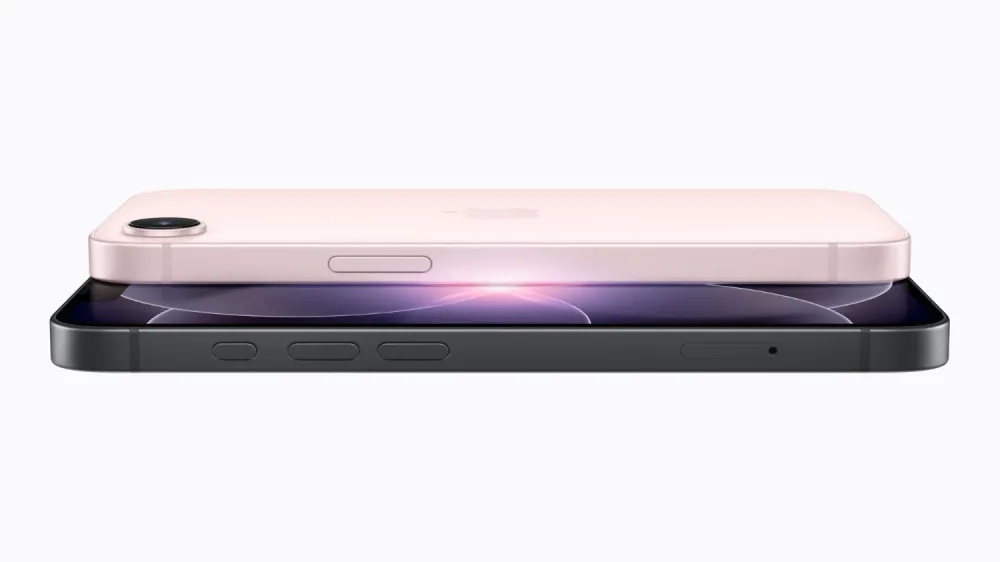
The iPhone Air is the biggest shift in iPhone design in years. It’s remarkably thin and incredibly robust. It feels great in the hand and looks fantastic.
But its existence is a solution to a problem that didn’t need solving. Like Samsung’s super-thin Galaxy S25 Edge, the sacrifices made to the iPhone Air to achieve that thin 5.6 mm thickness simply don’t stack up when balanced against the price tag.
From all reports, it’s been far from a commercial success for Apple in the months since it launched.
After a few months of using the phone, I don’t think I would recommend it for anyone. In almost every case, I think the iPhone 17 Pro or the iPhone 17 is a better product.
But with the increasing certainty that Apple will launch a foldable device, I think the iPhone Air is still an important product, not so much for customers, but for Apple’s engineers. The learnings they’ve had from designing this phone will undoubtedly help with future devices.
@bttr_reviews Finally got my hands on the @apple iPhone Air. First impressions: it’s definitely thin! This design is peak Apple. I still don’t know if I’m convinced a few millimetres of thickness is worth sacrificing the iPhone 17’s second camera for, but keen to try it out to see how it performs!
♬ Lighter Than Air - Atomica Music
What makes the iPhone Air stand out?
The iPhone Air is a smartphone entirely built for show.
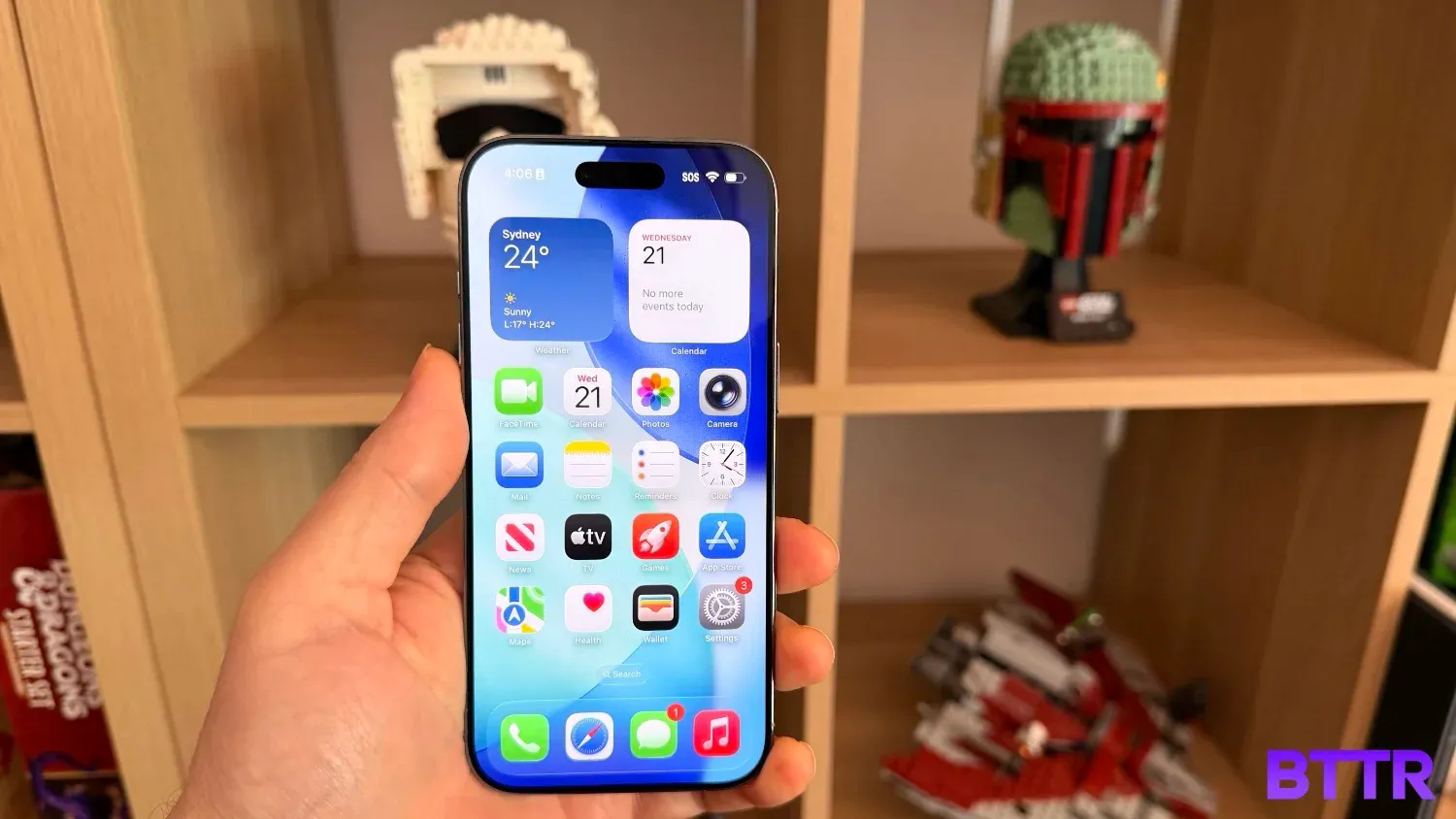
Don’t get me wrong: being an iPhone, it offers plenty of functionality to go with it. It’s got a stunning 6.5-inch Super Retina XDR display with peak brightness of 3,000 nits and up to 120 Hz refresh rate.
It’s powered by the A19 Pro chip, with 6 CPU cores, 5 GPU cores and a 16 core neural network, and runs iOS easily enough.
If you won an iPhone Air in a competition, you definitely wouldn’t be disappointed.
But the iPhone Air is all about that thin design. At just 5.6 mm thick for most of the device, it has been engineered purely to deliver a thin device.
There is nothing – not a single thing – that makes this a better phone than either the iPhone 17 or the 17 Pro, apart from the device’s thinness, and maybe its weight.
In the hand it feels great. But when it comes to choosing whether to spend money on it vs the standard iPhone 17 or 17 Pro, it just does not make sense as a product.
Apple iPhone 17 Pro specs
| Category | Specification |
|---|---|
| Finish | Sky Blue, Light Gold, Cloud White, Space Black (Grade 5 titanium frame) |
| Capacity | 256GB, 512GB, 1TB |
| Display |
6.5-inch Super Retina XDR (OLED) 2736‑by‑1260 pixel resolution at 460 ppi ProMotion (up to 120Hz), Always-On, Dynamic Island 3,000 nits peak brightness (outdoor) |
| Chip |
A19 Pro chip 6‑core CPU 5‑core GPU 16‑core Neural Engine |
| Rear Camera |
48MP Fusion Main camera: - 48MP Main (26 mm, ƒ/1.6) - Sensor-shift optical image stabilisation - 12MP optical-quality 2x Telephoto (52 mm, ƒ/1.6) |
| Front Camera | 18MP Centre Stage camera (ƒ/1.9) with square sensor design |
| Video Recording |
4K HDR video recording Dolby Vision support |
| Power & Battery |
3,149 mAh battery Up to 27 hours of video playback Fast-charge: Up to 50% in 30 mins with 20W+ adapter |
| Size & Weight |
Height: 156.2 mm | Width: 74.7 mm | Depth: 5.6 mm (11.3 mm at top section) Weight: 165 grams |
| Connectivity |
USB-C with fast charging Wi-Fi 7, Bluetooth 6.0, Thread networking Apple N1 networking chip, Apple C1X modem chip 5G (sub-6GHz), eSIM only |
| Durability | IP68 (6m depth for 30 mins), Ceramic Shield 2 front and back |
Design and build quality
From the front of the device, the iPhone Air just looks like any other iPhone. It’s a big slab of screen, 6.5 inches on the diagonal, making it larger than the 17 and 17 Pro models.
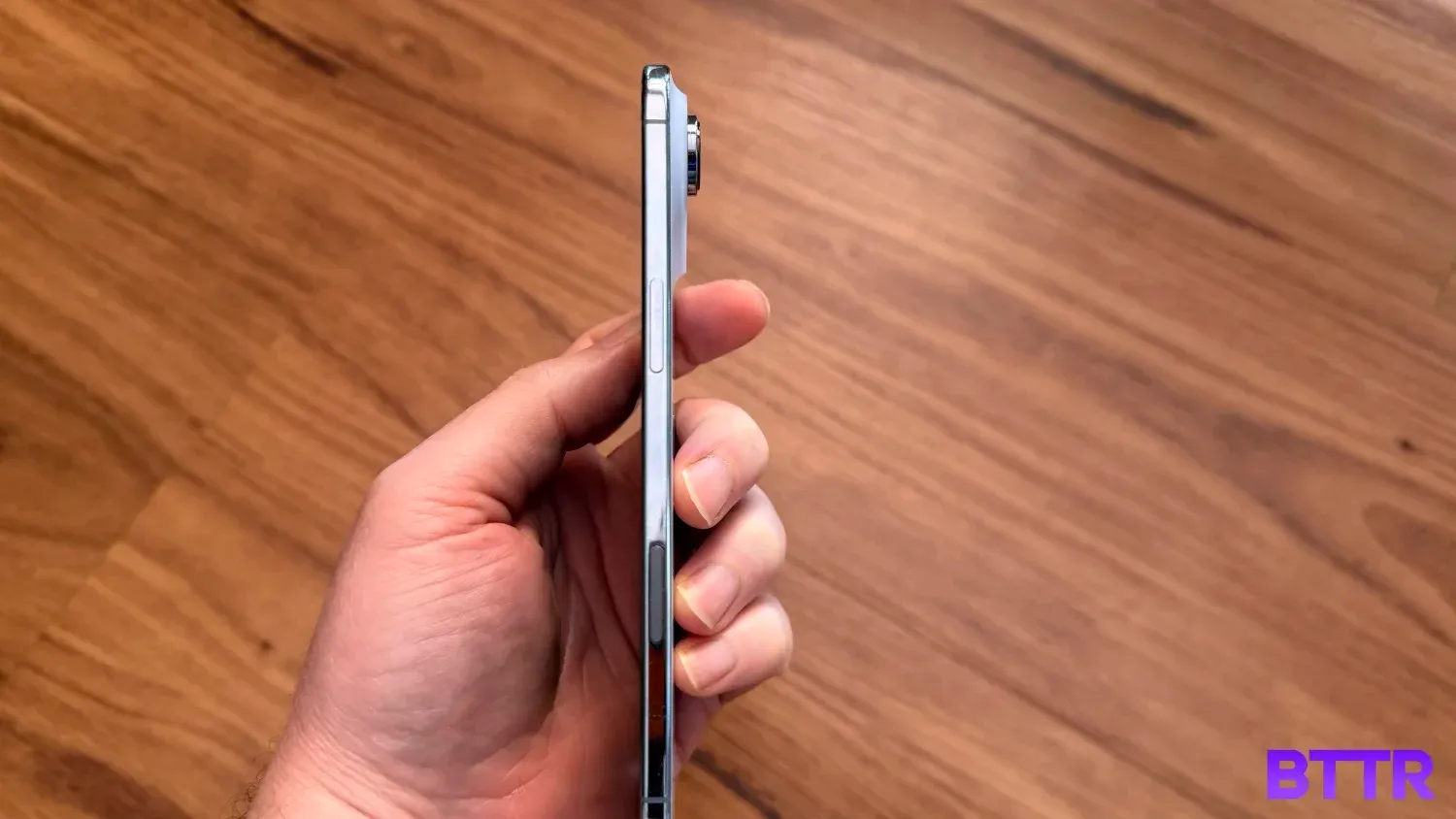
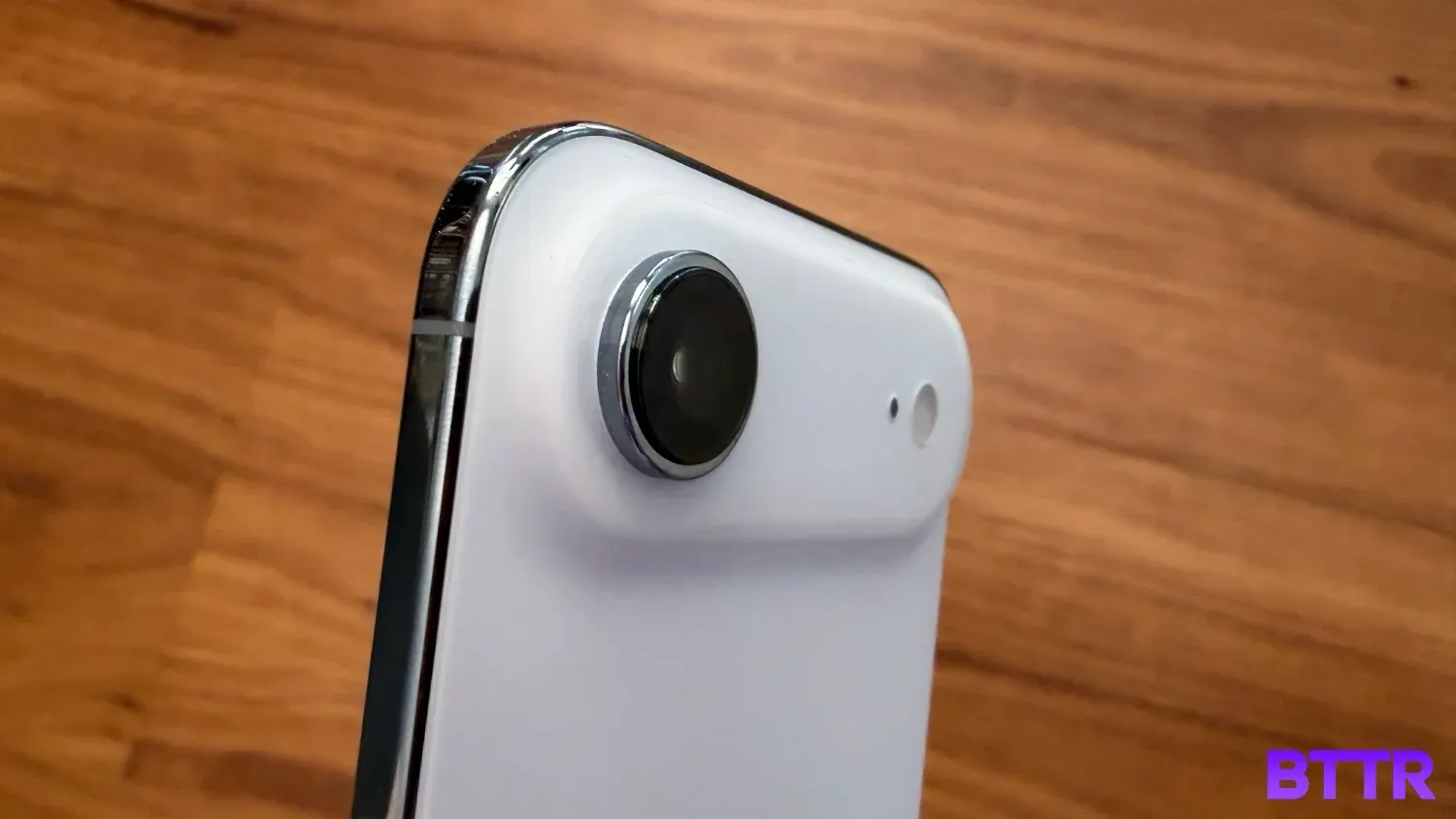
But turn the Air on its side, and you see something new, for Apple at least. The bulk of the phone is just 5.6 mm thick, though the camera bump does bulk out the top part of the phone to 11.3 mm.
Despite its thinness, Apple’s design team has done a remarkable job building an exceptionally strong device. I remember stories a decade ago of devices like the iPhone 6 Plus that would buckle in someone’s back pocket when they sat down. The iPhone Air doesn’t buckle.
The whole device feels even thinner than it looks, thanks to the way the edging blends into the Ceramic Shield glass panels. It’s smooth, and not as sharp as the edges of some other devices.
As you would expect, Apple did some serious rejigging of the internal components with the iPhone Air to make the device so thin. It’s the first iPhone in Australia to not offer a physical SIM card slot, and a lot of the key elements are now housed in the camera bump. This includes the processor, the C1X modem, the N1 wireless chip and a lot of the logic board.
This, in turn, has led to some sacrifices on the spec front, predominantly with the cameras and battery capacity.
The iPhone Air offers the same Center Stage front camera as its iPhone 17 and 17 Pro brethren, but around the back, there is only a single lens 48MP fusion camera system.
It offers a 1x and 2x zoom option, with the latter coming from cropping in on the default 48MP image.
Apple doesn’t disclose battery capacity, though teardowns show it’s a smaller battery than found in the iPhone 17, at 3,149 mAh vs 3,692 mAh.
Beyond the internals, the button layout on the Air is the same as the other 2025 iPhone models, with the Action button and volume rockers on the left side of the phone, power, and Camera Control button on the right.
This all combines to arguably the nicest looking of an iPhone to date. But it comes at a price I doubt many people would want to pay.
Display performance
At 6.5 inches on the diagonal, the iPhone Air’s display sits between the 6.3-inches of the iPhone 17 and 17 Pro and the 6.9-inch iPhone 17 Pro Max.
Beyond the screen size, though, there’s not a huge amount of difference on the screen front between the models. They all use the same Super Retina XDR Display technology, with Always on capability and the ProMotion refresh rate, that can scale from 1 Hz to 120 Hz, depending on what’s happening on the screen.
The resolution is slightly different due to the screen size difference, but the pixel density is identical across the models. For the iPhone Air, you get a 2,736 × 1,260 resolution.
You get the Dynamic Island technology, covered by a Ceramic Shield 2 front for better scratch resistance.
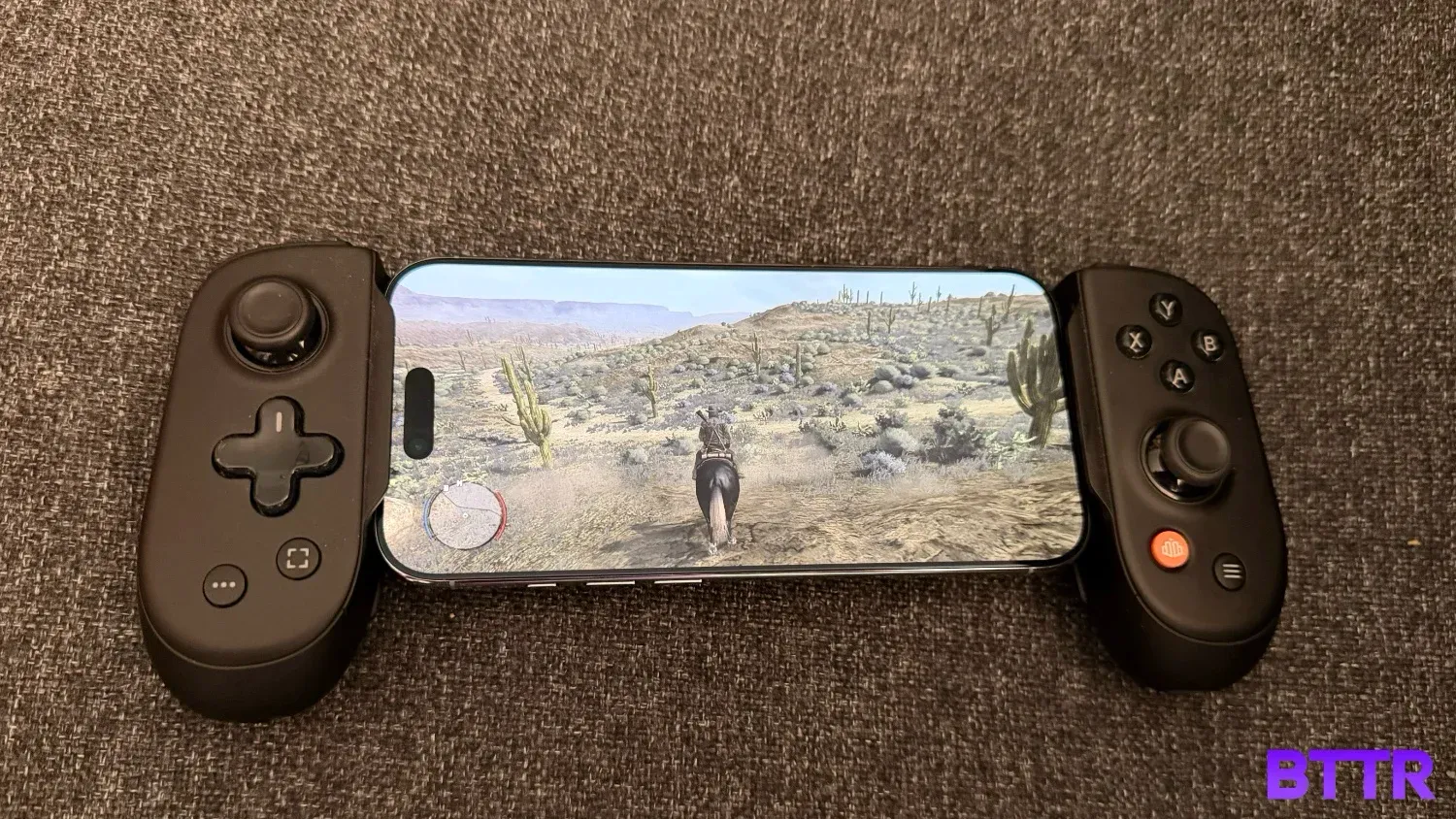
Which is to say that the iPhone Air’s screen is gorgeous. It looks great in all lighting conditions, including bright sunlight, and is brilliant for viewing photos, streaming 4K video or playing Red Dead Redemption on your device.
Camera performance
The camera is arguably the area with the biggest sacrifices have been made. For years now, iPhones have used multiple lenses and smart software to create a camera capable of a range of shooting modes and zoom levels.
The iPhone Air brings the camera system back to a single 48MP Fusion lens.
It’s effectively the same sensor as the main lens on the iPhone 17. Which means that for many photos, you will be hard-pressed to tell the difference between the iPhone Air and the iPhone 17.
But because there’s only a single lens, you just don’t get the same versatility. There is no option for ultra-wide shooting or macro photography, and while I don’t think there’s much demand for it, you can’t shoot spatial photos either.







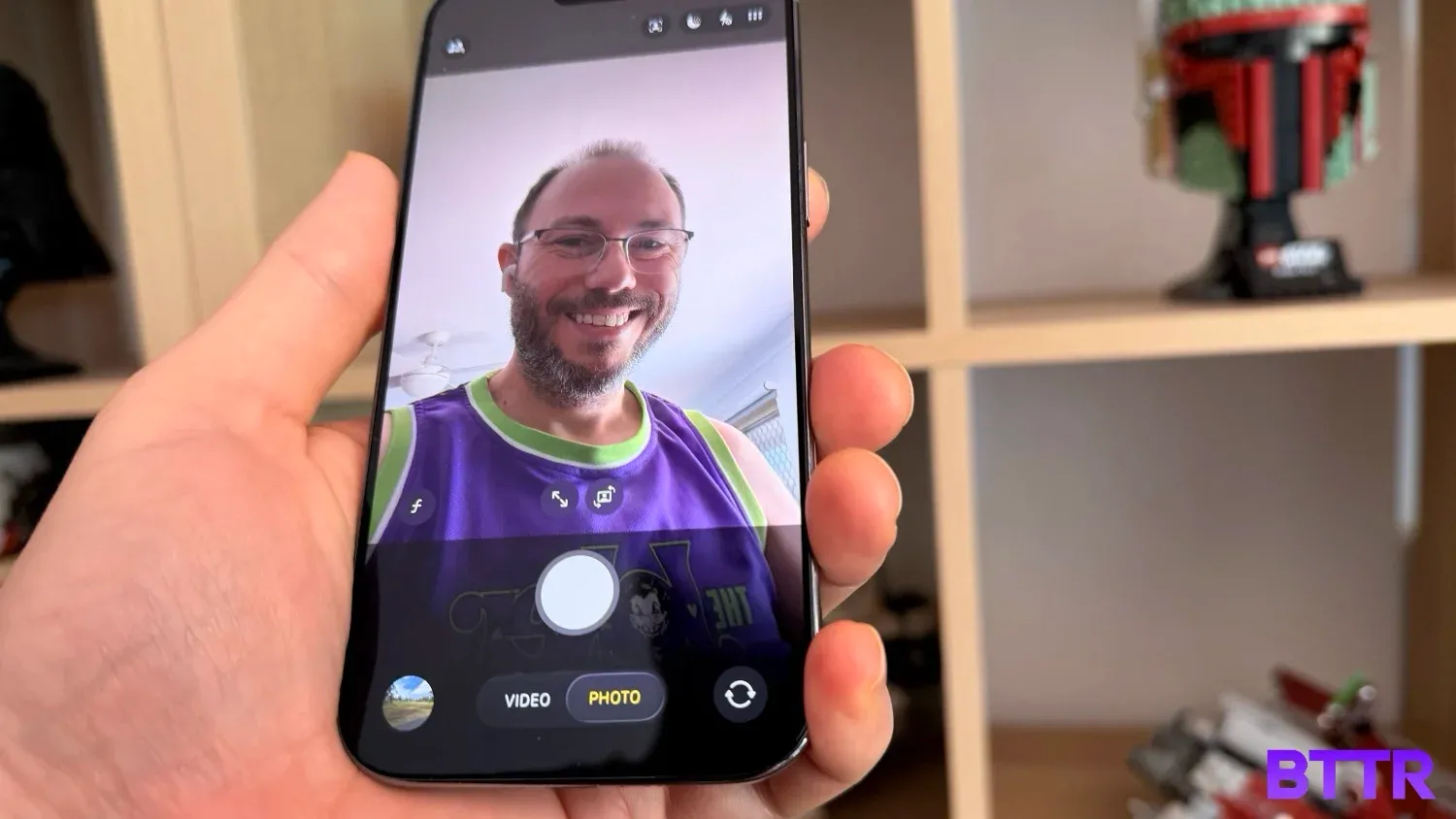
Around the front of the iPhone Air is the same new Centre Stage camera as the iPhone 17 and 17 Pro models, with the square sensor that can be set to film in either portrait or landscape mode without turning the camera.
You can see below from the sample images that the camera still does a good job. So it’s not really camera performance that’s impacted here, so much as camera versatility.
Performance and software
One area that the iPhone Air stands above the standard iPhone 17 is that it is powered by the A19 Pro chip, rather than the standard A19.
It’s not quite the same A19 Pro chip as the 17 Pro, though. The iPhone Air’s processor offers a 5-core GPU, where the 17 Pro has a 6-core GPU.
What does that mean? Well, it means that the iPhone Air does feel a little bit zippier than the iPhone 17, but not so much that you would notice in day to day usage.
As you can see from the GeekBench 5 benchmarks, the iPhone Air’s A19 Pro sits pretty close to the iPhone 17 Pro and iPhone 17’s processors across the board. Which means that the Air is more than capable of handling anything you throw at it, really.
| Phone | CPU Single Core | CPU Multi-Core | GPU Metal |
|---|---|---|---|
| Apple iPhone 14 | 1738 | 4741 | 12507 |
| Apple iPhone 15 Plus | 2289 | 5388 | 22784 |
| Apple iPhone 15 Pro | 2892 | 7196 | 27332 |
| Apple iPhone 16 | 3048 | 7667 | 27952 |
| Apple iPhone 16 Pro Max | 3190 | 7635 | 31942 |
| Apple iPhone 17 | 3772 | 9339 | 36961 |
| Apple iPhone 17 Pro | 3802 | 9840 | 46214 |
| Apple iPhone Air | 3675 | 9004 | 38063 |
The thing I enjoyed most while testing the iPhone Air out was playing Red Dead Redemption using the BackBone Pro controller.
While the game was great on the 17 Pro, the iPhone Air’s larger screen and slimmer body helped it fit more securely in the controller, while also making the game easier to view.
It also highlights just how powerful today’s smartphones really are from a gaming perspective.
Battery life and connectivity
The Air has the smallest battery of all the 2025 iPhones, which makes sense given the design.
That’s not to say that it has terrible battery life. For general use, I easily got through a day, though intensive gaming or streaming obviously reduced the battery life significantly.
Apple claims 27 hours of video playback on a single charge, compared to 30 hours for the iPhone 17 and 33 hours for the 17 Pro.
That doesn’t seem like too big a difference, and honestly, it depends on how you use the phone, whether you will notice it or not.
More noticeable are the fast charging capabilities. While the iPhone 17 models all support 40W fast charging, capable of getting you from 0 to 50% in 20 minutes, the Air only supports 20W speeds, giving a 30-minute timeframe to half fill the phone.
If you use a 30W MagSafe wireless charger, however, you’ll get the same speeds as the other models.
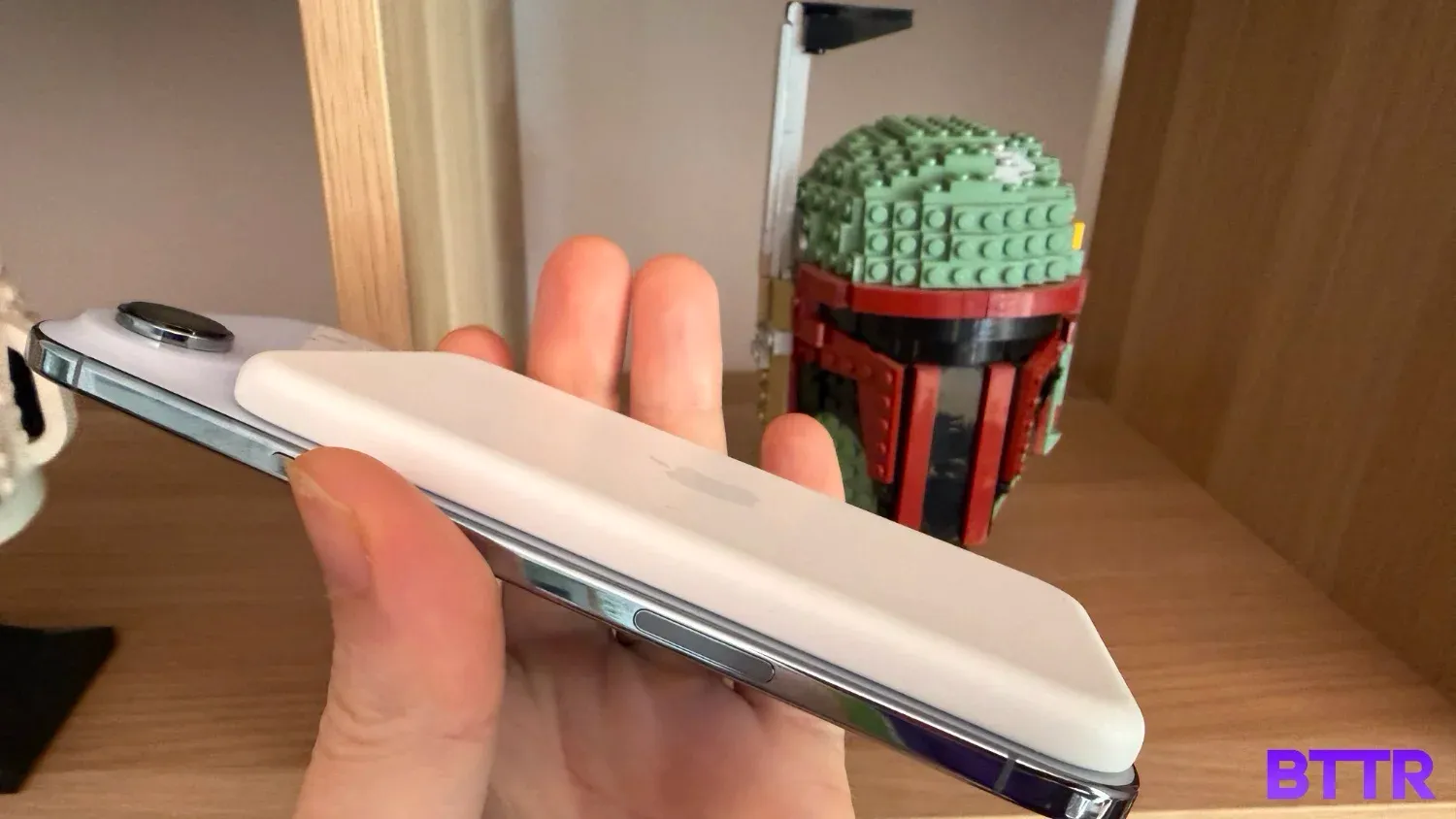
Because of these battery sacrifices, Apple did launch a dedicated MagSafe battery attachment specifically for the iPhone Air model. It will give you up to an extra 65% for your daily use, and can charge accessories using USB-C.
But it costs $159, which will push the starting price of the iPhone Air up close to $2K. Which ultimately brings us back to the value proposition.
Verdict
In the spectrum of iPhone models, the iPhone Air effectively replaced the “Plus” version of the standard iPhone. And with its larger screen size, that sort of makes sense.
But the Air is a unique proposition. While it has a big display, it sacrifices a lot of the key features people buy phones for (battery life, camera versatility) to create a stylish, thin design.
It’s the very definition of style over substance.
If someone gives you an iPhone Air, you should be happy. It’s a good phone.
But if you are looking to buy an iPhone for yourself, I cannot think of a single reason you would choose the iPhone Air’s thinness over the iPhone 17’s superior battery life and cameras. Particularly given the base 17 model is $400 cheaper than the iPhone Air.
By all indications, the iPhone Air hasn’t been much of a commercial success, and it’s not surprising. It just doesn’t justify its existence beyond being thin.
If Apple does venture into the foldable smartphone market, though, the engineering learnings from creating this phone are going to come in handy.
Buy the iPhone Air if:
- Design is more important than functionality
- You’re after a phone with a large, gorgeous screen
- It’s an emotional purchase rather than a rational one
Skip the iPhone Air if:
- You want a more versatile camera
- You are always charging your phone and want the best battery life
- Budget is a factor for you
Frequently Asked Questions
Is the iPhone Air worth buying in 2026?
For most people, no. The iPhone Air's ultra-thin 5.6 mm design comes with too many compromises, including a single rear camera, smaller battery (27 hours vs 30–33 hours on other models), and slower 20W charging. At $1,799, it costs $400 more than the iPhone 17, which offers better cameras and battery life. The Air makes sense only if you prioritise design and aesthetics above all else.
What's the difference between iPhone Air and iPhone 17?
The iPhone Air is thinner (5.6 mm vs 8.75 mm) and lighter (165g vs 204g) with a larger 6.5-inch display compared to the iPhone 17's 6.3-inch screen. However, the iPhone 17 has a double camera system versus the Air's single 48MP camera, a bigger battery (30 hours vs 27 hours playback), faster 40W charging, and stereo speakers. The Air uses the A19 Pro chip, while the standard 17 has the A19 chip.
Does the iPhone Air have good battery life?
The iPhone Air offers adequate but not exceptional battery life, with up to 27 hours of video playback. This is less than the iPhone 17 (30 hours) and iPhone 17 Pro (33 hours). For typical daily use, you'll get through a full day, but intensive gaming or streaming will drain it faster. Apple offers an optional $159 MagSafe battery pack that extends battery life by 65%.
How many cameras does the iPhone Air have?
The iPhone Air has two cameras: a single 48MP Fusion rear camera with 1x and 2x zoom capabilities, and an 18MP Centre Stage front camera. Unlike the iPhone 17 Pro's triple camera system, the Air lacks an ultra-wide lens, which means no macro photography, no spatial photos, and limited shooting versatility.
Is the iPhone Air too thin and fragile?
Despite being just 5.6 mm thin, the iPhone Air is surprisingly robust thanks to its Grade 5 titanium frame and Ceramic Shield 2 protection front and back. Apple's engineering ensures it won't bend or buckle like older thin phones (such as the iPhone 6 Plus). The device is IP68 water-resistant and feels solid in hand, though the camera bump does increase thickness to 11.3 mm at the top.