
BTTR is independent. We may earn a commission if you buy through our links. Why trust us?
The iPhone 17 is the iPhone for most people. It brings meaningful upgrades in camera quality, performance, and design without the premium price tag of the Pro models — a compelling choice for anyone upgrading from an iPhone 14 or older.
- Upgraded 48MP main camera is a big leap for non-Pro iPhones
- Thin, lightweight design is comfortable to hold and carry
- A19 chip offers plenty of power for everyday use and gaming
- No telephoto lens means camera versatility
- Still no USB 3 speeds
With the exception of this year’s iPhone Air, it really feels to me that Apple has found a pretty good balance between its standard and Pro-grade iPhones.
The Pro – which is clearly a better phone thanks to its additional camera and extra processing power – is priced at a level that makes it too expensive for most users.
But the standard iPhone model, ever since the iPhone 15, has offered very similar performance for a fraction of the cost, making it a clear choice for most people.
This year’s iPhone 17 is no different. Except in many ways, the decision to choose an iPhone 17 is even easier thanks to some significant upgrades over the iPhone 16.
Is it the right phone for you? It’s impossible for me to say. What I can say is that if you are looking for a new iPhone and don’t want to spend almost 2K on the Pro, the iPhone 17 is a really, really, really great device.
What makes the iPhone 17 stand out?
Do iPhones stand out anymore? I’d argue that they probably don’t, given that Apple has been iteratively improving them for almost 20 years now.
But if you want to know what’s better about this iPhone over previous generations, the easiest answer is in the cameras.
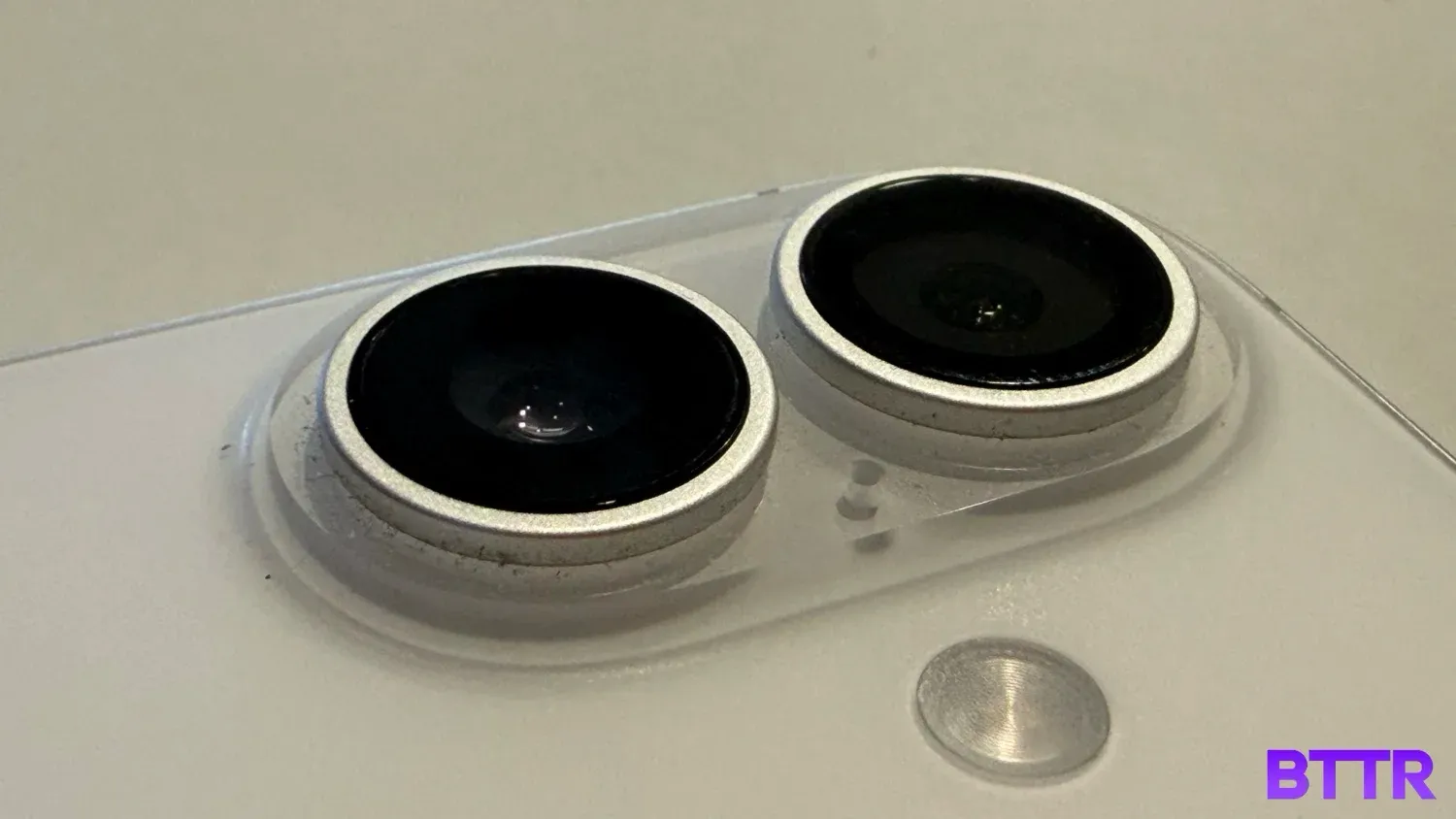
Last year’s iPhone 16 offered a 48MP Fusion Main lens and a 12MP ultra-wide. In the iPhone 17, that ultra-wide is now, also 48MP. That allows for the camera to capture a lot more detail in photos, as well as allowing for Apple’s Super High-resolution images.
The front camera also got a boost, from the 12MP TrueDepth camera on the iPhone 16 to the new 18MP Center Stage snapper. This is the same camera that’s on the iPhone 17 Pro, which has a square sensor and allows for either portrait or landscape imagery without having to rotate the phone.
But there’s more than just a couple of camera updates. For the first time – and finally – the core iPhone supports a 120Hz adaptive refresh rate, which allows for the Always-On display.
It’s actually the same 6.3-inch display as the 17 Pro, so there’s one less difference between the models as well.
The biggest disappointment, at least in my view, of the iPhone 17 over the iPhone 16 is that Apple changed the available colours. While the white I reviewed is fine, it doesn’t hold a candle to the brilliance of the iPhone 16’s pink colour.
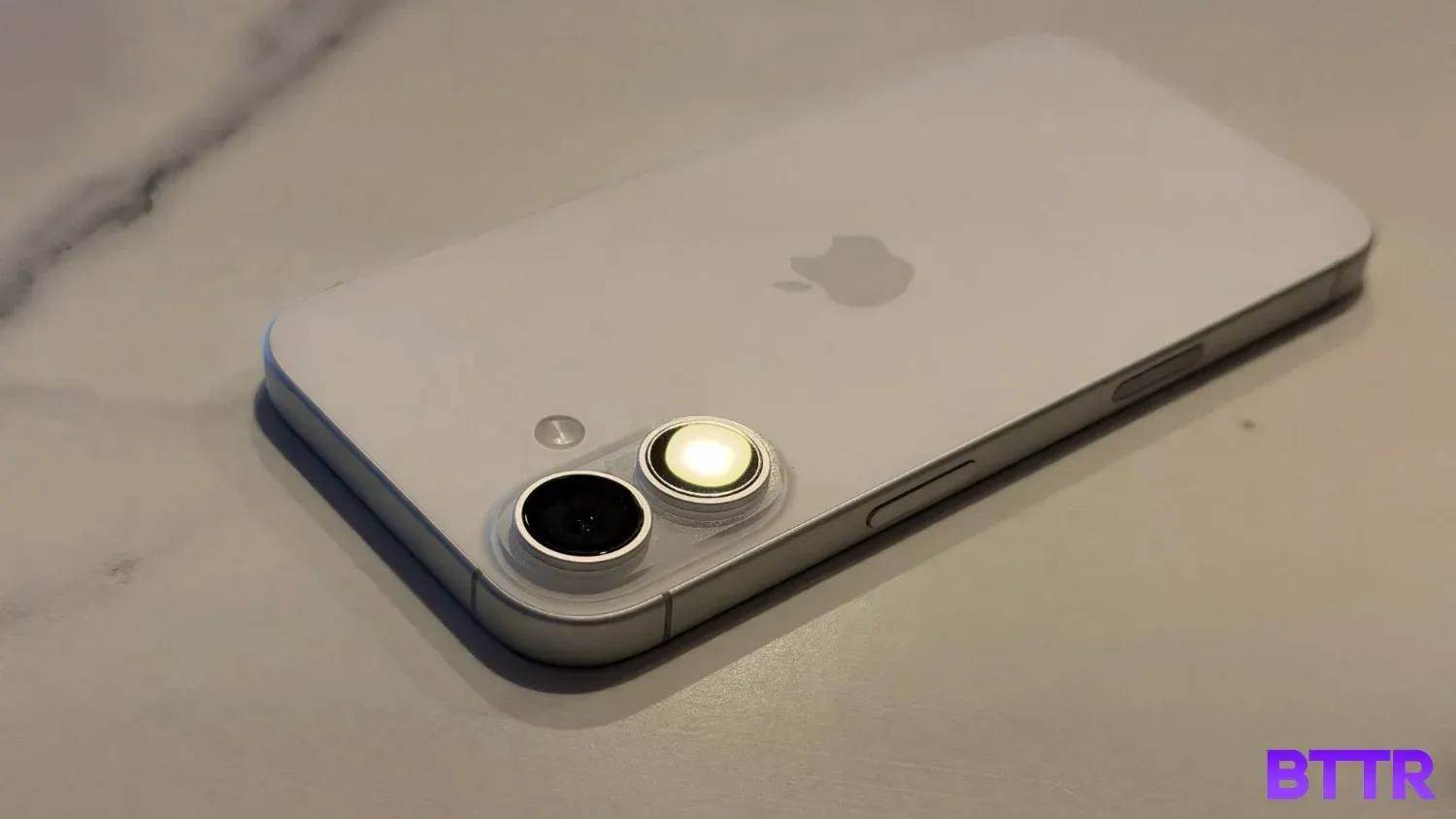
Apple iPhone 17 specs
| Finish | Black, White, Mist Blue, Sage, Lavender. Aluminium design with Ceramic Shield 2 front and colour-infused glass back. |
|---|---|
| Capacity | 256GB, 512GB |
| Size and Weight |
Height: 149.6 mm (5.89 inches) Width: 71.5 mm (2.81 inches) Depth: 7.95 mm (0.31 inch) Weight: 177 grams (6.24 ounces) |
| Display |
Super Retina XDR OLED display, 6.3 inches (diagonal) 2622 x 1206 pixels at 460 ppi Dynamic Island Always-On display ProMotion technology with adaptive refresh rates up to 120Hz HDR display, True Tone, Wide colour (P3) 1,000 nits max brightness (typical); 1,600 nits peak (HDR); 3,000 nits peak (outdoor) 2,000,000:1 contrast ratio (typical) Antireflective coating |
| Water Resistance | IP68 (maximum depth of 6 metres for up to 30 minutes) under IEC standard 60529 |
| Chip |
A19 chip 6-core CPU (2 performance + 4 efficiency cores) 5-core GPU with Neural Accelerators 16-core Neural Engine Hardware-accelerated ray tracing |
| Rear Camera |
48MP Dual Fusion camera system 48MP Fusion Main: 26mm, f/1.6, sensor-shift OIS, 100% Focus Pixels 12MP 2x Optical-quality Telephoto: 52mm, f/1.6 48MP Fusion Ultra Wide: 13mm, f/2.2, 120° field of view 2x optical zoom in, 2x optical zoom out; 4x optical zoom range Digital zoom up to 10x Photonic Engine, Deep Fusion, Smart HDR 5 Night mode, Portrait mode, Panorama (up to 63MP) Spatial photos, 48MP macro photography Image formats: HEIF and JPEG |
| Video Recording |
4K Dolby Vision at 24, 25, 30 or 60 fps 1080p Dolby Vision at 25, 30 or 60 fps Cinematic mode up to 4K Dolby Vision at 30 fps Action mode up to 2.8K Dolby Vision at 60 fps Slo-mo: 1080p at 120 fps or 240 fps Spatial video at 1080p at 30 fps Dual Capture up to 4K Dolby Vision at 30 fps Digital zoom up to 6x Video formats: HEVC and H.264 Spatial Audio, stereo recording, Audio Mix |
| Front Camera |
18MP Center Stage camera f/1.9 aperture, Autofocus with Focus Pixels Ultra-stabilised video, Dual Capture Photonic Engine, Deep Fusion, Smart HDR 5 Night mode, Portrait mode 4K Dolby Vision video at 24, 25, 30 or 60 fps Slo-mo: 1080p at 120 fps |
| Battery |
Video playback: Up to 30 hours Video streaming: Up to 27 hours Fast-charge capable: Up to 50% in 20 minutes with 40W adapter or higher MagSafe wireless charging up to 25W Qi2 wireless charging up to 25W |
| Face ID | Enabled by TrueDepth technology in the Center Stage front camera |
| Connectivity |
5G (sub-6 GHz and mmWave) with 4x4 MIMO Gigabit LTE with 4x4 MIMO Wi-Fi 7 (802.11be) with 2x2 MIMO Bluetooth 6 Thread networking technology NFC with reader mode Ultra Wideband (2nd-generation chip) |
| Location | Precision dual-frequency GPS (GPS, GLONASS, Galileo, QZSS, BeiDou and NavIC), Digital compass, Wi-Fi, Mobile connectivity |
| Connector | USB-C with support for charging, DisplayPort, USB 2 (up to 480 Mbps) |
| SIM | Dual SIM (nano-SIM and eSIM); Dual eSIM support |
| Sensors | Face ID, Barometer, High-dynamic-range gyro, High-g accelerometer, Proximity sensor, Dual ambient light sensors |
| Operating System | iOS 26 |
| Safety Features | Emergency SOS via satellite, Crash Detection, Roadside Assistance via satellite, Find My via satellite |
| Audio Playback | AAC, APAC, MP3, Apple Lossless, FLAC, Dolby Digital, Dolby Digital Plus and Dolby Atmos; Spatial Audio playback |
| Video Playback | HEVC, H.264 and AV1; HDR with Dolby Vision, HDR10+/HDR10 and HLG; Up to 4K HDR AirPlay |
| In the Box | iPhone with iOS 26, USB-C Charge Cable (1 m) |
| Environmental Operating Conditions |
Operating temperature: 0° to 35° C Storage temperature: −20° to 45° C Relative humidity: 5% to 95% noncondensing Operating altitude: tested up to 3,000 metres |
Design and build quality
Apple’s not some newcomer to smartphone design, so it’s hardly a surprise that everything about the iPhone 17 looks and feels elegant.
The phone is sleek, with a Ceramic Shield 2 front, which Apple claims offers 3x better scratch resistance over the standard Ceramic Shield.
The back of the phone doesn’t have the Ceramic Shield covering, so it’s not as robust. But given most people chuck a case on their phones anyway, it’s not a drama.
As a phone, though, the iPhone 17 feels great in the hand. The 6.3-inch display is a good size – maybe a fraction too large for one-handed operation, but certainly a better balance than the larger Plus sized models, in my opinion.
Despite my fears that the camera control button would be a one-year wonder, Apple has included it here, as well as the much more useful Action button.
The 17 is powered by the A19 chip, which has a 6-core CPU (2 performance + 4 efficiency cores), a 5-core GPU with Neural Accelerators and a 16-core Neural Engine.
That’s frankly not too dissimilar to the A19 Pro inside the iPhone 17 Pro. And the reason was made clear last year when Apple gave the iPhone 16 capable of running Apple Intelligence.
In order to run Apple’s AI, the processor needs to sing, and so there’s not too much difference between the standard and Pro chipsets, at least compared to previous years,
Wi-Fi 7, Bluetooth 6 and support for Thread give you all the connectivity you could need. You also get features like Emergency SOS via satellite and roadside assistance via satellite for peace of mind if you’re out of mobile service range in Australia’s bush.
Display performance
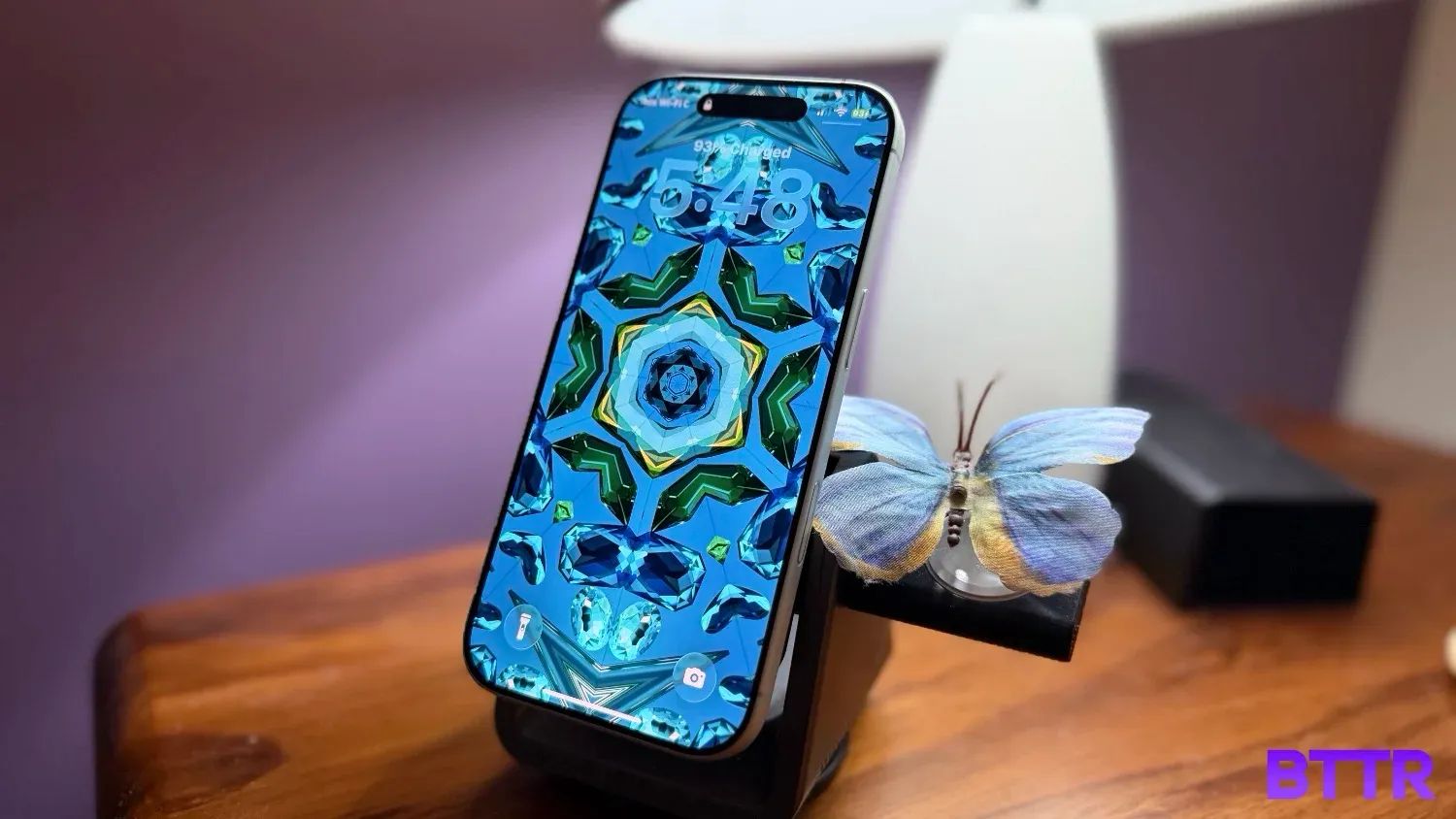
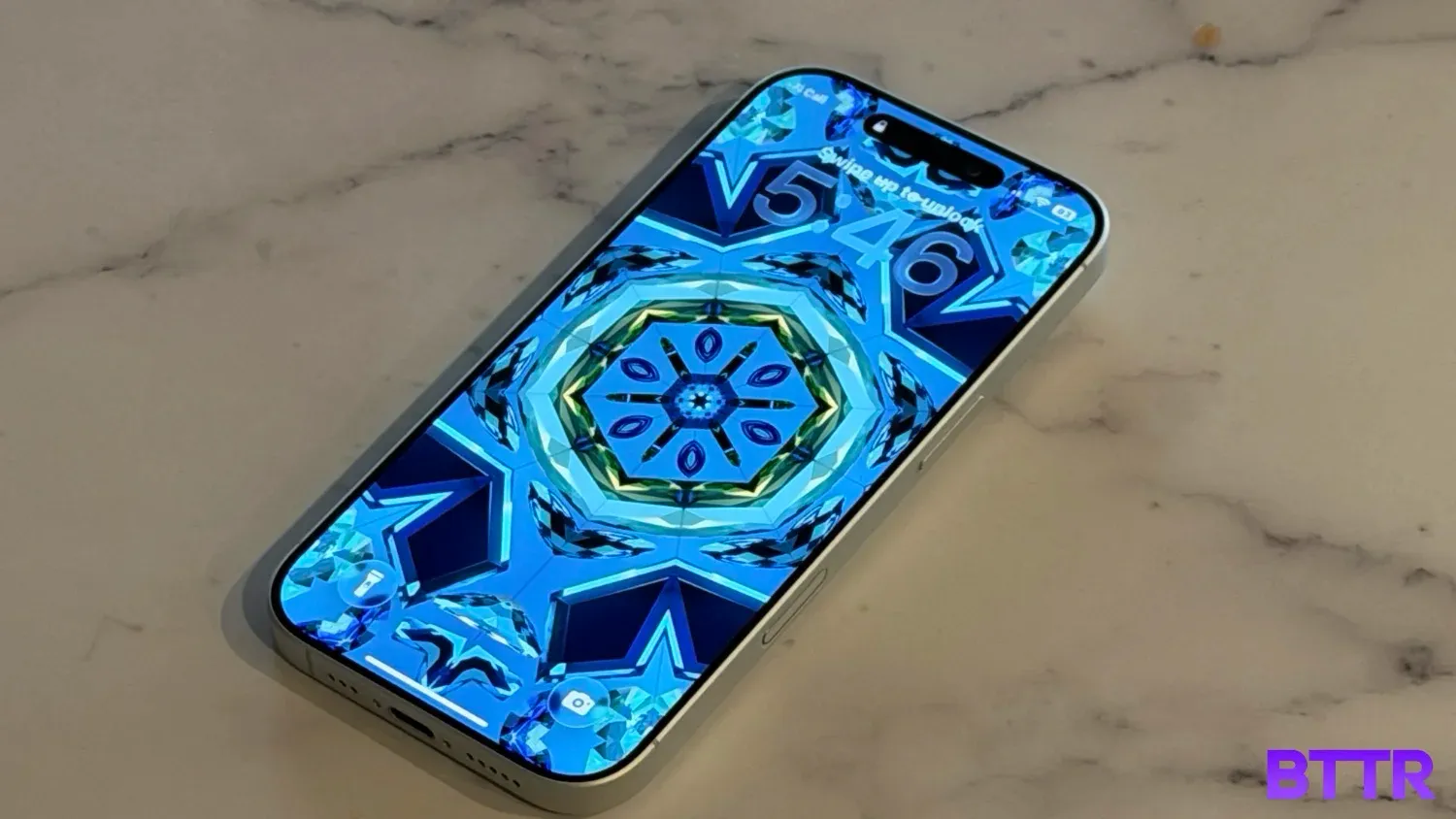
The big development this generation is that Apple finally updated the standard iPhone’s display to support ProMotion 120Hz. The variable refresh rate technology means things feel really smooth when scrolling, but also allows for always-on display technology without killing off the battery life.
It’s been a long time coming, so it’s good to see Apple finally bring the base iPhone up to the industry standard.
But what’s perhaps more surprising is that this is effectively the same display that you’ll find in the iPhone 17 Pro. It has the same resolution, same size, same brightness and same refresh rate.
This isn’t a criticism of the screen, though. It’s a very nice screen, perfect for looking at photos, browsing the web and streaming Netflix. It’s just a little surprising that Apple didn’t differentiate the Pro model here.
Compared to the iPhone 16, it is a step-up on the brightness front, which is another impressive development. The screen is easy to read, even in full sunlight.
Camera performance
While the screens are the same, the camera array on the iPhone 17 is not the same as the 17 Pro, (or the iPhone Air for that matter).
It’s a solid offering, though. Unless you’re a professional content creator, the combination of a 48MP Fusion main lens and the 48MP Fusion Ultra-Wide is enough for most situations.
The improved megapixel count on the ultra-wide lens really helps give the iPhone 17’s camera a delightful depth and detail level. It’s maybe not as versatile as the iPhone 17 Pro, but it’s definitely not compromising on quality.









`
But one of my favourite camera developments with this range of iPhones is the new 18MP Center Stage front camera. With its square sensor, you can choose between portrait and landscape shooting modes regardless of what orientation you have your phone.
This is so convenient when trying to shoot video or pieces to camera with the phone on a Tripod.
I do wish you could record full frame and then edit it to landscape or portrait (or both) for different formats, but maybe that will come next year.
Performance and software
Apple’s iPhones have been way out in front since it launched its own Silicon. Benchmark performance for iPhones over the past few generations has been consistently brilliant, and keeps getting better every year.
But looking at GeekBench 6 scores for the generation, you can see that where the A19 Pro chipset shines for the iPhone 17 Pro is in GPU performance. Single core performance in the iPhone 17 is almost on par with the Pro, and the multi-core performance is 95 per cent of the 17 Pro as well.
In terms of real-world usage, that means the phone can comfortably play high-end games, as well as do some pretty good video editing. If you want to do a lot of 4K video editing, I’d still suggest the 17 Pro – that’s where that phone really stands apart.
But for most people (including myself), the iPhone 17 has more than enough grunt to get the job done. The iPhone 17 is a very, very capable device.
iOS 26 isn’t my favourite version of iOS to date – the Liquid Glass user interface is fine, I guess, but feels like an unnecessary overhaul.
I still prefer it to Android, though. Not everyone will feel the same there, though.
Battery life and connectivity
Most phone batteries are perfectly fine. In the three years I’ve been testing phones at BTTR, I can’t think of a single time a phone’s battery has completely underwhelmed me or blown away my expectations.
The truth is that manufacturers have found a pretty good balance, and Apple perhaps more than the Android manufacturers.
Apple still doesn’t publicly share the battery capacity sizes in its iPhone models, but we know from teardown that it’s a 3,692 mAh battery. In a market where even budget Android phones offer 5,000 mAh, on paper that seems a bit undercooked.
But battery life is a pretty difficult thing to benchmark effectively, and despite the smaller capacity, Apple’s phones still offer all-day battery in most scenarios. If you spend the day playing Red Dead Redemption on your phone you may find differently, but for an average day of browsing social media and checking emails, you’ll be fine.
That all said, Apple’s added some fast charging smarts here. First off, you can plug it into a 40W charger (which sadly doesn’t come in the box), and you’ll get to about 50% full in 20 minutes.
Even better in my mind is the updated MagSafe, which gives 50% in 30 minutes on a 30W wireless charger.
I know that’s a bit slower, but MagSafe (and Qi2) is so convenient, it’s impossible not to love it.
Verdict
This is the iPhone to buy, unless you happen to make a lot of video content professionally, in which case you should get the iPhone 17 Pro.
With a starting price of $1,399, it’s still not a cheap phone. But when you consider that you still get 90% of the 17 Pro’s performance for 70% of the RRP, and it becomes impossible to ignore that this phone gives the best value for money.
Sure, it may not top the charts in terms of absolute performance. But it really does offer an impressive amount of performance for the price.
In a year when Apple decided to try something different with the iPhone Air – something that didn’t quite hit the mark – the iPhone 17 is a faithful upgrade that delivers.
Buy the iPhone 17 if:
- You want the best value for money iPhone on the market
- You’re looking for a gorgeous screen with a 120 Hz refresh rate
- You’re upgrading from an iPhone 14 or older
Skip the iPhone 17 if:
- You shoot photos or video for work – get the iPhone 17 Pro
- You upgraded last year – there’s not really that big a difference over the iPhone 16
- You really want the best AI features – Apple still lags in this area
Where to buy
Top iPhone 17 deals
Frequently Asked Questions
Is the iPhone 17 worth upgrading from an iPhone 16?
Probably not. The iPhone 17 brings a better ultra-wide camera and 120Hz display, but the improvements over the iPhone 16 aren't dramatic enough to justify the cost if your current phone is working fine.
What is the difference between the iPhone 17 and iPhone 17 Pro?
The main differences are the camera system and processing power. The iPhone 17 Pro adds a telephoto lens and a more powerful A19 Pro chip with significantly better GPU performance, making it better suited to professional video and photography. The iPhone 17 shares the same display size, resolution, and refresh rate as the Pro.
Does the iPhone 17 have a 120Hz display?
Yes. For the first time on a standard iPhone model, the iPhone 17 supports ProMotion adaptive refresh up to 120Hz, enabling smoother scrolling and an Always-On display, features previously exclusive to the Pro range.
How long does the iPhone 17 battery last?
Apple rates the iPhone 17 at up to 30 hours of video playback. In real-world use, it comfortably lasts a full day of typical usage including browsing, social media and email. Fast charging via a 40W adapter can reach 50% in around 20 minutes.
What cameras does the iPhone 17 have?
The iPhone 17 has a dual rear camera system with a 48MP Fusion main lens and a new 48MP Ultra-Wide lens, an upgrade over the 12MP ultra-wide on the iPhone 16. The front camera is an 18MP Center Stage camera with a square sensor that supports both portrait and landscape shooting without rotating the phone.