


BTTR is independent. We may earn a commission if you buy through our links. Why trust us?
Hot on the heels of yesterday's budget iPhone update, Apple has unveiled its updated lineup of MacBooks powered by the M5 processor.
The MacBook Air gets the baseline M5, while the MacBook Pro ships with the new M5 Pro and M5 Max chipsets.
MacBook Air: more of a good thing
Last year's M4 MacBook Air has been my go-to recommendation for most people since it launched, and this update makes that case even stronger. Apple has doubled the base storage to 512GB , and you can now configure it all the way up to 4TB, too.
Apple claims the M5 chip delivers up to 4x faster AI task performance than the M4 model, and up to 9.5x faster than the M1. For most users, though, the real-world benefit will simply be snappier performance across the board, including faster app launches, smoother multitasking, and better handling of more demanding creative tasks.
The new N1 wireless chip also brings Wi-Fi 7 and Bluetooth 6 to the Air for the first time, which should mean more reliable connectivity whether you're at home or in a busy café.
Everything else that makes the MacBook Air great is still here: the fanless design, up to 18 hours of battery life, the 12MP Center Stage camera, and the Liquid Retina display. It's available in 13- and 15-inch sizes, in sky blue, midnight, starlight, and silver.
"With M5, MacBook Air powers through a wide range of tasks, from everyday productivity to creative workloads, and is even faster for AI," said John Ternus, Apple's senior vice president of Hardware Engineering.
Pricing starts at $1,799 for the 13-inch and $2,199 for the 15-inch, with education pricing available. Pre-orders open Thursday 5 March, with availability from Wednesday 11 March.
MacBook Pro: built for the demanding stuff
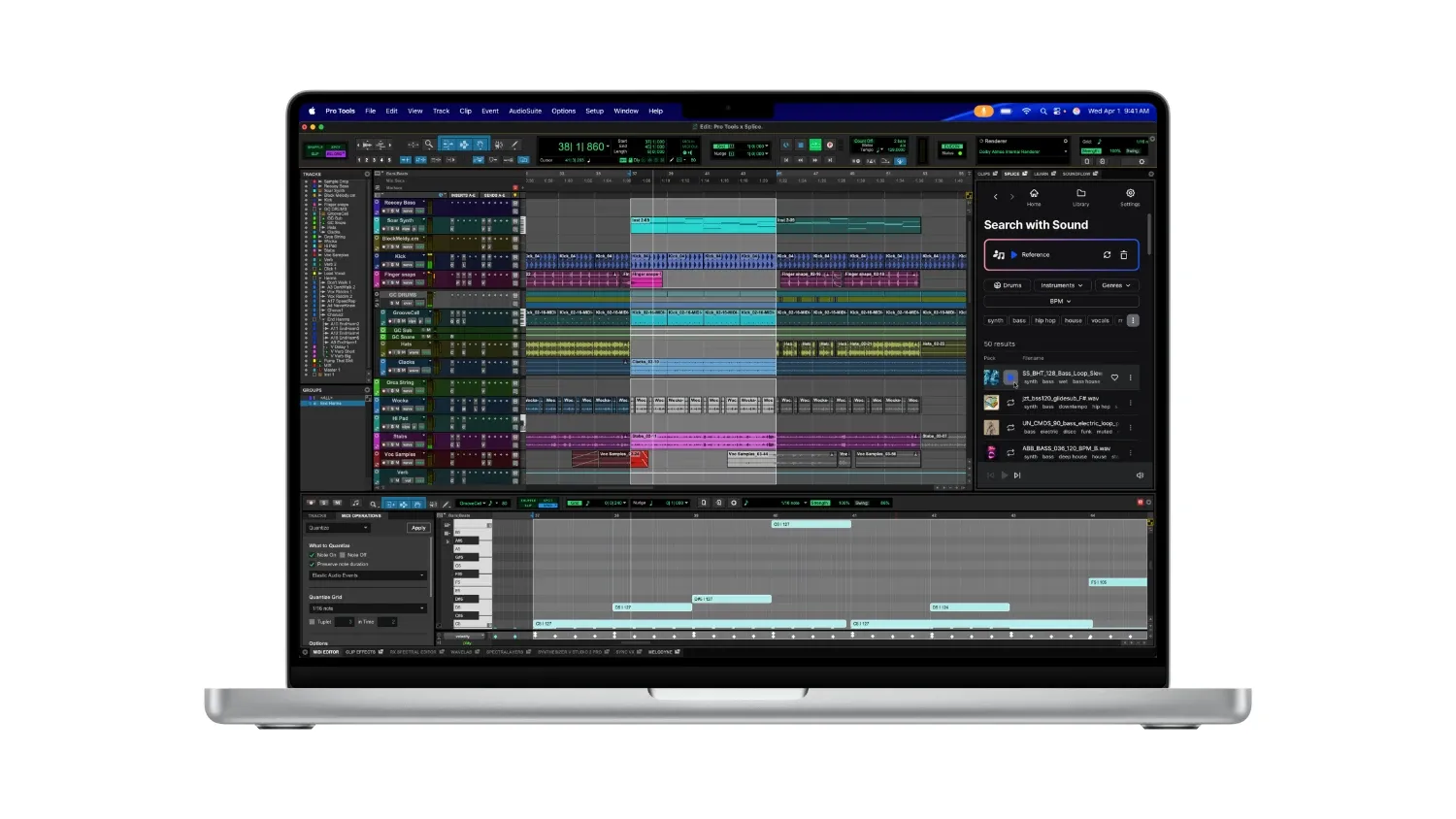
For users who need serious horsepower, the MacBook Pro gets a substantial upgrade with the new M5 Pro and M5 Max chips. Apple has introduced what it's calling a "Fusion Architecture" for these chips: essentially combining two dies into a single system on a chip. This allows for significantly more CPU and GPU cores than the standard M5.
The M5 Pro delivers up to 4x faster AI performance than M4 Pro, while the M5 Max pushes things even further. Apple is particularly keen to highlight on-device AI capabilities here, with claims of dramatically faster LLM prompt processing and AI image generation. For developers, researchers, and creative professionals running heavy local workloads, these are meaningful improvements.
Unified memory bandwidth also sees a big jump: M5 Pro supports up to 307GB/s, while M5 Max hits 614GB/s. The latter can be configured with up to 128GB of unified memory. This is useful if you're working with large datasets, complex 3D scenes, or running multiple demanding applications simultaneously.
Storage improvements are also welcome. The M5 Pro model now starts at 1TB, and M5 Max at 2TB. SSD read/write speeds are up to 2x faster than the previous generation, with peak speeds of up to 14.5GB/s on the M5 Max.
Both chips support Thunderbolt 5, and the MacBook Pro also gains Wi-Fi 7 and Bluetooth 6 via the same N1 chip found in the Air. Battery life remains excellent at up to 24 hours.
Pricing for the MacBook Pro lineup:
- 14-inch MacBook Pro with M5 (1TB): from $2,699
- 14-inch MacBook Pro with M5 Pro: from $3,499
- 16-inch MacBook Pro with M5 Pro: from $4,299
- 14-inch MacBook Pro with M5 Max: from $5,799
- 16-inch MacBook Pro with M5 Max: from $6,299
Education pricing is available across all models. Available in space black and silver, with pre-orders from 5 March and availability from 11 March.
A new display family
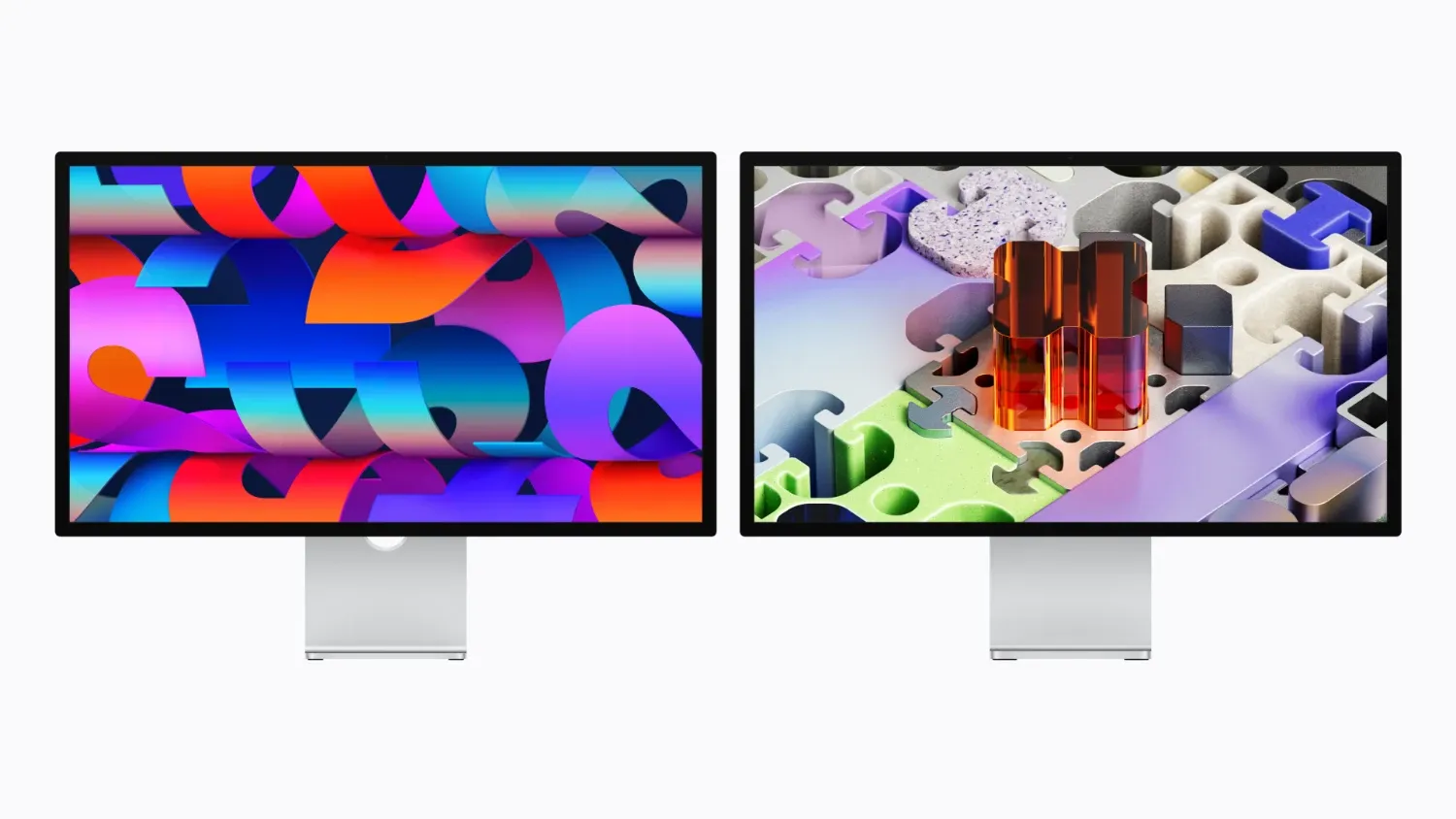
Alongside the new laptops, Apple has also announced updates to its Studio Display lineup.
The existing Studio Display gets a refresh with a new 12MP Center Stage camera (now with Desk View support), improved bass from its six-speaker system, and a welcome upgrade to Thunderbolt 5 connectivity. It starts at $2,599.
The bigger news is the all-new Studio Display XDR, which replaces the Pro Display XDR at $5,499.
This is a 27-inch 5K display with a mini-LED backlight featuring over 2,000 local dimming zones, 2,000 nits of peak HDR brightness, a 1,000,000:1 contrast ratio, and a 120Hz refresh rate with Adaptive Sync.
It also adds Adobe RGB colour gamut support alongside P3, making it a compelling option for print and design professionals who need accurate colour across multiple colour spaces.
Both displays include the same camera and audio system, Thunderbolt 5 connectivity, and are available in standard or nano-texture glass.
The Studio Display XDR comes with a tilt- and height-adjustable stand included, while the standard Studio Display ships with a tilt-only stand.
Pre-orders open 5 March, with availability from 11 March.