
BTTR is independent. We may earn a commission if you buy through our links. Why trust us?
3D printing has always been one of those technologies I've wanted to try out, but never really had the chance to experiment with. I think part of that was the fact that it seemed so overwhelming, particularly if you wanted to print with different materials or different colours.
But this new Bambu H2C 3D printer looks like it might be a great gateway for newcomers like myself to get started, though it doesn't really have an entry-level price tag.
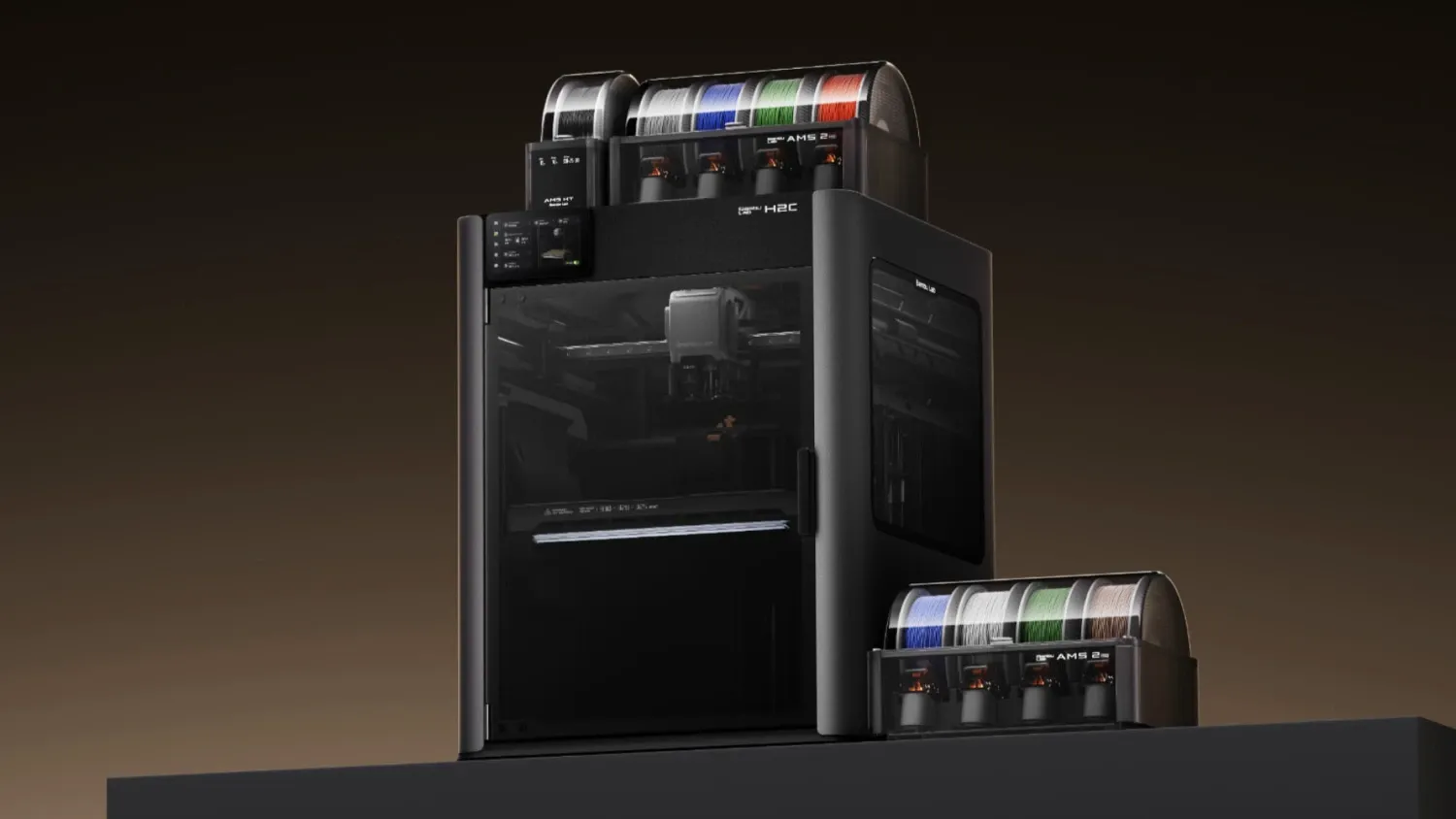
Bambu Lab has just launched the H2C in Australia. It took three years of development, but the H2C promises to bridge the gap between industrial-grade precision and consumer-friendly usability.
The standout feature here is the "Vortek Hotend Change System". This clever bit of engineering lets the printer swap between six different hotends automatically, enabling it to work with up to 24 different filaments in a single print job. If you're using seven or fewer filaments, you can eliminate the process of purge cleaning each filament before switching, which means way less wasted material.
It's all about the automation
With the H2C, the hotend changes happen contactlessly in seconds, and each hotend actually remembers which filament was last used. This means the printer can automatically suggest the best setup for your next job, reducing both errors and prep time.
The automation extends to features like touchless calibration, intelligent nozzle cleaning, automatic filament assignment, pre-print plate scanning, and real-time extrusion monitoring through a macro lens camera. These are the more fiddly elements of 3D printing that may dissuade newcomers to play around with the technology.
The 8-second inductive heating system means minimal downtime when switching materials, while the PMSM servo extruder delivers up to 10kg of extrusion force. That's important for maintaining stable performance when you're printing at high speeds.
Bambu Lab has clearly thought about long-term durability here. Rather than using mechanical connectors that can degrade over time, the H2C uses high-frequency contactless communication for temperature control and data transfer. Tool changes achieve micrometre-level accuracy, which is crucial for complex, long-running builds.
Movement accuracy sits below 50 micrometres, and the fully flame-retardant chamber makes it safer for working with high-temperature engineering materials. The enclosed design with adaptive airflow and integrated filtration also means cleaner air quality.
"From multi-colour printing to engineering-grade materials, the H2C is designed to deliver reliability and creative freedom in equal measure," said Xuming Wu, Sales Manager for ANZ at Bambu Lab. "For Australian makers, educators, designers and engineers, this unlocks an entirely new level of fast, clean and precise multi-material printing that simply works."
Availability and pricing
The Bambu Lab H2C is available now in Australia through Bambu Lab's web store and authorised resellers, with pricing starting at $3,699.
That's definitely a serious investment, but if you're looking at prototyping, design work, or even advanced cosplay projects, the H2C offers capabilities that were previously only available in much more expensive industrial machines.
For those after something more budget-friendly, Bambu Lab's A/P Series starts at just $329 and can be found in select Officeworks, Harvey Norman, and JB Hi-Fi stores.
That might be the better entry point for curious beginners like myself before taking the plunge on something like the H2C.