
BTTR is independent. We may earn a commission if you buy through our links. Why trust us?
DJI has gone hard on its first robot vacuum, and it shows. The ROMO P's drone-derived obstacle avoidance is one of the best we've tested, the hot-water self-cleaning base is impressively thorough, and the transparent design is a striking flex. At $2,299 though, it's a steep ask, especially when the DJI Home app still lacks Alexa and Google Home support, and the 98mm robot height means it won't slip under lower-profile furniture that cheaper rivals handle with ease.
- Best-in-class obstacle avoidance detects objects as thin as 2mm — cables and playing cards included
- Hot-water self-cleaning base keeps mop pads clean, not just rinsed
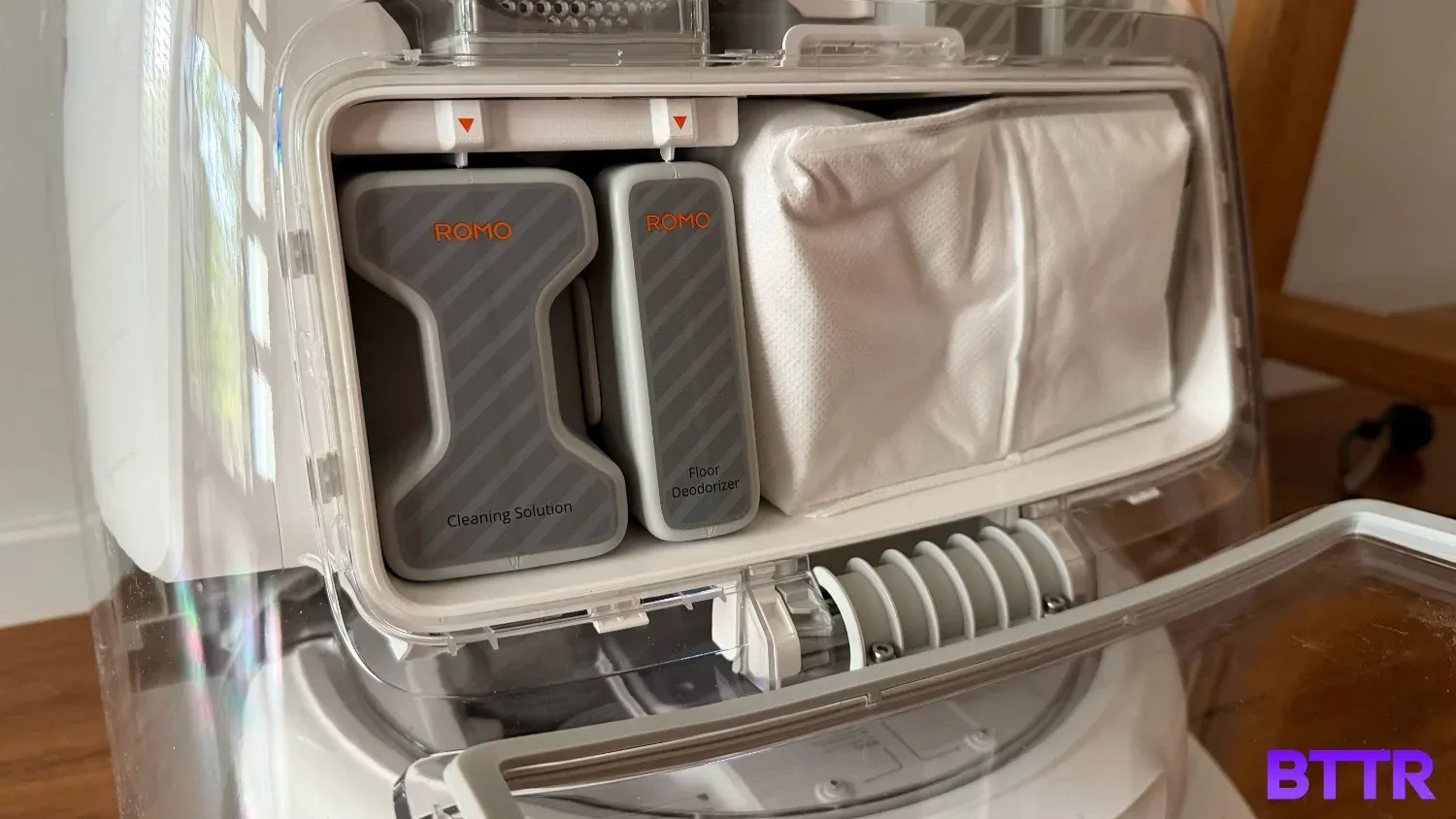
- Floor deodoriser compartment is a ROMO P exclusive and a nice touch for pet owners
- 200-day maintenance-free operation with UV antibacterial dust bag is hard to argue with
- No Alexa or Google Home support — the DJI Home app is the only option for now
- At 98mm tall, it won't fit under furniture that many competitors handle without issue
- $2,299 is a premium price in a market where Roborock and Ecovacs offer fierce competition
DJI is definitely not a brand you think of when it comes to vacuum cleaners. The company built its empire on drones, which in turn developed into action cameras and gimbals.
The connection to robotic vacuums is a bit more tenuous, but it is there. The ROMO P takes advantage of DJI’s advanced sensors and smart algorithms, which give it the ability to intelligently mop and clean your home.
The same tech that lets you fly a drone without it crashing into a wall here lets you clean right to the edge of your floor.
But even though there are definite technology overlaps, a robot vacuum is a risky bet for the drone company. There are plenty of dedicated robot vacuum brands that have been developing their own models for longer, which gives them a definite advantage.
Does DJI compete? Absolutely, though as with any company’s first product in a new category, I’m tempted to suggest waiting for the sequel before investing in a ROMO robot vacuum.
What makes the DJI ROMO P stand out?
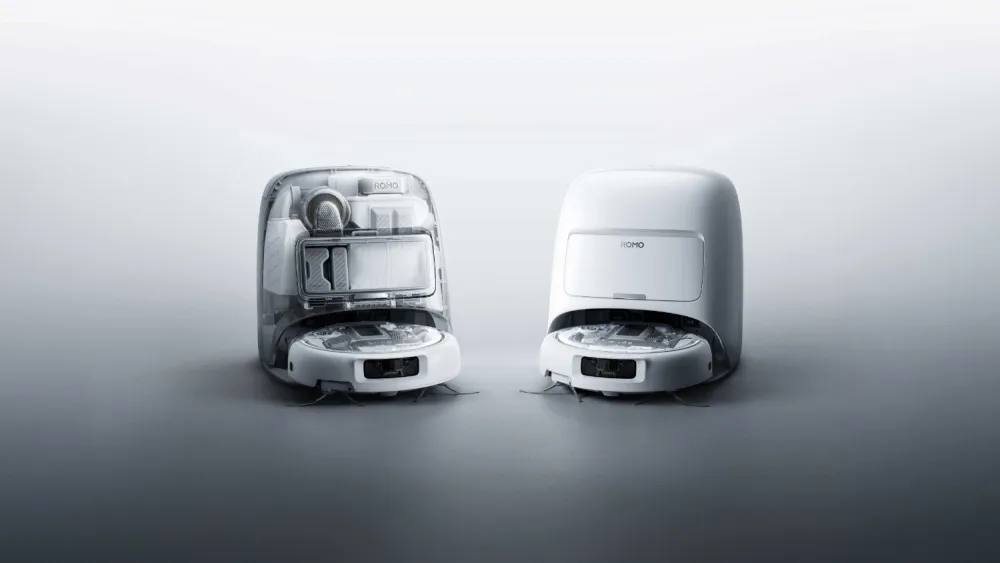
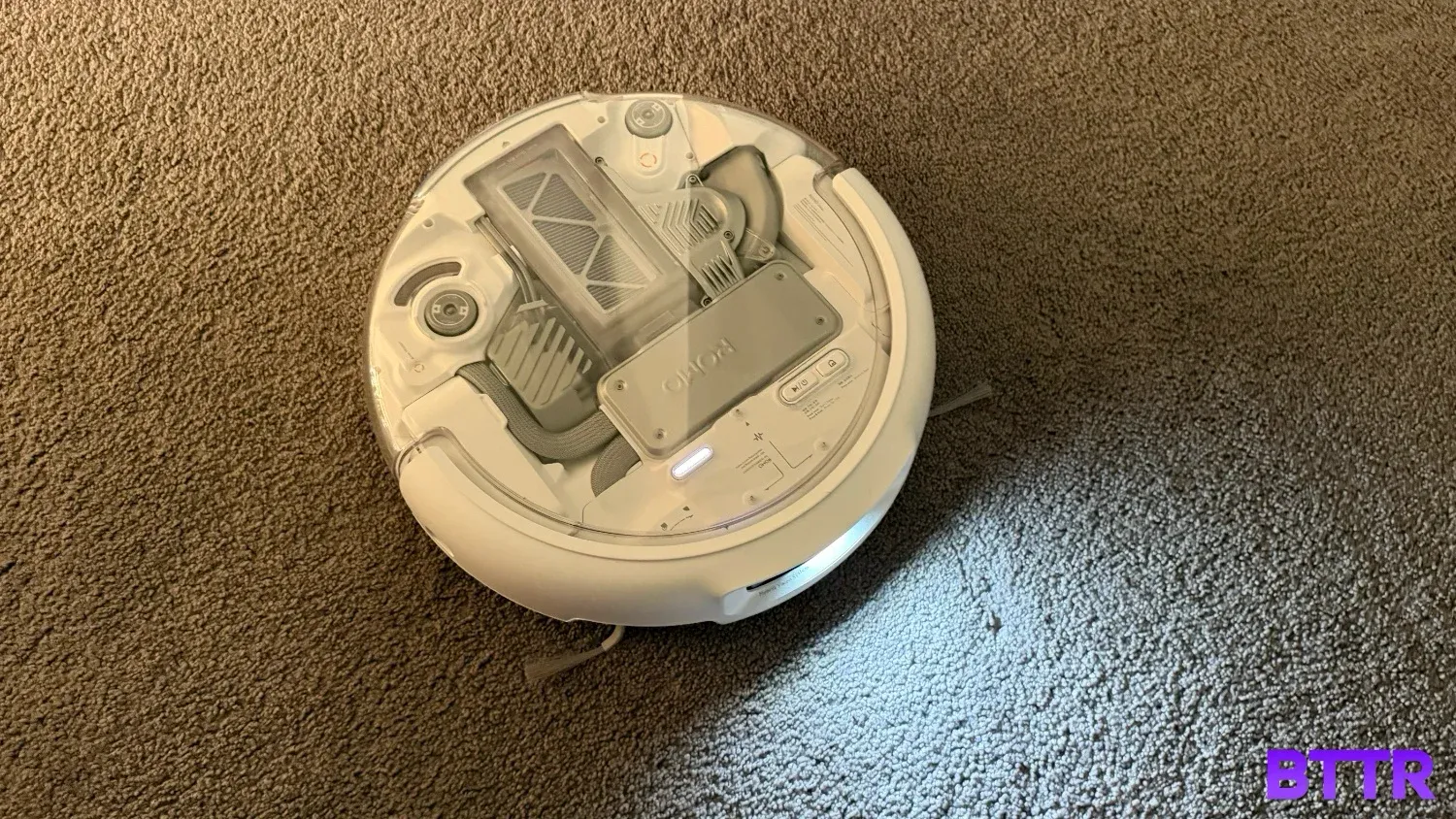
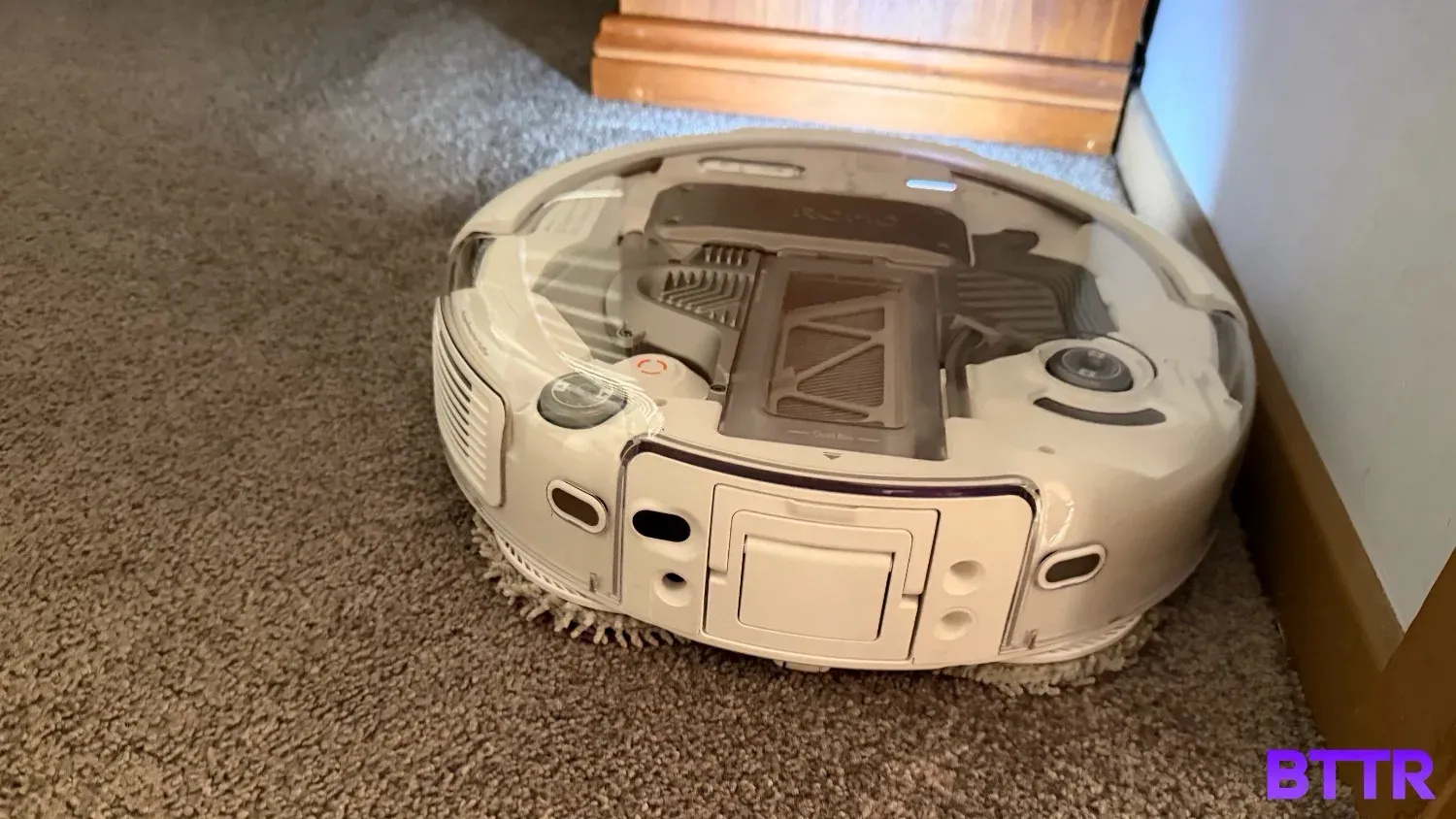
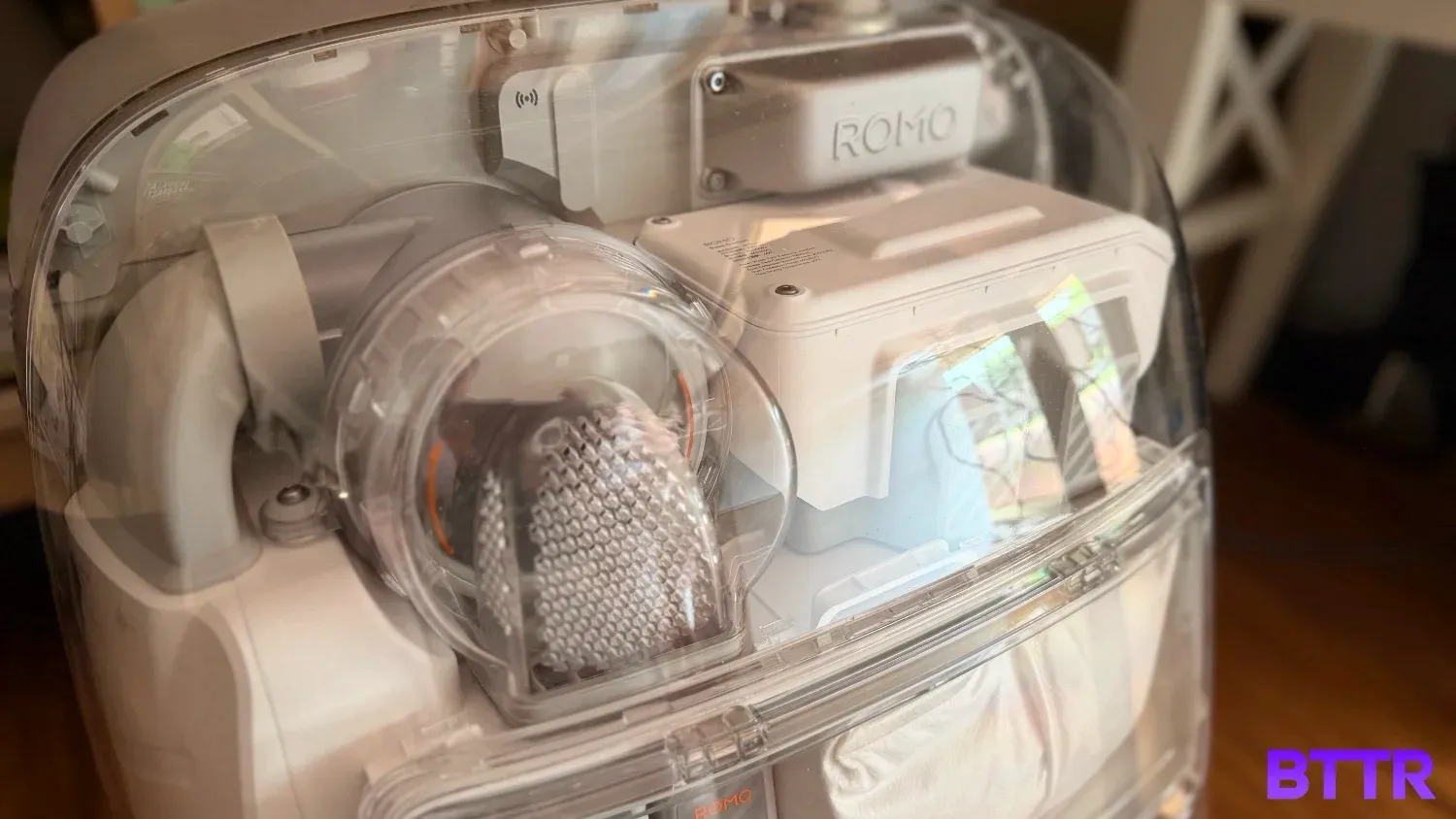
DJI knew that it would have to do something to stand out when it launched its first robot vacuum in an already crowded market. And so the DJI ROMO P has a transparent design.
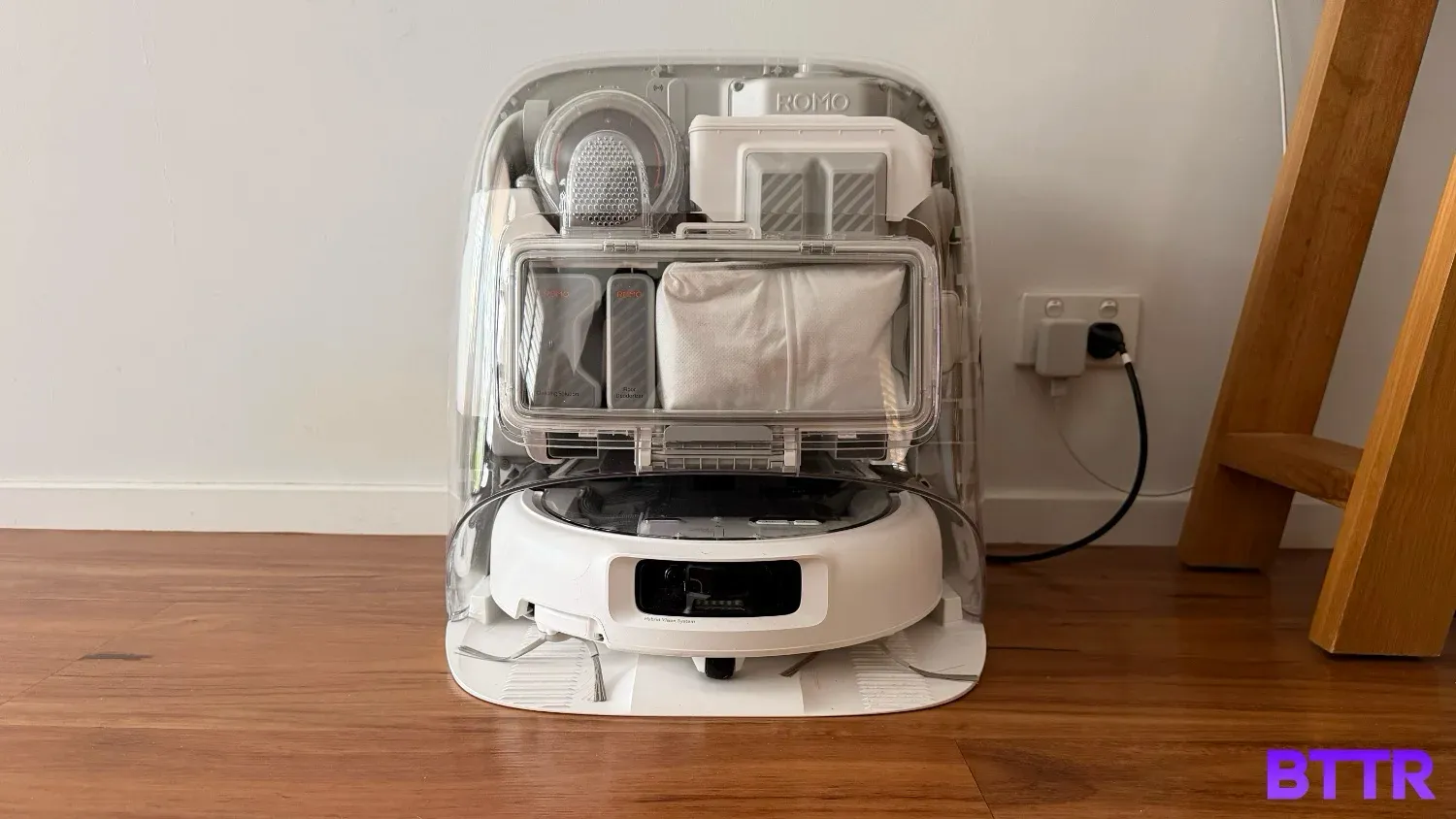
It’s not just the vacuum itself that boasts a clear casing so you can see the internal bits. The entire dock also has the same invisible skin aesthetic. It reminds me of Nothing’s phones – a unique design proposition that is designed to grab your attention so you will take a closer look at the product itself.
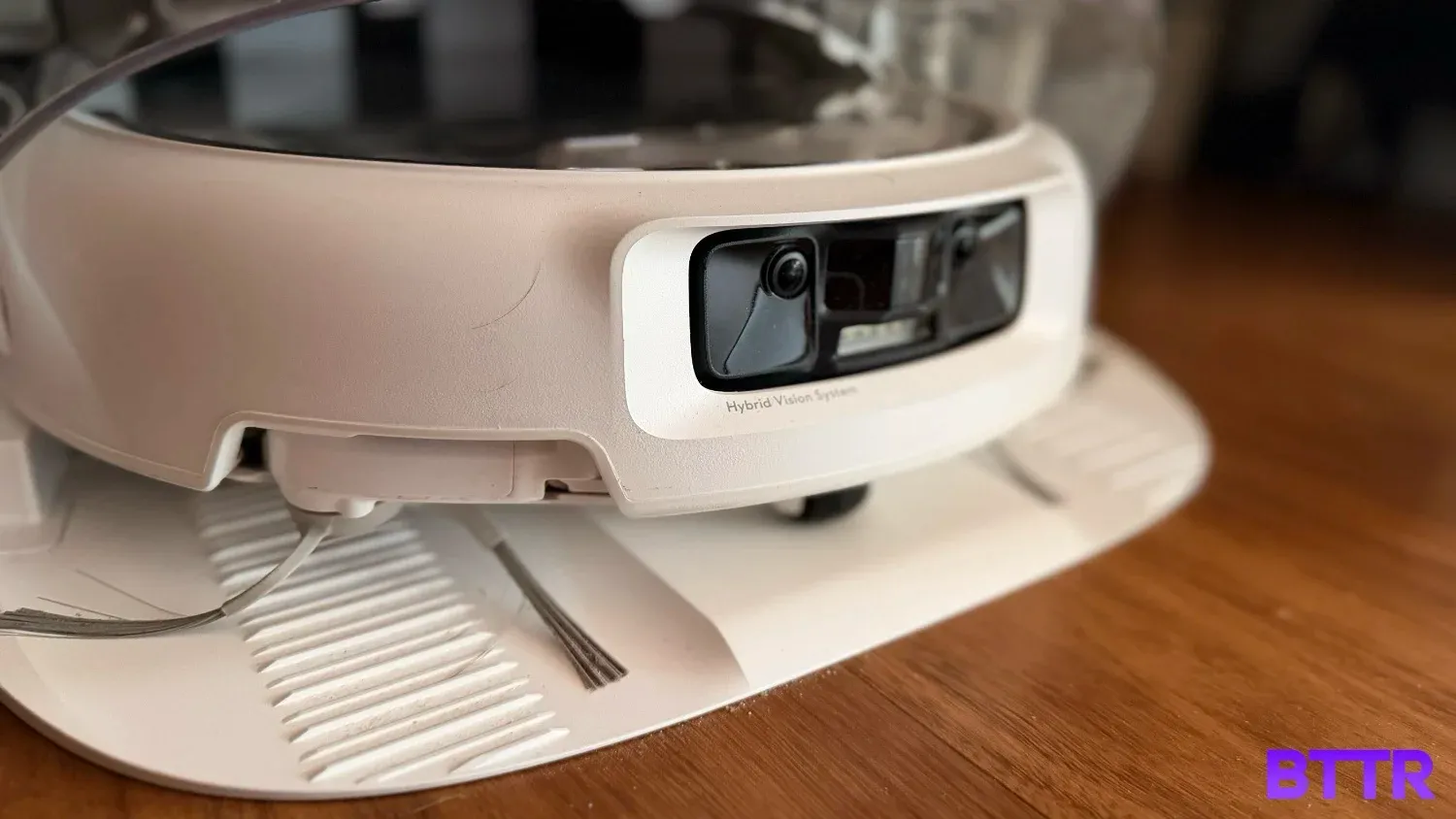
There’s some good stuff under the hood here, by the way. The ROMO P has 25,000 Pa of suction power, with binocular fisheye + dual solid-state LiDARs to detect obstacles around the home.
It has dual robotic arms and an extendable side brush to help clean in corners and to the edge of your floors.
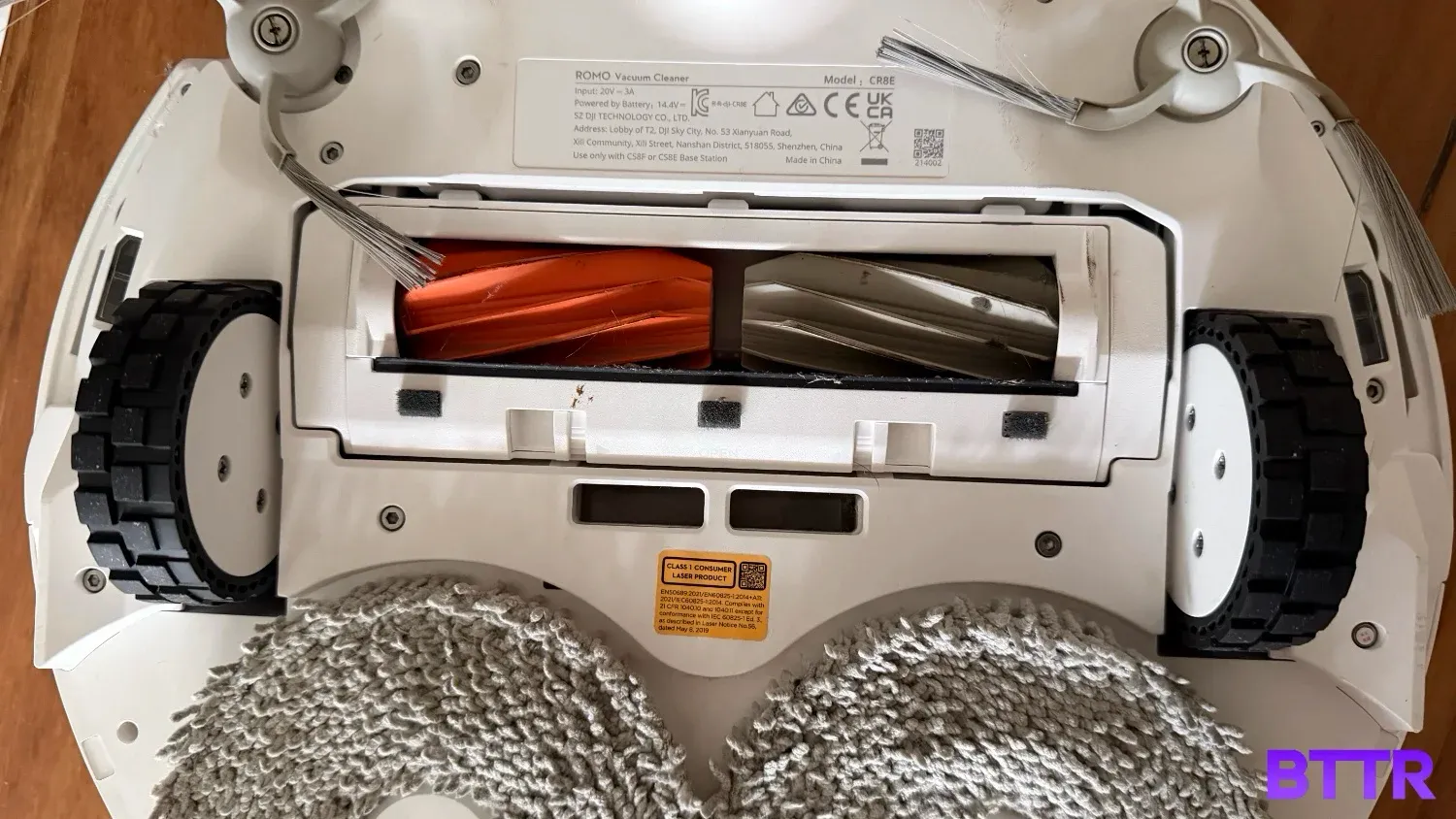
And interestingly, the roller brushes underneath the vacuum don’t quite meet in the middle, allowing larger chunks of dirt and debris to get sucked up without getting caught. It also helps minimise hair tangles, inverting the way rollers like the Dyson PencilVac works.
The base is pretty solid, too. It offers a three-stage sound suppression system to help minimise the volume of the dock while it empties and cleans the different components.
The design of the washboard at the bottom uses four high-pressure water jets and a large diameter waste outlet to thoroughly clean the circular mop pads, washing with hot water and drying with hot air and a UV sterilisation system.
DJI claims you’ll get up to 200 days of maintenance free cleaning. That doesn’t include emptying the dirty water tank, though, which you should do after every clean if you want to avoid gagging at the smell when you open it up. That’s not a DJI issue, though.
DJI ROMO P specs
| Category | Spec | Value |
|---|---|---|
| Robot | Model | CR8E |
| Robot | Dimensions (width×depth×height) | 351×351×98 mm |
| Robot | Weight | 4.4 kg (9.7 lbs) |
| Robot | Appearance | Transparent |
| Robot | Suction Power | 25000 Pa |
| Robot | Dustbin Capacity | 260 ml |
| Robot | Battery | Capacity: 5,000 mAh / Energy: 72 Wh |
| Robot | Rated Voltage | 14.4 V |
| Robot | Rated Input | 20 V |
| Robot | Runtime | 3 hours |
| Robot | Charging Power | 55 W |
| Robot | Wi-Fi Transmitter Power (EIRP) | 2.4000 GHz to 2.4835 GHz: < 20 dBm (CE) / 5.150 GHz to 5.350 GHz: < 23 dBm (CE) / 5.470 GHz to 5.725 GHz: < 23 dBm (CE) / 5.725 GHz to 5.835 GHz: < 14 dBm (CE) |
| Robot | Wi-Fi Protocol | 802.11b/g/n, 802.11a/n/ac |
| Robot | Bluetooth Protocol | Bluetooth 5.0 |
| Robot | Bluetooth Transmitter Power (EIRP) | 2.4000–2.4835 GHz: <10 dBm |
| Robot | Charging Time | 2.5 hours |
| Base Station | Model | CS8E |
| Base Station | Dimensions (width×depth×height) | 453×425×440 mm |
| Base Station | Weight | 10 kg (22.05 lbs) |
| Base Station | Appearance | Transparent |
| Base Station | Waste Water Tank Deodorization Module | Standard |
| Base Station | Antibacterial Cleaning Solution | Supported |
| Base Station | Dust Bag UV Antibacterial | Supported |
| Base Station | Tank Capacity | Clean Water Tank: 4 L / Waste Water Tank: 3.2 L |
| Base Station | Dust Bag Capacity | 2.4 L |
| Base Station | Rated Input | 220–240 V, 50–60 Hz |
| Base Station | Rated Output | 20 V ⎓ 3 A |
| Base Station | Rated Power | Recharge: 55 W / Drying and Recharge: 110 W / Dust Collection: 635 W / Self-Cleaning With Hot Water: 1100 W |
| Base Station | Bluetooth Protocol | Bluetooth 5.1 |
| Base Station | Bluetooth Transmitter Power (EIRP) | 2.4000 GHz to 2.4835 GHz: < 10 dBm |
| General | Operating Temperature | 0° to 40° C (32° to 104° F) |
| General | Charging Temperature | 5° to 40° C (41° to 104° F) |
Design and build quality
I’ll be up front here – I don’t love the ROMO P’s design. There is definitely an element of intrigue at being able to see certain components of a robot vacuum, but this is also the type of appliance you want to have out of sight and out of mind.
From a marketing perspective, it’s great, but from a “having this appliance in my home” perspective, it feels like it’s not for me.
But that’s my subjective opinion. I know there’s certainly going to be a market for people who love the idea of seeing the transparent casing of the ROMO P in their home.
Fortunately, the design hasn’t led to any sacrifices in build quality. The base and the robot itself both feel solid and well-built. After several weeks of testing, I had no issues with the physical product.
I really like the way DJI has combined two shorter roller brushes to not-quite-meet in the middle. This allows for an anti-tangle design that keeps longer hair from wrapping around the rollers, as well as letting the robot pick up larger bits.
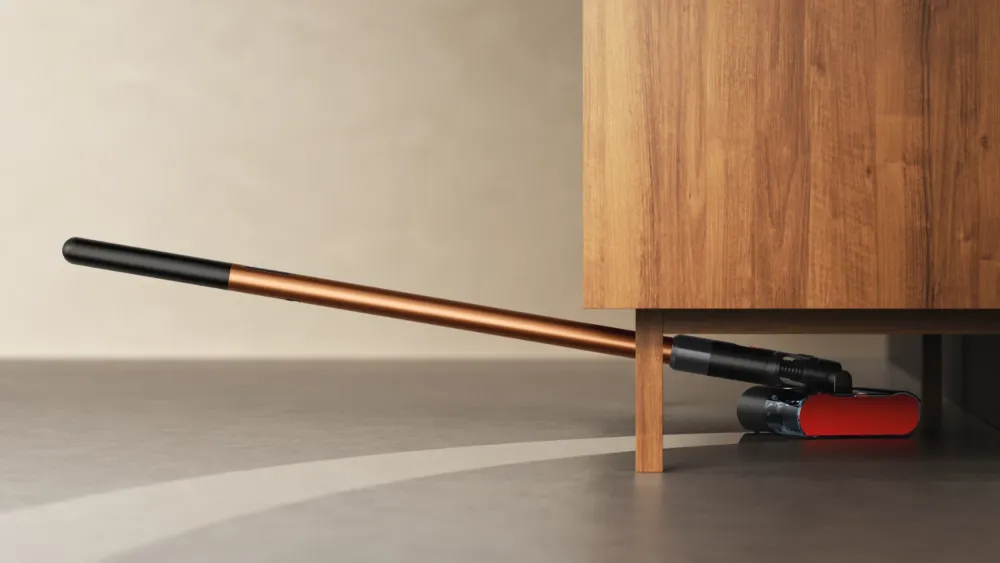
The robot is quite low to the ground, as there’s no protruding head on the vacuum to get caught on lower pieces of furniture.
Cleaning performance
One of the challenges I think DJI will face as it enters the market with the ROMO P is that it’s launching at a time that traditional manufacturers are leaning into roller or track mops.
Dyson, Ecovacs, Dreame, Narwal and Roborock all have models that use the newer roller or track mop. And I’ve got to say that once you’ve tried one of those mops, going back to the spinning mop pads is a recipe for disappointment.
The vacuum quality of the ROMO P is actually pretty good. While the 25,000 Pa of suction power isn’t at the same level as the best vacuum cleaners, it’s still remarkably strong, and does a fantastic job of sucking up everything from dirt and dust to larger chunks of food dropped on the floor.
Things like muesli and garlic peel were easily picked up by the ROMO P.
On the mopping front – look, it’s not terrible. As a general maintenance device that wets your floor and keeps it clean, it’s perfectly fine.
But as a device for cleaning up spills or stubborn messes, the ROMO’s rotating mop pads just don’t really compete with the more advanced mops on the market.
I fully expect DJI to address this, though. This is a first generation product for them, and I expect that the second generation will be up to speed on the mopping front for a flagship robot vacuum.
One other little anecdote I did find it strange that the vacuum doesn’t automatically empty its dustbin after a cleaning cycle, though. Instead, it empties before it starts the next cycle.
That means all the dust it collects just... sits there, in the vacuum, instead of the disposal bag. You can change the empty feature to be on a schedule or manually controlled, but surely it should just be emptied every time the vacuum returns to the dock?
Ease of use
Probably the most notable area the DJI model outperforms its competitors is in the DJI Home app.
Once the vacuum is connected and setup, the Home Screen offers a range of shortcuts to different customisable cleaning modes.
Sure, you can build a full cleaning routine with scheduled start and finish times, just like every other robot vacuum on the market. But what I loved was being able to create a shortcut to just vacuum the kids’ carpeted bedrooms. Or a deep clean cycle for the kitchen that vacuums and mops in turbo mode to give the kitchen a proper clean after cooking.
The ROMO did an exceptional job mapping my home, requiring very few manual edits. This is something I’ve found many vacuums struggle with, but DJI’s sensors did an impressive job of that, as well as determining the floor type and location.
Obstacle avoidance is also fantastic. In just over a month of testing, it never chewed up a cable or got stuck on an errant sock. It did get stuck between the wall and my toilet on multiple occasions, though – I guess it thinks it’s a bit thinner than it actually is.
Interestingly, there’s no smart home integration here. There is a built-in voice assistant, “Hey ROMO”, in the app, but it did not appear to support English as I tested the vacuum.
While I expect the Hey ROMO feature could arrive by the launch window, the lack of Matter or even custom Alexa or Google Home skills leaves the ROMO P at a disadvantage over other leading devices.
Power and battery
With a 5,000 mAh battery, the ROMO P has enough juice to clean your whole home in a single attempt, depending on how you approach things. I found that using the vacuum then mop option for my three bedroom home means it needed a couple of attempts.
But just a straight vacuum or a combined vacuum and mop cycle did the job without a worry.
On the upside, the robot supports 55W fast charging from the dock, so it’s ready to get back out there fully charged in about 2.5 hours.
The 25,000 Pa of suction is a headline feature, and something you’ll only get on Turbo mode, but I did find the suction of the ROMO to be solid on the default settings. It picks up most debris without an issue.
Verdict
The DJI ROMO P is an impressive first outing in the robot vacuum space for a company better known for flying cameras. Its solid suction, easy to use app and self-cleaning dock make it a solid alternative in a crowded market.
The design will not be for everyone, though. Its industrial chic stands out, and that may not be what you want in a device designed to clean your home.
The decision to stick with the oscillating mop pads helps keep the price down, but also leaves this model, DJI’s first flagship, struggling to compete on mopping performance with devices like the Ecovacs Deebot X8 Pro Omni, Narwal Flow or Dreame Aqua10 Pro Ultra Track S.
Like I say with almost any first-gen product – it may be worth waiting for the second generation so that DJI can work out the kinks. But even if you don’t, it’s clear that the ROMO P is DJI’s announcement it’s coming for the lucrative robot vacuum market.
Buy the DJI ROMO if you:
- Want some of the best obstacle avoidance on the market and a hands-off cleaning experience — the self-cleaning dock and 200-day maintenance window is hard to beat
- Are already in the DJI ecosystem and want a vacuum that plays nicely with the DJI Home app's customisable cleaning modes
- Love a design statement – if the Nothing Phone aesthetic appeals to you, the transparent casing will look right at home
Skip the DJI ROMO if you:
- Prioritise mopping performance, as roller and track mop systems from Narwal, Dreame, and Roborock do a noticeably better job on stubborn messes
- Have a lot of low-profile furniture because at 98 mm tall, the ROMO P will miss spots that slimmer competitors clean without issue
- Are deep in the Google or Amazon smart home ecosystem, as this lacks Alexa or Google Home support
Latest vacuum deals
Frequently Asked Questions
Does the DJI ROMO P work with Alexa or Google Home?
Not currently. The ROMO P uses the DJI Home app for all scheduling and control, and does not support Alexa, Google Home, or Matter at launch. There is a built-in "Hey ROMO" voice assistant in the app, though English language support was not functional at the time of our testing.
How often do you need to empty and refill the DJI ROMO P's tanks?
The base station's 2.4L dust bag can go up to 200 days between changes under normal use. The clean water tank holds 4L, which should last several cleans depending on floor size. The 3.2L dirty water tank, however, should be emptied after every clean, as leaving wastewater sitting in the tank quickly becomes unpleasant.
Is the DJI ROMO P good for pet hair?
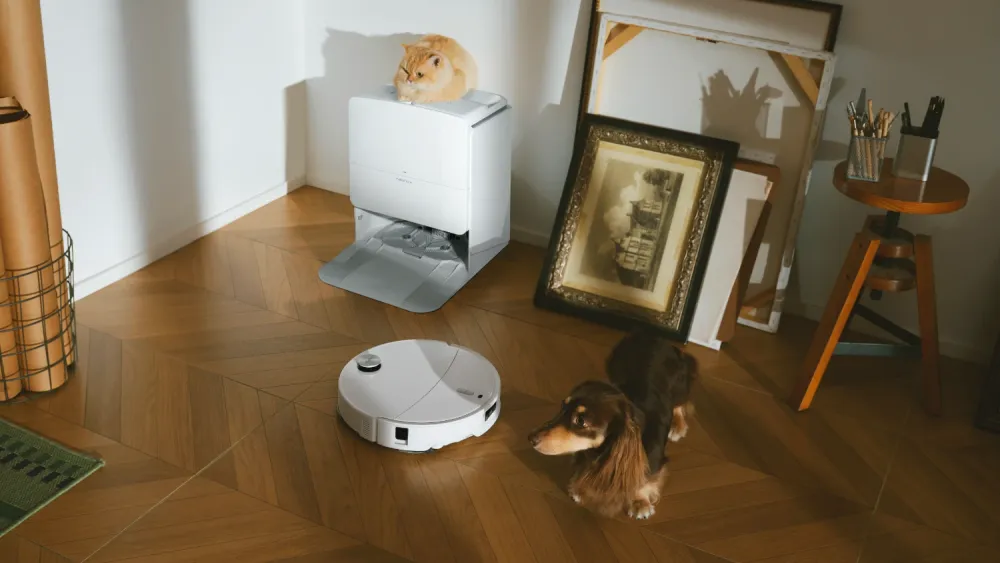
Yes, with an exception. The dual roller brush design specifically avoids the rollers meeting in the middle, which significantly reduces hair tangling — a common issue on other robot vacuums. The floor deodoriser compartment, exclusive to the ROMO P, is a bonus for pet owners dealing with odours.
How does the DJI ROMO P compare to the ROMO A and ROMO S?
All three models have the same core cleaning hardware, sensors, and obstacle avoidance system. The ROMO P ($1,899) and ROMO S ($1,599) are more conventional in appearance and drop some of those premium base station features.
Does the DJI ROMO P mop and vacuum at the same time?
Yes. The ROMO P can vacuum and mop simultaneously in a single pass, or you can run them as separate cycles. It always sweeps before mopping to avoid dragging debris across the floor with the mop pads. Note that the ROMO uses oscillating circular mop pads rather than the roller or track mop systems found on some rivals, which limits its effectiveness on stubborn stains and dried spills.