

BTTR is independent. We may earn a commission if you buy through our links. Why trust us?
If you've never experienced the satisfying clunk when an iPhone snaps perfectly onto a MagSafe wireless charger, you've been missing out.
By using magnetic alignment, Apple was able to increase the reliability of wireless charging, so you didn't have to nudge your phone around on a charging pad hoping it would charge overnight.
While Apple had a headstart with magnetic wireless charging, Qi2 wireless charging finally brings the benefits of magnetic charging to everyone. Well, in theory anyway.
In reality, you can count the number of Android phones with proper Qi2 support on one hand, despite the standard being announced in early 2023.
HMD was the first to launch a Qi2 Android device, with the HMD Skyline, but it was only with the launch of the 2025 Google Pixel lineup that the standard actually arrived in a flagship device.
To help break down what you need to know about wireless charging, in this guide we'll break down Qi2 vs MagSafe, what Qi2 wireless charging actually is, and whether you should even care right now.
What is wireless charging?
Wireless charging in your phone uses a technology called electromagnetic induction.
Basically, there's a transmitter coil (TX) in your charger and a receiver coil (RX) in your phone. When you place your phone on the charging pad, electricity flows through the charger's coil, creating a magnetic field. That field induces an alternating current in your phone's coil, which then charges your battery.
It's the same principle that powers electric toothbrushes and induction cooktops – just applied to your phone.
The original Qi standard (pronounced "chee", meaning "vital energy" in Mandarin) launched way back in 2010. It was developed by the Wireless Power Consortium, a group of over 300 companies including Apple, Samsung, and Google.
For over a decade, Qi charging was... fine. It added convenience when you didn't have a cable handy, but it could also be really frustrating.
If your phone wasn't positioned just right on the pad, it would charge slowly or not at all. As often as not, you would wake to find our phone sitting at 12% battery after a night on a Qi charger because you hadn't lined up the coils enough.
The charging speeds for the original Qi standard weren't great, either. The original Qi specification maxed out at 5W, though it eventually bumped up to 7.5W for some devices and 15W for specific manufacturers.
But there was another problem: energy efficiency. When the coils weren't perfectly aligned, standard Qi charging could waste up to 40% of the power as heat rather than actually charging your battery. This inefficiency not only slowed charging but also generated unnecessary heat that could potentially affect your phone's battery health over time.

What is MagSafe wireless charging?
In 2020, Apple launched MagSafe with the iPhone 12. This wasn't just wireless charging, though: it was magnetic wireless charging.
A ring of precisely placed magnets around the iPhone's charging coil meant the phone would snap into perfect alignment every single time.
The benefits are obvious. Instead of wireless chargers that required careful placement, you could simply place your phone near the charger and the magnets would line it up so it just worked.
The magnets also opened up other opportunities. Third-party manufacturers began creating an entire ecosystem of magnetic accessories: wallets that snapped to your phone's back, car mounts that held your phone securely while charging, and battery packs that attached magnetically.
And because of the precise connection, MagSafe could deliver up to 15W of charging power to compatible iPhones, which was significantly faster than the 7.5W phones could achieve with standard Qi wireless chargers.
But MagSafe was Apple's proprietary technology. Android users were left out in the cold, watching as iPhone owners enjoyed the convenience of magnetic charging and a growing MagSafe accessory ecosystem.
Qi2: Making magnetic charging universal
In early 2023, the Wireless Power Consortium announced the Qi2 standard. The most exciting part of the announcement was that Apple contributed to the spec, essentially making MagSafe an open standard.
The key feature in Qi2 is the Magnetic Power Profile. It's got the same ring of magnets around the charging coil that ensures perfect alignment every time, just like MagSafe. This means less energy waste, less heat, and consistent 15W charging.
This magnetic alignment brings several important benefits beyond just convenience. By ensuring the transmitter and receiver coils are perfectly aligned, Qi2 reduces wasted energy by up to 40% compared to standard Qi charging.
This means less heat generation, which is better for your phone's long-term battery health. Heat is one of the biggest enemies of lithium-ion batteries, so keeping charging temperatures down helps maintain battery capacity over time.
Qi2 is also backwards compatible. Your Qi2 charger will work with your old Qi phone (just without the magnetic alignment), and your old Qi chargers will charge Qi2 phones (without the magnets, obviously).
Qi2 25W: Faster charging arrives
In July 2025, the WPC released Qi2 25W (also called Qi v2.2 or Qi v2.2.1). As the name suggests, it supports up to 25W wireless charging, a boost of nearly 70% more power than the original 15W standard.
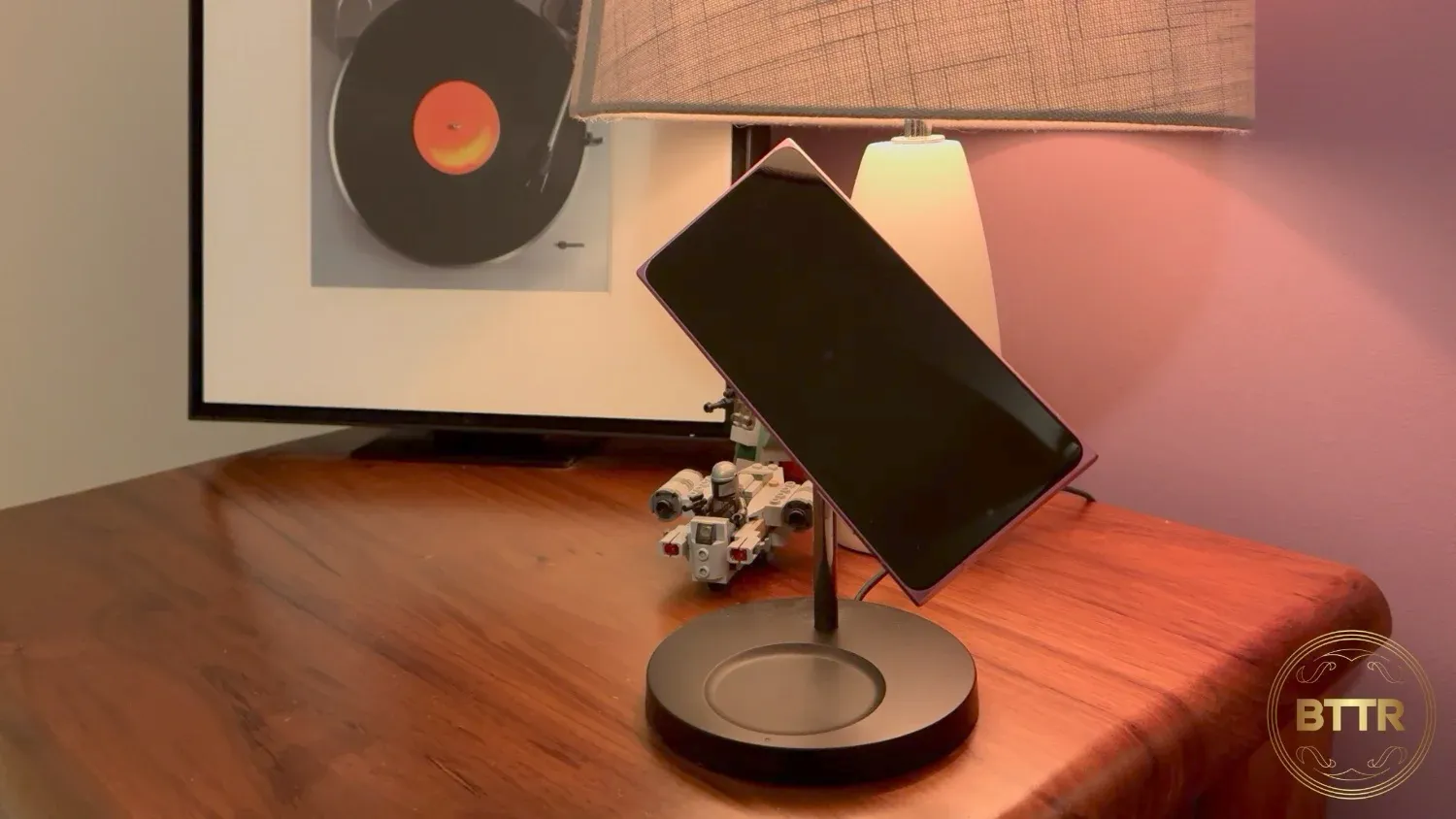
With a Qi2 charger like the Belkin UltraCharge Pro 3-in-1, you can charge from 0% to 50% in about 30 minutes.
The biggest advantage of Qi2 25W isn't the speed, though. It's the fact that the standard is certified across platforms, meaning it will work with both iPhones and compatible Android devices.
The Android adoption problem
The Qi2 standard was announced in early 2023. It's now early 2026, and only two product lines actually have Qi2 with built-in magnets: the HMD Skyline and the Google Pixel 10 family.
That's it. Two.
And in our HMD Skyline review, we discovered that the magnets in the Skyline weren't even strong enough to secure a connection to a Magsafe charger.
More recently, Samsung's Galaxy S25 series took a frustrating approach when it launched in early 2025. They're labelled "Qi2 ready", but don't have magnets built into the phones themselves.
This means they support 15W wireless charging and are technically compatible with the Qi2 spec, but Qi2 accessories will just slide off because nothing is holding them in place.
You need to buy a separate magnetic case to actually use Qi2 accessories properly.
While adding magnets to a phone means redesigning the entire internal layout, it's still disappointing that more Android manufacturers haven't jumped aboard the technology.
Particularly given the fact that the open nature of the Qi2 25W standard effectively means that any compatible device would be able to take advantage of Apple's fairly robust MagSafe ecosystem of accessories.
What's Pixelsnap, then?
When Google announced the Pixel 10 series in August 2025, it introduced "Pixelsnap", its branding for Qi2 wireless charging and magnetic accessories.
Despite the different name, Pixelsnap is just Qi2. It's more a brand name for Google's magnetic products than a separate technical standard.
All Pixel 10 models (Pixel 10, Pixel 10 Pro, Pixel 10 Pro XL, and Pixel 10 Pro Fold) include Qi2 magnetic alignment built in. The Pixel 10 Pro XL goes further with support for the faster Qi2 25W standard.
Cross-compatibility
Because Qi2 is an open standard, Pixel 10 phones work with MagSafe accessories, and Qi2-certified products work with Pixel 10. But there's a catch: MagSafe chargers will only deliver faster charging speeds to iPhones.
When used with a Pixel 10, a MagSafe charger typically provides just 5W, whereas a Qi2-certified charger will deliver the full 15W (or 25W for the Pro XL).
Similarly, Pixelsnap accessories should work with any Qi2-compatible device, including iPhones with MagSafe.
The "Qi2 Ready" compromise
To address manufacturers' hesitation about adding magnets, the WPC introduced "Qi2 Ready" branding. This applies to devices that support Qi2 technology internally but need magnetic cases or accessories for the full Qi2 experience.
The Samsung Galaxy S25 series and OnePlus 13 fall into this category. They can charge at 15W wirelessly and are technically Qi2-compatible, but without built-in magnets, you need to add a magnetic case to use magnetic chargers, stands, and accessories.
But not all magnetic cases are created equal. If you buy a case made before Qi2, or one that wasn't designed for your specific phone model, the magnets might not align properly with your phone's charging coil.

Should you actually care about Qi2?
If you're buying a new phone in 2026, Qi2 support should absolutely be on your list. The convenience is undeniable.
Magnetically attaching your phone to a charger on your nightstand, desk, or in your car without fumbling for perfect alignment makes it effortless to keep your phone running through the day.
Plus, the growing ecosystem of magnetic accessories, from power banks and car mounts to wallet attachments, makes the whole standard much more versatile.
With Qi2's improved energy efficiency (up to 40% less waste than standard Qi), you're getting more environmentally friendly charging that's better for your phone's battery longevity.
But the transition has been painful, particularly for Android owners.
The costs can add up quickly, too. A Qi2 charger can cost between $30 and $100. If you want the full experience, you probably need to replace multiple chargers plus buy a magnetic case, which means you could easily drop an additional $200 on top of your phone purchase.
What's coming next?
The good news? Momentum is building. While Samsung's S25 series only offered "Qi2 Ready" support, reports suggest the S26 series launching in 2026 may include properly built-in magnets.
More Android manufacturers are expected to adopt Qi2 through 2026 and beyond. As the ecosystem grows, accessory makers will have more incentive to create Qi2 products, prices should drop, and the overall experience will improve.
But the roadmap for Qi2 extends beyond just phones. The WPC is already working on higher power standards – potentially up to 50W for wireless charging – which would make wireless charging speeds competitive with the fastest wired chargers.
We're also likely to see Qi2 expand to other device categories. AR and VR headsets, smartwatches, and even laptops could eventually support Qi2 charging. Some manufacturers are already exploring Qi2 for wireless earbuds cases.
Public infrastructure is another area where Qi2 could make a real difference. Airports, coffee shops, hotels, and cars are increasingly adding wireless charging pads. With Qi2's universal standard and magnetic alignment, you'll be able to confidently place your phone on any public charging pad knowing it'll charge at full speed.
There's also growing interest in reverse wireless charging, where your phone can wirelessly charge other devices. Some flagship Android phones and recent iPhones already support this feature, letting you charge your wireless earbuds or a friend's phone by placing it on the back of your device.
For now, though, Qi2 is a feature that's genuinely useful if you can stomach the transition costs and frustrations. It's the future of wireless charging... it just hasn't quite arrived for most Android users yet.