
BTTR is independent. We may earn a commission if you buy through our links. Why trust us?
Take a stroll into your kitchen and take a look at your cooktop. Whether it’s gas or electric, there’s a chance it looks remarkably similar to the cooktop your parents used while you were growing up.
Sure, there might be touch controls rather than twisty knobs. Or maybe you have an induction stove when you grew up with gas.
But overall, cooktop design has been remarkably similar for a long time.
That’s especially true for electric cooktops. Most electric and induction cooktops are a sheet of shiny glass, which collects fingerprints and scratch marks easily.
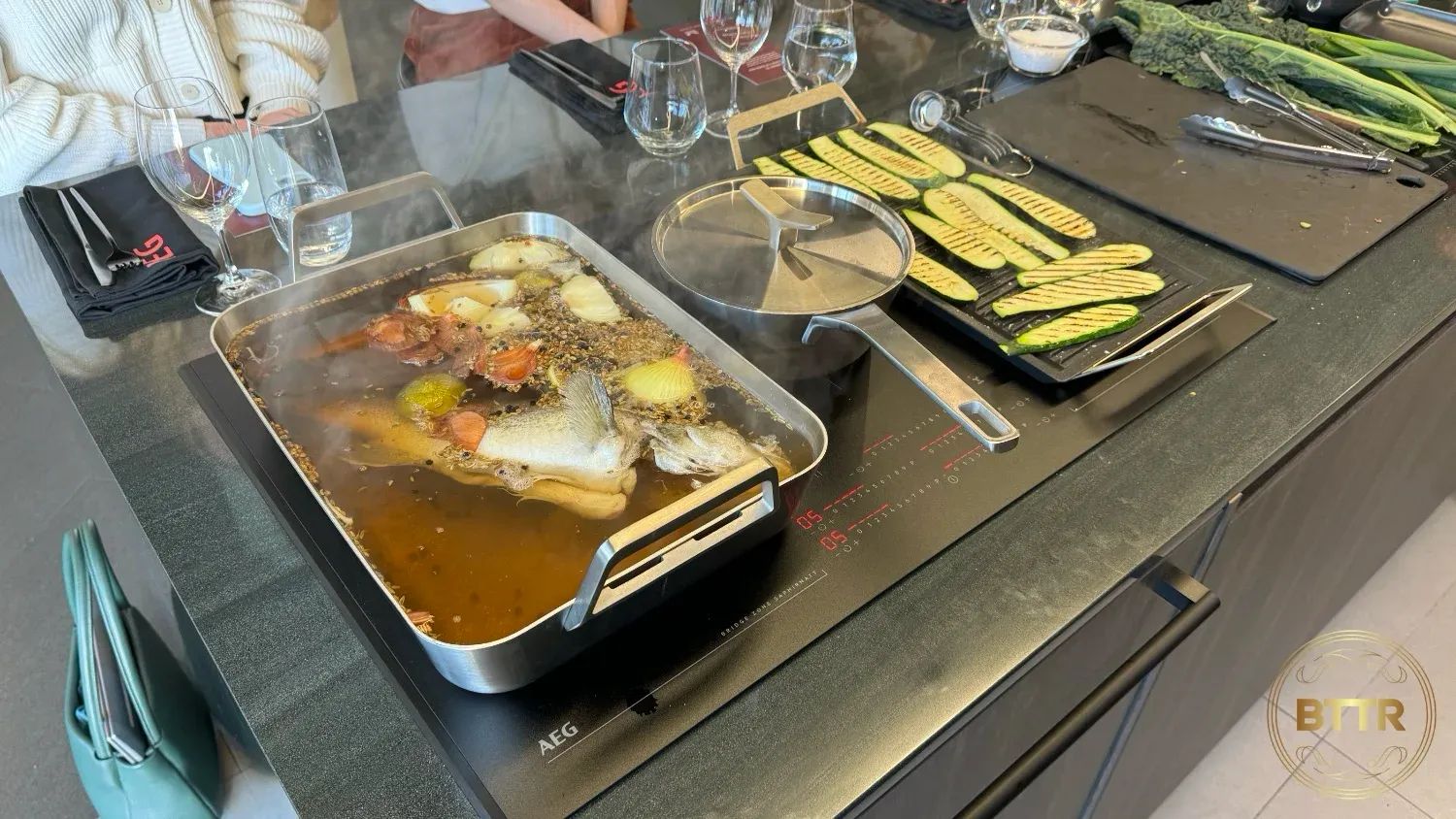
But this year, premium appliance brand AEG launched the SaphirMatt Induction Cooktop, which brings a unique matte finish to the category. It is such a novel offering that it was awarded the Best of the Best distinction in the Red Dot Awards for Product Design in 2024.
In an intimate setting with Scott King, Senior Design Leader at AEG, and Rodney Dunn from Australia’s Best Restaurant for 2024, The Agrarian Kitchen, I got to hear a bit about how the SaphirMatt came to be.
A decade in design
As a tech writer used to the annual release cycle of flagship smartphones and robot vacuum cleaners, the discovery that Senior Design Leader Scott King had been working on the SaphirMatt came as a bit of a shock.
King explained that he has been working with AEG’s parent company, the Electrolux Group for over 30 years, and over a decade ago went to work with the company’s German team to help design what would become the SapphirMatt.
There was a lot of change over that time. Kitchen design trends shifted away from stainless steel and into a more matte finish on appliances like ovens.
However, finding a way to create that same matte finish on a glass cooktop presented numerous challenges.
“I mean, it takes a lot to go away and have to remake the technology. Ceramic glass is a very complex chemical process to get the formula right.”
“We've been talking about this for more than 10 years,” King explains. “I mean, it takes a lot to go away and have to remake the technology. Ceramic glass is a very complex chemical process to get the formula right.”
The goal wasn’t just a matte finish. Because cooktops get banged around a lot, with pots and pans being “shuffled” back and forth, the product King and his team were creating needed to be robust enough to avoid scratches, as well as featuring best in class induction technology for fast, even cooking.

It also needed to be easy to clean, like traditional glass cooktops.
To get the perfect texture, AEG worked with a glass supplier in the Champagne region of France to get it just right. But it wasn’t a quick process.
“The glass alone is a very independent activity and a very complex thing to do that only a few manufacturers in the world can actually achieve.”
“At the moment, [the French glass manufacturers] are the only ones that can achieve this,” King explains.
“They've got a very good development process, and they worked really hard to get this to a point where they gave us the right balance of finish and scratch resistance.”
“But it's not a quick process of backwards and forwards… We just tell them it's too rough or too smooth, and they [go off to solve the problem] and get back a couple of years later with a better solution.”
A robust finish
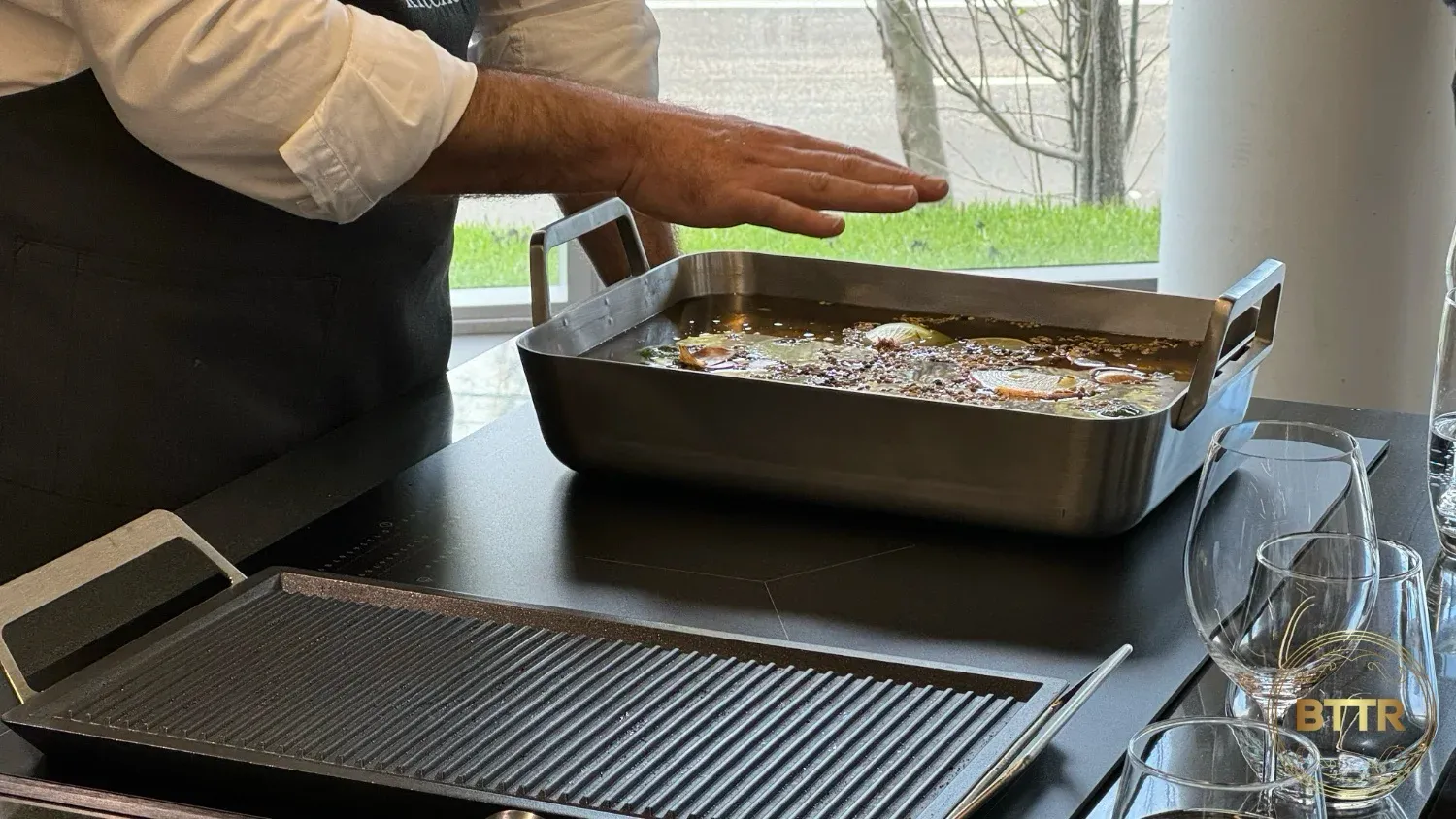
Looking at the SapphirMatt cooktop, it reminded me a lot of the display on the TCL NXTPAPER 40 smartphone. It is definitely glass, but it has a tactile layer that gives it a stunning matte finish.
Touching the cooktop highlighted that this was nothing like the TCL’s phone screen. It felt a lot more textured, for a start.
But it also felt a lot harder. That was a key priority for King and his team in finding the perfect finish for the cooktop.
Because most electric and induction cooktops are covered by a sheet of glass, which regularly has metal pots and pans scraping across the top, finding a hardened glass that could withstand the “shuffling” of pans by customers was imperative.
"Using it as a chopping board, you could still damage it. It's not impervious; it's not Superman."
“I think the part that the new finish does so well is that it eliminates those little scratches you get from the everyday shuffling,“ King tells us.
“If your partner is a shuffler, then you know how frustrating it could be to see those first scratches. [So] it's really about finding a solution and finding a balance for clean-ability and scratch resistance that we've worked really hard on,” he adds.
It’s important to note that just like the glass on your smartphone, this isn’t impervious. Despite its matte finish, it’s also not a chopping board.
“Using it as a chopping board, you could still damage it. It's not impervious; it's not Superman,” King tells us.
It's all about making it look new longer because it's another product that will look old over time.
“It's a product you want to look new, and it'll stay looking new because it doesn't change.”
Cooking quality
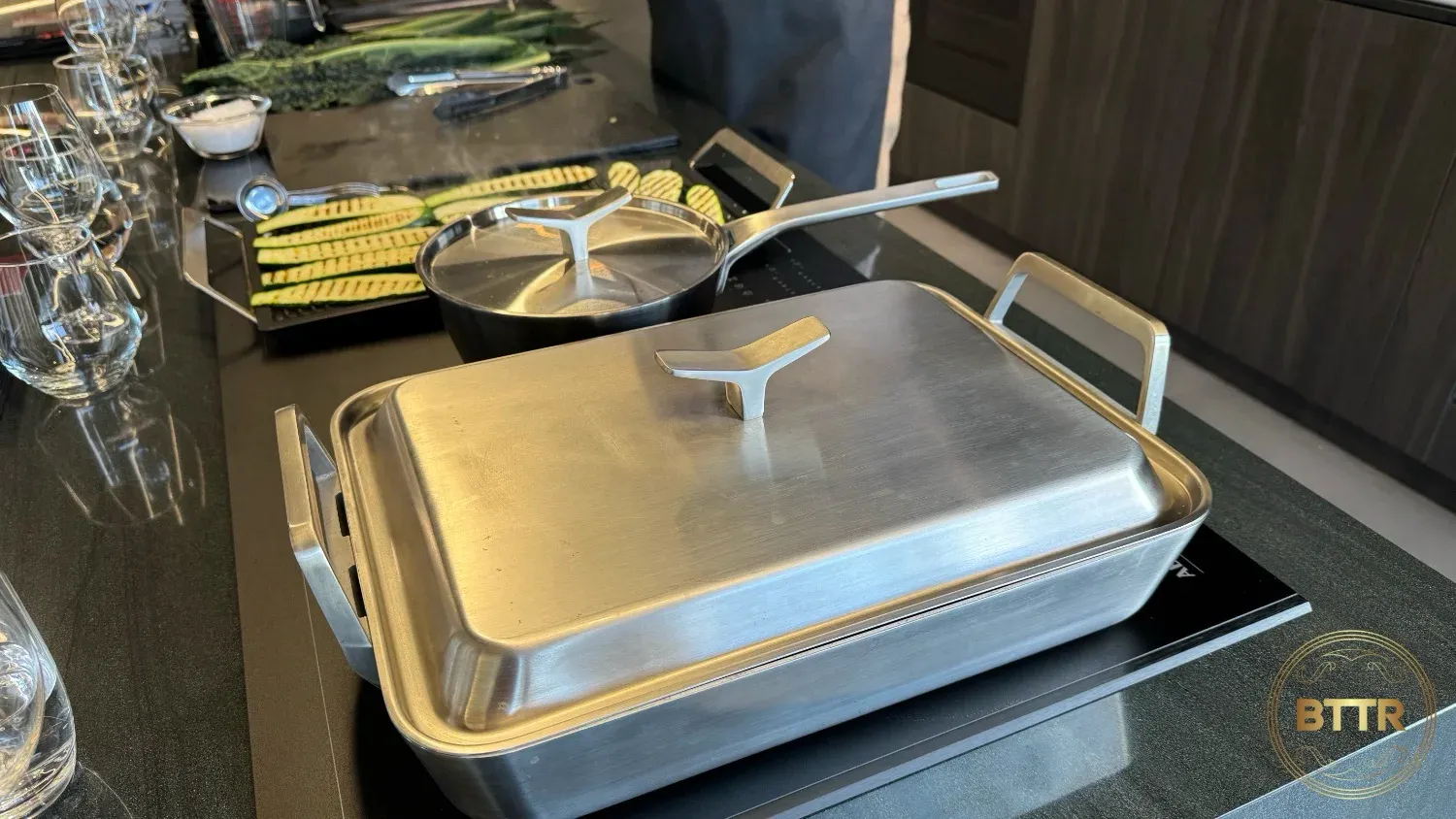
Short of paying for a whole kitchen renovation, I’m not going to be able to properly review the SapphirMatt.
But AEG gave me the next best thing by organising an intimate masterclass with Rodney Dunn from The Agrarian Kitchen.
Just days after Rodney and his restaurant was awarded the Gourmet Traveller award for the best restaurant in Australia, he was cooking up a meal for me and a few other media using the AEG SapphirMatt cooktop.
Obviously, the meal was delicious, but Rodney offered some key insights into how his commercial kitchen started using induction cooktops over gas.
“When we first opened the cooking school, I was like, oh, no, no, we want gas,” he said.
“And I really think that they were smart, and they said, ‘We'll give you an induction cooker in a trolley you can wheel around and use.’”
“And I just fell in love with it, as people do, and become very passionate about using it because it's about control. All cooking is about controlling heat, and these control heat perfectly,” Dunn explained.
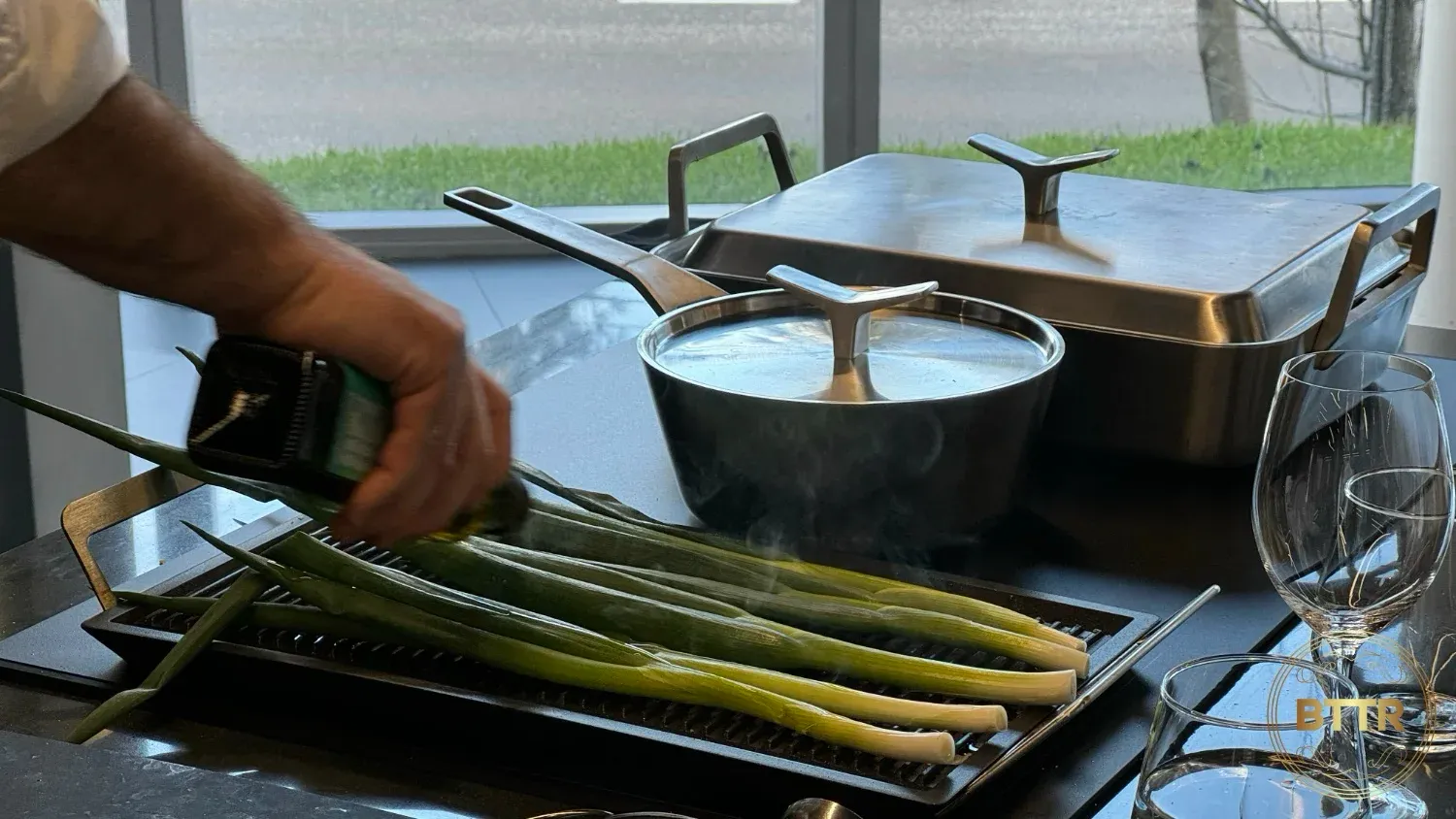
While he was cooking, the chef took time to highlight some features he particularly liked on the SapphirMatt, like the Bridging controls. This function allowed him to use a large induction grill stretched across two of the cooking zones, with the linked zones sharing temperature and timer controls.
He also pointed out the Heat memory function, which remembers the cooking setting for a zone for 120 seconds should you lift a pot from the zone to clean up a spill or need to whisk in some butter, for example.
The interface was also completely reworked for the cooktop over the ten years it was in development.
The UI is also new, so we've actually put individual timers in each of the zones, which is pretty uncommon in most induction.
One of the more notable additions is the inclusion of separate timers for each cooking zone. Usually on induction cooktops, you will have to use a single timer and scroll through the cooking zones.
King explained that the decision was made based on AEG’s consumer insight that people want more control over more zones rather than having to complex timer.
Pricing and availability
The AEG SapphirMatt cooktop is available now in an 80 cm version for an RRP of $3,899.
It’s available from a range of online and physical retailers including Harvey Norman, Winnings, RetraVision and Signature Appliances.
It’s a truly unique product, bringing design innovation to a category that hasn’t seen a lot of change in a long time.
As King explains, “The reason we got the Best of Best [Award] at Red Dot is because this is just an industry game changer. This is the first time anything's changed in this category in a very long time. And everyone recognises it really changes what we can do with this cooked up in the kitchen.”
Latest oven & cooktop deals