
BTTR is independent. We may earn a commission if you buy through our links. Why trust us?
This year's iPhone flagship clearly differentiates itself on its camera capabilities. If you need a premium smartphone camera, this is the best iPhone for you, otherwise the iPhone 17 is likely to be sufficient.
- Exceptional camera system, front and back
- Impressive power makes it great for gaming
- Gorgeous screen is clear to see in full sun
- Not a significant difference in CPU power over the iPhone 17
- Quite heavy
- It's pricey
Since the iPhone 12, Apple’s annual iPhone release has been fairly standard. You get two sizes of the standard model, and two sizes for a “Pro” model.
But in 2025, Apple changed that a bit with the introduction of the iPhone Air. While the iPhone 17 Pro and Pro Max models followed the formula, the iPhone Air effectively replaced the iPhone 17 Plus with its thin design.
In this new strategy of three separate iPhone families (four, if you count the more budget-friendly “e” model that launched at the start of 2025), Apple really needed to differentiate what each lineup offered a customer.
And for the iPhone 17 Pro (and the Pro Max), the answer lies in the cameras.
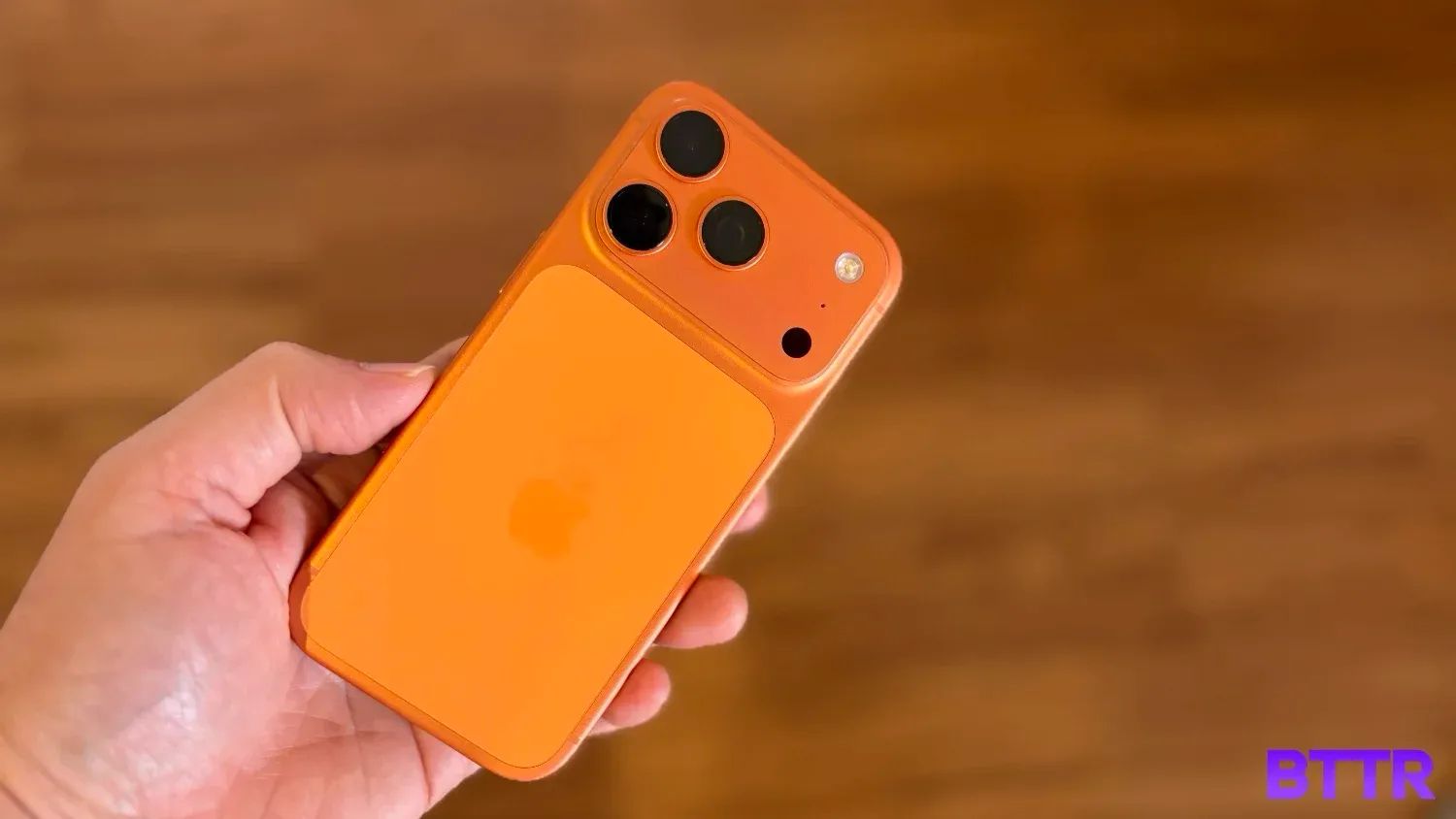
@bttr_reviews I wasn’t sure I’d be into the orange colour on Apple’s new iPhone 17 Pro, but I really like it. Not as much as I like the pink iPhone 16, but this is still really nice. I’ve had a couple of days with this phone now, and I’m digging the new camera array with up to 8x zoom, and the Center Stage camera, though that does take a bit of getting used to. Full review to come!
♬ Orange Shoes - DJ BAI
What makes the iPhone 17 Pro stand out?
Just to be clear, the iPhone Pro family has always had a more premium camera offering. But with this year’s models, I really feel like the camera is the defining element of the 17 Pro in a way I didn’t for last year’s 16 Pro Max.
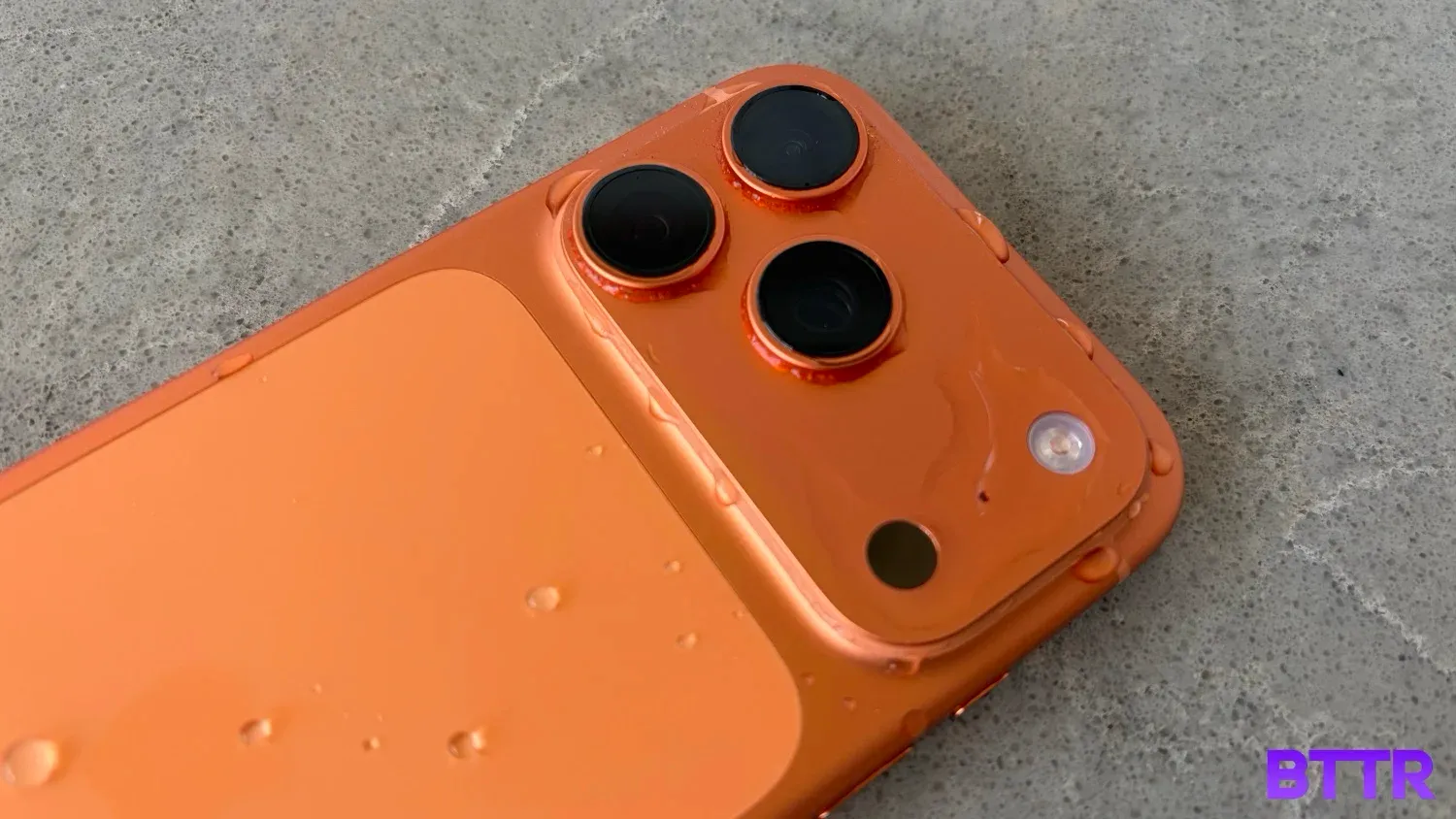
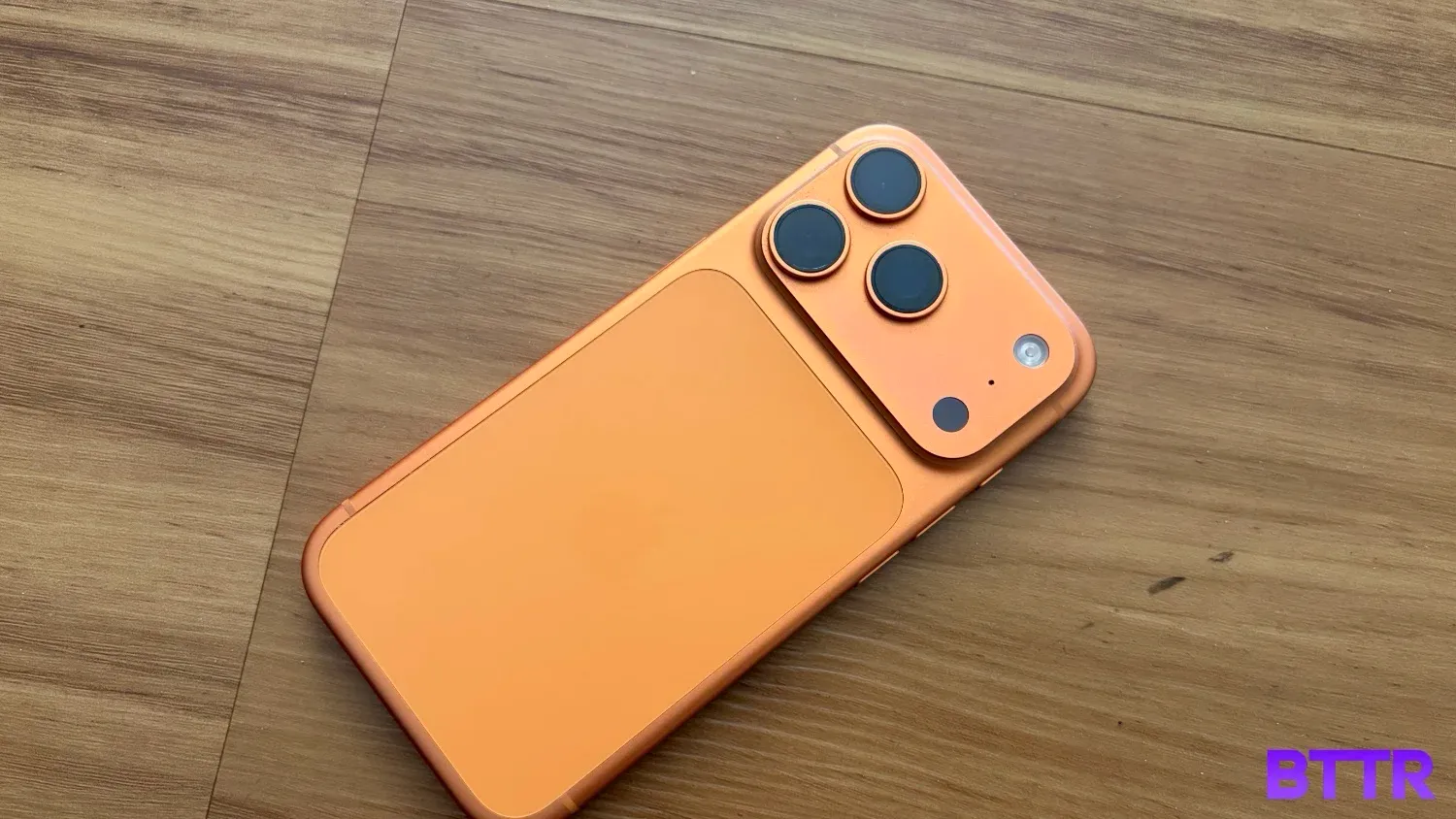
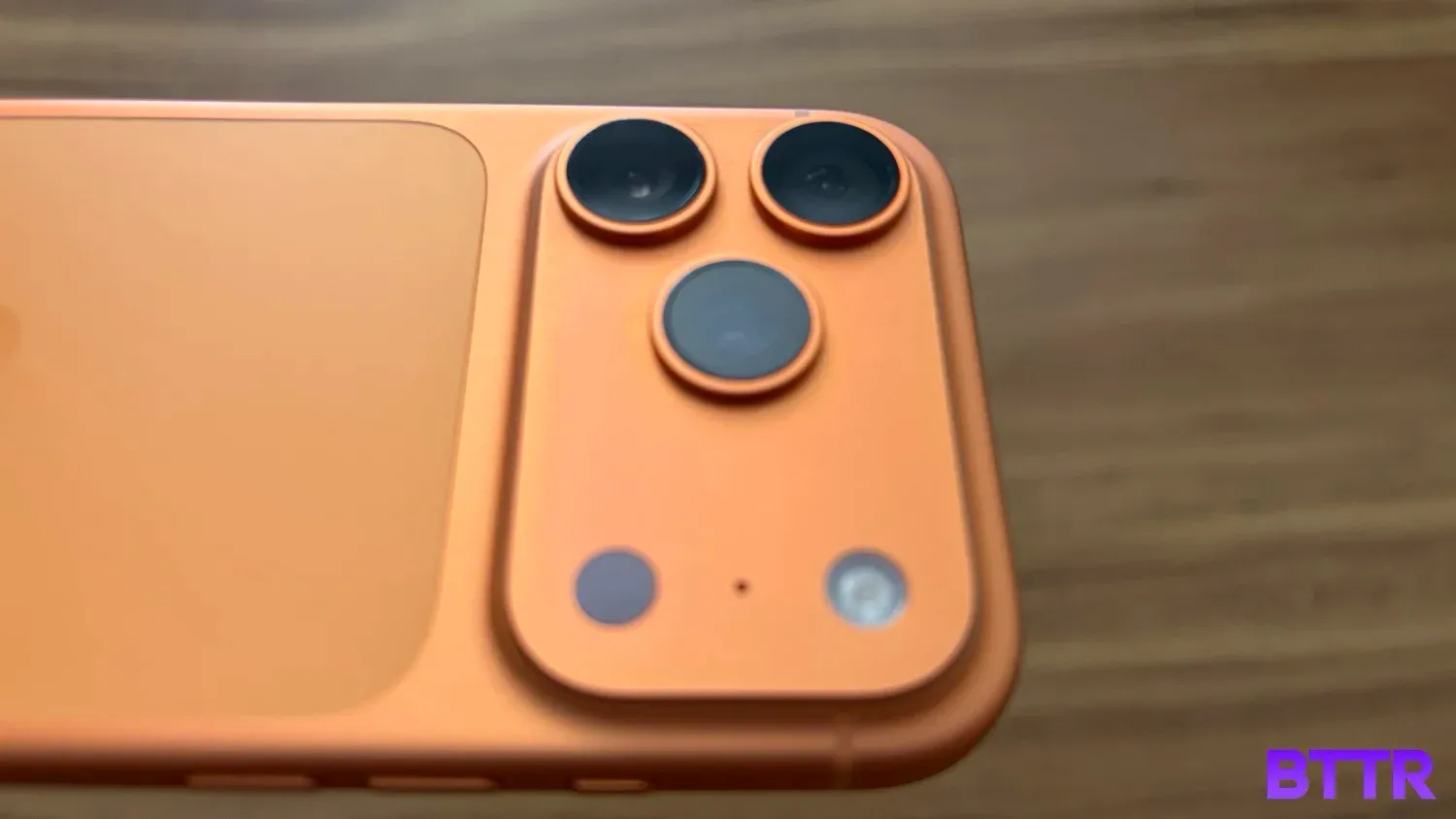
A part of that is the new design, arguably “borrowed” from Google’s Pixel lineup, that sees the rear camera array sit more like an island across the entire width of the back of the phone.
In practice, this doesn’t make too much of a practical difference to the phone. The camera lenses all protrude from the camera island and are all still on one side, so the phone is still a bit lopsided when resting on a flat surface (unless you get a case that evens it out).
But it’s the inside tech that really helps the cameras stand out. For the first time, all three lenses are 48 megapixels, so the optical zoom quality feels much better.
Around the front, the selfie camera has had an upgrade as well. It now uses an 18MP square sensor, that lets the phone shoot portrait or landscape photos and video without you having to rotate the phone.
But the real advantage comes with the software. The iPhone 17 Pro supports professional video tools like ProRes RAW and Apple Log 2. For most people, thesis terms probably mean nothing, but for actual videographers, it turns their phone into a tool that can actually be used for work.
Of course, there are other improvements as well, from the screen to the processor. I’ll dive into them below.
Apple iPhone 17 Pro specs
| Category | Specification |
|---|---|
| Finish | Silver, Cosmic Orange, Deep Blue (Aluminium unibody design) |
| Capacity | 256GB, 512GB, 1TB |
| Display | 6.3-inch Super Retina XDR (OLED) 2622‑by‑1206 pixel resolution at 460 ppi ProMotion (up to 120Hz), Always-On, Dynamic Island 3,000 nits peak brightness (outdoor) |
| Chip | A19 Pro chip 6‑core CPU (2 performance, 4 efficiency) 6‑core GPU with Neural Accelerators 16‑core Neural Engine |
| Rear Camera | 48MP Pro Fusion system: - 48MP Main (24 mm, ƒ/1.78) - 48MP Ultra Wide (13 mm, ƒ/2.2) - 48MP Telephoto (100 mm 4x, ƒ/2.8) - 8x optical-quality zoom range; Digital zoom up to 40x |
| Front Camera | 18MP Center Stage camera (ƒ/1.9) with Autofocus |
| Video Recording | 4K Dolby Vision at 24/25/30/60/100/120 fps ProRes up to 4K at 120 fps (external recording) Spatial video/photo support |
| Power & Battery | Up to 31 hours video playback Fast-charge: Up to 50% in 20 mins with 40W+ adapter |
| Size & Weight | Height: 150.0 mm | Width: 71.9 mm | Depth: 8.75 mm Weight: 204 grams |
| Connectivity | USB-C (supports USB 3 up to 10Gbps) Wi-Fi 7, Bluetooth 6.0, Thread networking Apple N1 wireless networking chip |
| Durability | IP68 (6m depth for 30 mins), Ceramic Shield 2 front |
Design and build quality
Apple has moved away from the Titanium build of previous Pro models and embraced aluminium this year. It’s probably a good thing, given that the phone still feels heavy despite using the lighter material.
Visually, the most obvious difference between this year’s model and the iPhone 16 Pro is the camera plateau, which stretches across the back of the phone. But the 17 Pro is also half a mm thicker than last year’s phone.
Combined with the switch to aluminium, Apple has Ceramic Shield glass on the back of the phone and the newer Ceramic Shield 2 on the front display. While the sequel technology obviously promises better scratch protection, the shift to aluminium meant many early customers lamented the device scratching on the back.
I’ve been using a case, so I haven’t really had any issues on the scratch front, though.
Hidden within the iPhone 17 Pro’s body is the new A19 Pro chipset, which features a 6-core CPU, a 6-core GPU and a 16-core Neural Engine. That’s a beast of a processor, and so there’s a new vapour chamber inside which uses de-ionised water to dissipate heat from the processor to the aluminium chassis.
If you only use your phone for scrolling through Instagram, you’re probably not going to see the benefit of this feature. But if you record 4K video in ProRes format or even just spend a lot of time playing graphically intensive games, then this addition will be a welcome one.
While the phone also supports 5G, Bluetooth 6 and Wi-Fi 7, it’s the support for Qi2 fast wireless charging I want to point out here. The 25W charging speeds on the new Qi standard let you get your phone to 50% charged within 30 minutes.
Partnered with a Qi2 charger like the Belkin UltraCharge Pro 3-in-1, you really don’t need to stress too much about battery life with the 17 Pro.
Display performance
The 6.3-inch Super Retina XDR OLED display on the iPhone 17 Pro is gorgeous. Whether you’re looking at photos, streaming Netflix or playing Red Dead Redemption, the phone does a remarkable job.
You get an adaptive ProMotion refresh rate which scales from 1Hz to 120Hz depending on what it’s showing, which helps all your interactions look and feel smooth.
One of the biggest improvements this year comes in the form of brightness. Apple has managed to give the 17 Pro a peak brightness of 3,000 nits, which is plenty to make the screen readable even in direct sunlight. An anti-reflective coating on the Ceramic Shield 2 glass does help with that too.
Colours are vibrant, contrast is great (2,000,000:1) and HDR support makes viewing content much more immersive.
Like previous generations, the Dynamic Island integrates alerts and live activities from your apps in an easy-to-see fashion, and if you want it to, the phone supports an always-on display without significantly impacting battery life.
All told, the screen on the 17 Pro is fantastic, but it’s worth pointing out that there’s nothing about this screen that sets it apart from the standard iPhone 17 model. That phone has the same brightness, contrast, and refresh rate capabilities.
Camera performance
There’s a reason I typically prefer the Pro family of iPhones over the standard model, and that’s the camera array.
In the 17 Pro, Apple has lifted its game with its Fusion camera array by combining three 48 megapixel cameras into a seamless single camera experience.
When it comes down to it, the zooming here is a bit of software trickery, where each lens crops in to a central part of an image to “zoom”, before moving from ultra-wide to wide to telephoto lens.
But you can’t deny that the experience is seamless. Smartphone cameras have been using tricks like this for years, so if you’re a photography purist, you probably need to get yourself a proper DSLR.
For the rest of us, the results are really pretty good.









Video quality is also fantastic. Even keeping it in the most basic settings gives you clear, bright, vibrant footage.
Of course, if you want to take it to the next level, the 17 Pro supports pro-grade codecs. I’m not even going to pretend I used them, though – that’s above my level of videography skill.
Finally, a quick shout out for the selfie camera. While it’s more evident if you’re recording video using the 18MP front sensor, the ability to pivot between landscape and portrait shooting modes without having to turn the phone is really helpful.


It reminds me a bit of the 5:4 aspect ratio of the GoPro Hero 11 Black from a few years ago.
The only disappointment I had here – and I’m sure I wouldn’t be the only one – is that I’d like to be able to shoot in the square aspect, then crop to both portrait and landscape in post to share to different video platforms.
Maybe next year?
Performance and software
You’d be hard-pressed to find better performance in a smartphone than what you get with the 17 Pro and the A19 Pro chip running the show.
While my benchmarking isn’t as comprehensive as some other sites, you can really see how far out in front Apple Silicon is when it comes to benchmarking scores.
The year-on-year growth over last year’s iPhone 16 Pro Max (and the iPhone 15 Pro) is also worth calling out.
In real-world terms, there are never any performance issues. This phone just breezes through anything you throw at it.
Whether it’s shooting 4K video in difficult lighting conditions or playing high-end games while streaming lossless audio to a pair of AirPods Pro 3.
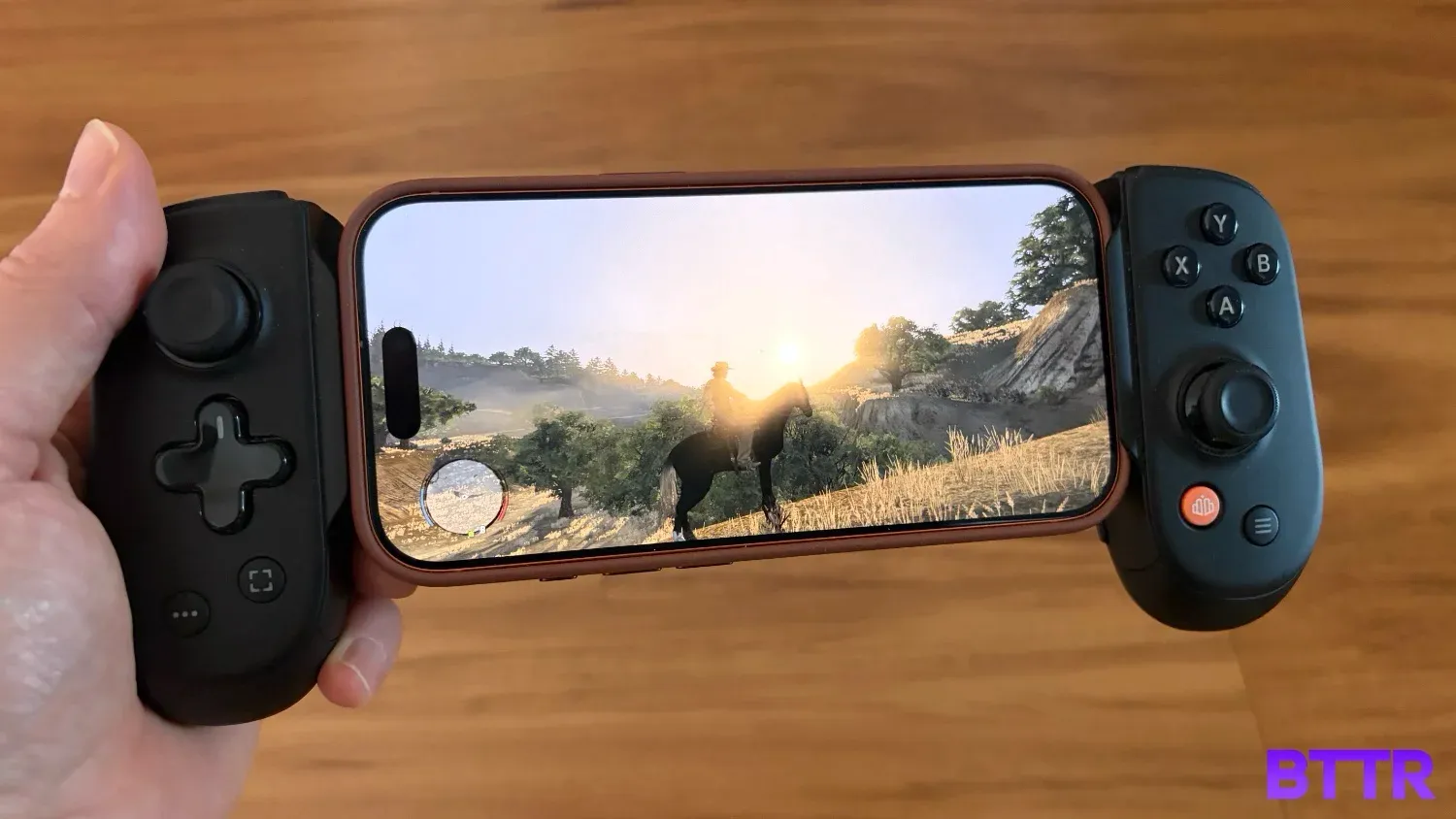
I guess my favourite experience to show just how good the phone’s performance is was loading up Red Dead Redemption and plugging the phone into the Backbone Pro.
The screen’s perhaps a little small for the full cinematic experience of RDR, but it’s still the full gaming experience.
And it runs flawlessly. When Rockstar launched L.A. Noire on the original Switch, I was excited to replay the iconic police adventure. But the Switch couldn’t handle it – driving across Los Angeles in the game at full speed meant I ended up driving through blackness, as the game tried to load up the surrounding environments.
In all my time playing Red Dead, the 17 Pro didn’t drop any frames as I rode my horse through the digital Wild West. The experience definitely needs the controller to be worthwhile, but, incredibly, a flagship title from 15 years ago is now playable on a smartphone.
As far as iOS 26 goes: Some people love it and some people hate it. I’m relatively indifferent. I think Apple’s design ethos here doesn’t add much to the overall experience, but it still works. So it’s fine.
Battery life and connectivity
Everybody uses their phone differently, so I don’t really consider doing a battery benchmark all that useful.
What I can say, after using the 17 Pro as my main phone for a few months, is that I’ve only once or twice pushed it to empty in a single day. Those days typically involved me playing graphically intensive games for extended periods of time.
Apple claims up to 33 hours of video playback. Nobody actually sits on their phone doing nothing but watching videos for 33 hours, though, so more impressive for me is that fact that the phone is typically about half full by the end of my day.
On the occasions I have used it a bit more than that, the 17 Pro supports 40W fast charging through the USB-C port, or Qi2 wireless fast charging up to 25W. With that combo, I’m able to get myself up and running again in no time.
With 5G, Bluetooth 6, Wi-Fi 7 and Thread support, there are no connectivity challenges at all. If anything, using the 17 Pro has highlighted that my dual-band 802.11 ac home wireless network could probably use an upgrade.
Verdict
If you want a phone with zero compromises, then the iPhone 17 Pro is the best place to start. It’s expensive, sure, but it’s not designed for the average user. That’s what the iPhone 17 is for.
The 17 Pro is designed for anyone who needs pro-grade photography or video features. Sure, most people who actually buy the phone won’t use that functionality, but it doesn’t mean Apple’s pricing is unwarranted.
The 17 Pro has some of the best cameras you can find in a smartphone, the most powerful processor and impressive battery life. It looks pretty great, and iOS is, in my opinion at least, a better operating system than Android for most people.
If the price is too high for you, the good news is that you have options. The iPhone 17 is almost as good, with only a handful of sacrifices for a cheaper (though not cheap) device.
But for me, this is the iPhone to own. It’s a flagship, and everything about the phone lives up to that title.
Buy the iPhone 17 Pro if:
- You’re looking for professional level photography and videography formats
- You refuse to settle when it comes to processor power
- You need a powerful phone that can last all day
Skip the iPhone 17 Pro if:
- The price tag is beyond your budget
- You don’t like losing your stylus between the couch cushions
- You need a device for a level of productivity Android apps can’t deliver
Where to buy
The Apple iPhone 17 Pro is available in Silver, Cosmic Orange and Deep Blue colour options, with 256 GB, 512 GB and 1 TB storage options.
Here’s what the RRP looks like across capacity and sizes:
| Storage Option | iPhone 17 Pro (RRP AUD) | iPhone 17 Pro Max (RRP AUD) |
|---|---|---|
| 256GB | $1,999.00 | $2,199.00 |
| 512GB | $2,399.00 | $2,599.00 |
| 1TB | $2,799.00 | $2,999.00 |
| 2TB | N/A | $3,799.00 |
Browse iPhone 17 Pro deals
Frequently Asked Questions
What are the key camera upgrades on the iPhone 17 Pro?
The iPhone 17 Pro features a new triple 48MP Pro Fusion camera system. For the first time, the Main, Ultra-Wide, and Telephoto lenses all use 48MP sensors. This allows for high-resolution ProRAW photography at every focal length and introduces a new 4x optical zoom (100 mm) that delivers 12MP optical-quality images at 8x magnification.
How much longer is the iPhone 17 Pro battery life?
The iPhone 17 Pro offers a significant boost in endurance, providing up to 31 hours of video playback (a 4-hour increase over the iPhone 16 Pro). This is driven by the efficiency of the A19 Pro chip and a new internal design that maximises battery density. It also supports 40W fast charging, reaching 50% battery in just 20 minutes.
Is the A19 Pro chip faster than the A18 Pro?
Yes, the A19 Pro chip is built on a next-generation 3-nanometer process, offering up to 20% faster CPU speeds and 50% faster GPU performance compared to the A18 Pro. It also introduces dedicated Neural Accelerators in every GPU core to power on-device Apple Intelligence features and a new vapour chamber cooling system for sustained gaming performance.
What is the brightness of the iPhone 17 Pro display?
The 6.3-inch Super Retina XDR display now hits a peak outdoor brightness of 3,000 nits, making it 50% brighter than the previous generation. It also features Ceramic Shield 2, which is 3x more scratch-resistant, and an anti-reflective coating to improve visibility in direct sunlight.
What is the new 18MP Center Stage front camera?
The iPhone 17 Pro introduces an 18MP front-facing camera with a unique square sensor. This allows the camera to support Center Stage, which automatically keeps you in frame during video calls. The square sensor also enables "digital rotation," letting users capture both portrait and landscape selfies without physically turning the phone.