

BTTR is independent. We may earn a commission if you buy through our links. Why trust us?
A few years ago when I was at Finder, Amazon hosted an online webinar for its affiliates about maximising returns for big sale days like Prime Day and Black Friday.
It was a bit last minute for me, but I logged on to watch editors from CNN Underscored and USA Today's Reviewed to talk through how they approach product reviews and affiliate revenue.
It wasn't overly new information for me. But what I really took away from the experience was how large and broad the opportunity for affiliate websites really was. Indirectly, it probably even played a part in me deciding to try to launch BTTR.
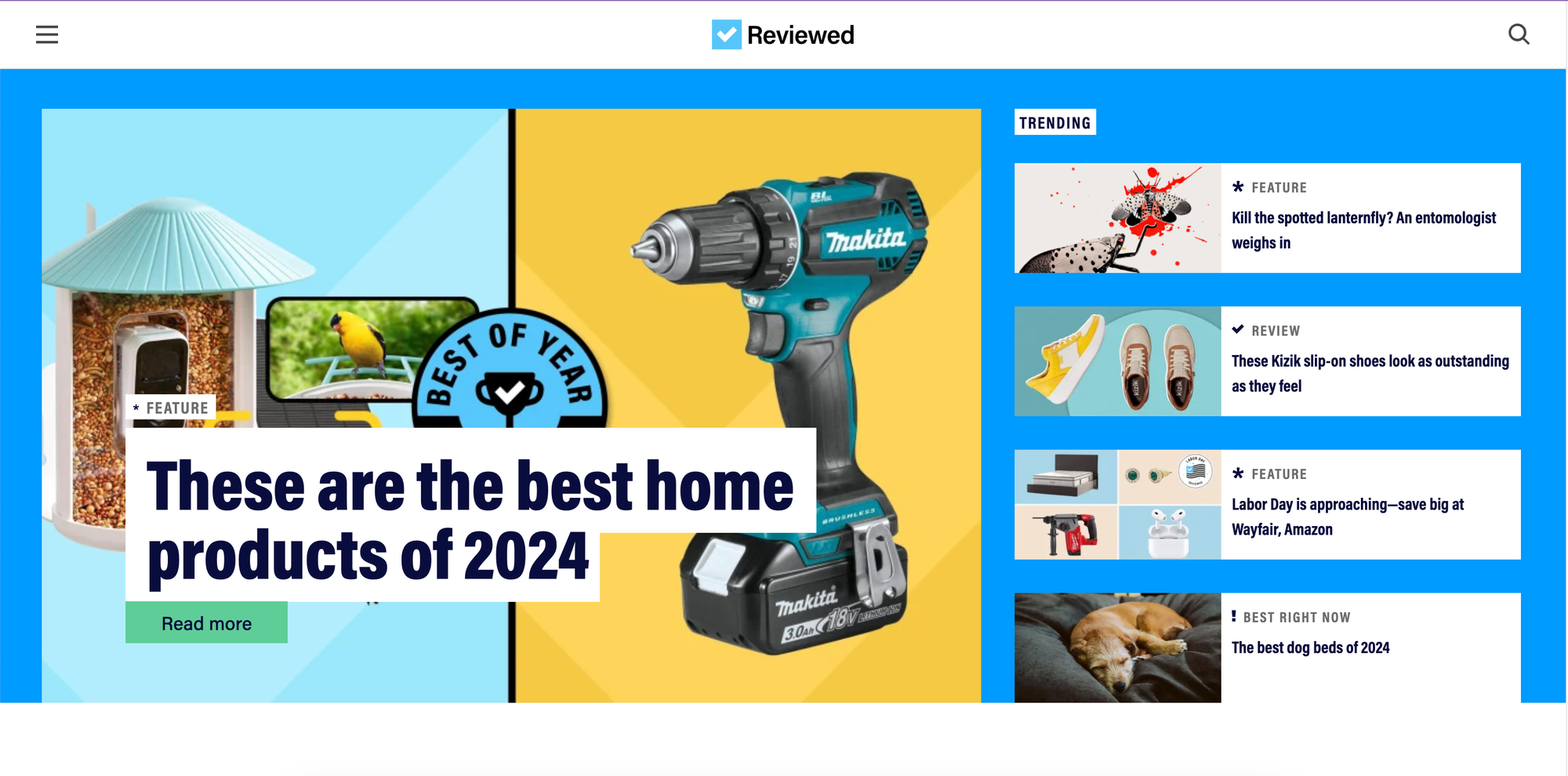
So to read on The Verge that parent company Gannett is shuttering the Reviewed website from 1 November is terrible news.
As the owner/operator of a (much, much smaller) review site, I have many thoughts on this. While I feel that this particular situation is the result of a confluence of bad decisions and a tougher market, I feel that not enough blame will land at Google's feet here.
AI has no place as a writer
The Verge article linked above makes a big song and dance about last year's scandal that parent company Gannett was publishing AI-written product reviews without informing or consulting the editorial staff.
It's an important piece of the story, absolutely. I am still yet to see an example of AI written content that comes close to offering the same level of insight or clarity as something written by a reasonably talented writer.
The fact that the suits at Gannett thought it could use AI content (or even outsource review content to a marketing agency, if we give them the benefit of the doubt) highlights the fundamental breakdown between the people who run media companies and the people who work there.
Because if you head to the Reviewed website right now, I'm going to tell you there is a hell of a lot of effort that has gone into creating some exceptionally detailed, rigorously tested product reviews.
While the scandal of AI content isn't something I want to dismiss, the website itself doesn't lean heavily on it at the moment. Each of the product roundups I looked at from the homepage highlighted rigorous testing and effort from a range of writers and editors.
To me, this confirms that while AI content is an issue, it's not the biggest issue here.
The issue is revenue, and how it's getting harder to come by.
Google strikes again
I've spent a lot of time writing about the evils of Google's current approach to monetisation. The search giant is sacrificing quality for revenue at the detriment of the World Wide Web.
Going back to April 2021 (and probably before then, to be honest), Google has had product reviews in its sights. In April of 21, Google rolled out a dedicated algorithm specifically targeting product reviews.
The intention, as per Google's documentation at the time, was to reward high-quality product reviews that showed demonstrated first-hand experience with the product and topical expertise from the author.
The reason Google felt it needed to address this was clear if you did a search at the time. A huge number of websites had sprung up to offer "review" content, without having touched the product, instead recommending whatever product would make them the most money through affiliate marketing.
But here's the thing. I actually feel it wasn't so much an altruistic attempt to deliver better results to searchers that drove Google's decision here. It was the fact that Google was enabling a lot of these websites to make a lot of money from affiliate marketing, but Google wasn't really seeing any reinvestment.
With affiliate marketing in areas like financial categories, or even mobile plans or broadband, each sale makes enough money that you can invest a significant amount in search advertising and still make a profit. That’s true even if only a small percentage of people who click on an ad actually sign up to the product or service.
For products, that's usually not the case. Some big ticket tech items might give a decent commission, but in most cases there's not really enough profit in it to make paid marketing a worthwhile endeavour.
And that's a problem for Google because it meant that websites were making millions in revenue through organic search, but not reinvesting it into Google's paid marketing arm.
So Google has completely overhauled how it treats product reviews. It created a dedicated algorithm, tweaked it a few times, and then rolled it back into the core algorithm. It tried to tackle its affiliate concern with its Helpful Content Update, but ended up destroying legitimate small publishers in the attempt.
Its most recent effort is to seemingly give up on trying to reward the best content, and instead just promote Reddit threads or major global publishers for any review query.
A bigger issue
Which brings me back to Reviewed. The revenue model for the site is clearly affiliate-driven. So with Google making it harder and harder to compete with the likes of Reddit for organic traffic, and paid traffic too expensive to deliver a profit, what are the opportunities for sustainable growth?
This is actually a much bigger issue and impacts more than just review websites, for what it's worth. The media is in a difficult spot, with tech giants profiting off publishers' content, while actively reducing their opportunities to generate revenue.
The quest to solve this issue is a much bigger one than I hoped to tackle in this piece, to be honest. There are a lot of moving parts, and plenty of vested interests, and what is a fundamental challenge of convincing people that there's value in paying for high-quality content.
But the shuttering of Reviewed will be a tragedy for the internet in general. We need more well-funded sites testing products to help consumers make informed decisions.
BTTR relies on support from readers like you to keep going. If you'd like to support our work, consider a one-time donation. Every little bit helps us to cover costs and stay independent. 100% of donations go directly to authors. Thanks for your support!