

BTTR is independent. We may earn a commission if you buy through our links.
Why trust us? | How we test
Backbone was a company built around a confluence of two separate ideas. On the one hand, there was the incredible rise of high-performance mobile gaming, and the need for better controls than just a touchscreen.
On the other hand, there was the rise of cloud gaming services, offering access to vast libraries of games powered by remote servers, yet displayed on any number of local devices, from your TV to your smartphone.
While there are plenty of mobile gaming controllers on the market that offer a comfortable control system for mobile gaming, there aren’t really any devices that manage to act as both a robust mobile gaming controller and a partner for cloud streaming.
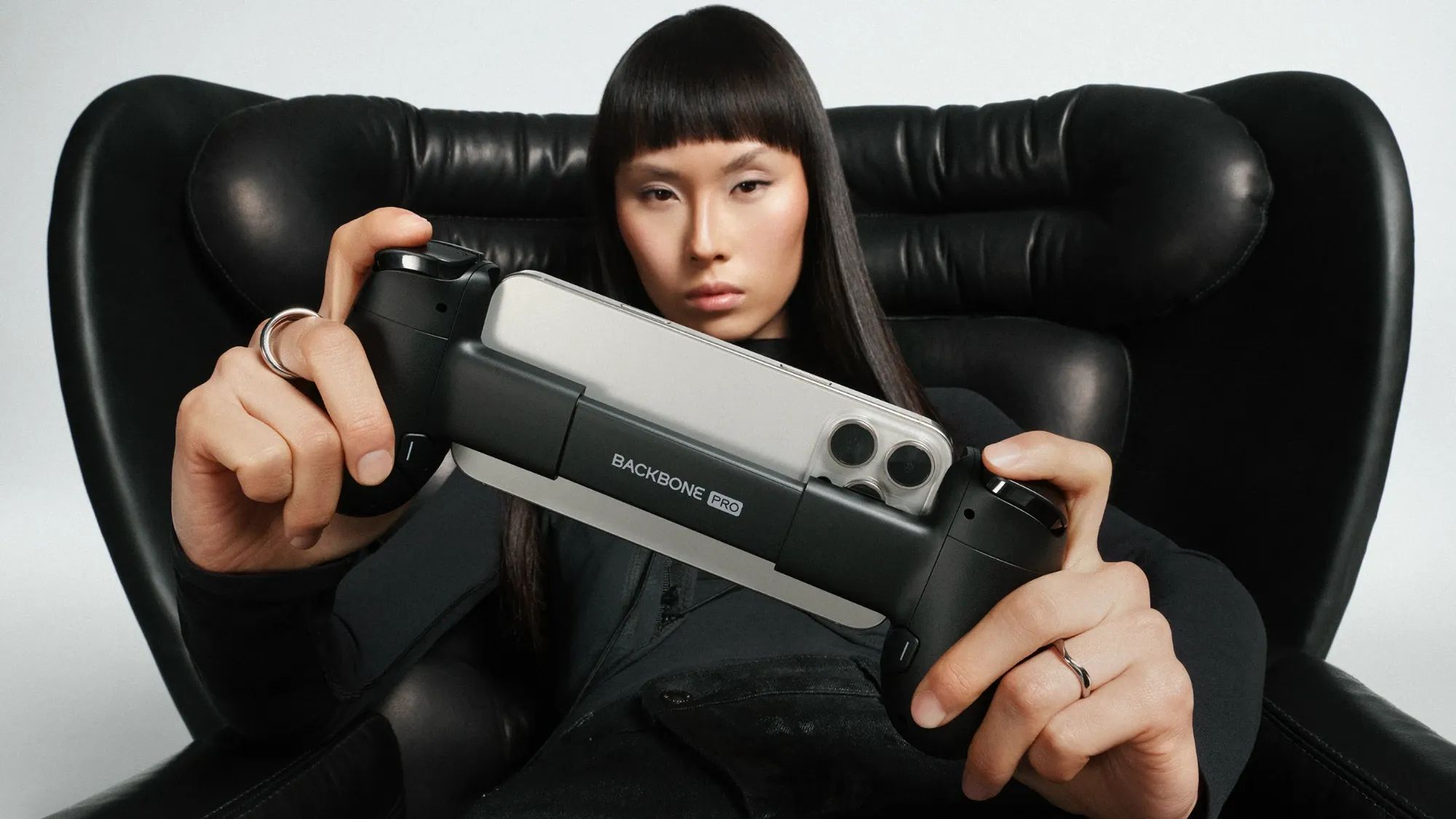
For Backbone CEO Maneet Khaira, the Backbone Pro is the device for both. Designed from the ground up, the Pro is not only designed to feel like an exceptional games controller, it has a range of features designed to make it the only controller you require.
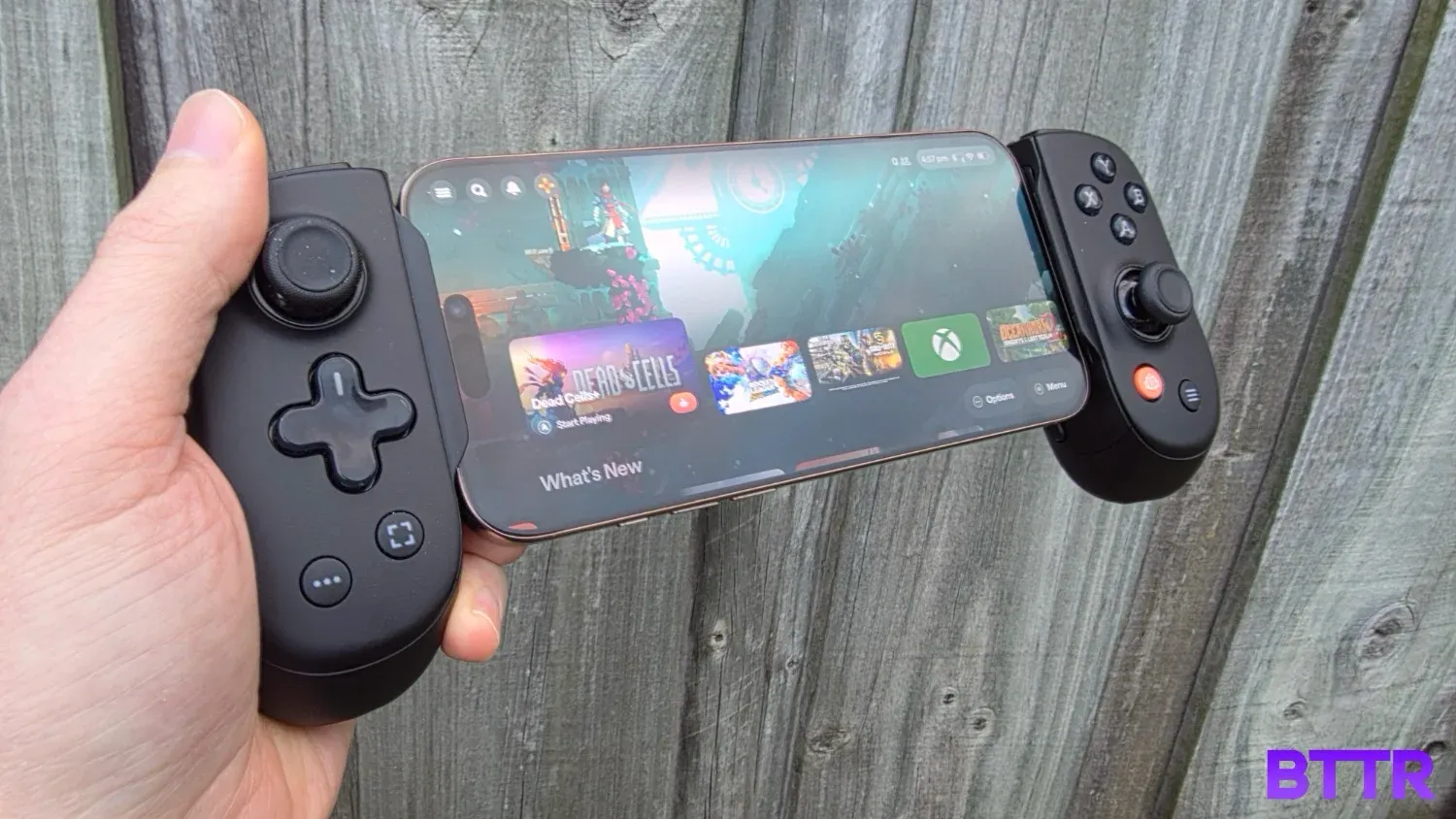
The science of comfort
Designing the Backbone Pro was a process that took about three years, and involved redesigning everything from the ground up. Which is a surprise given how well received the Backbone One was.
For the team at Backbone, it was a process that involved a lot of testing, some custom, Matrix-like camera systems and inspiration from portable PC handhelds that were coming onto the market.
“One of the coolest things about it was that in order to make something comfortable, we had to really break it down to a science,” explained Khaira. “Because we realised if we want to make something really comfortable, we have to quantify it and know that it's comfortable in order to ship it.”
The process of quantifying comfort involved 3D printing workable versions of the new controller, then recording 360-degree video of people using that controller. Then, using software, the Backbone team used software to measure the joint angles of the players’ hands, which gave the team a way to quantify the model’s comfort.
“We measured and recorded thousands of hours of gameplay footage and had people like play on it. And every time we found an opportunity to improve it, we would then print another version and then bring it back and test it again,” Khaira explained.
“We did over 9,000 part iterations on this thing. Like, I don't think that the other companies that think about this stuff are going to that degree, But we were really obsessed.”
How obsessed? Extremely obsessed.
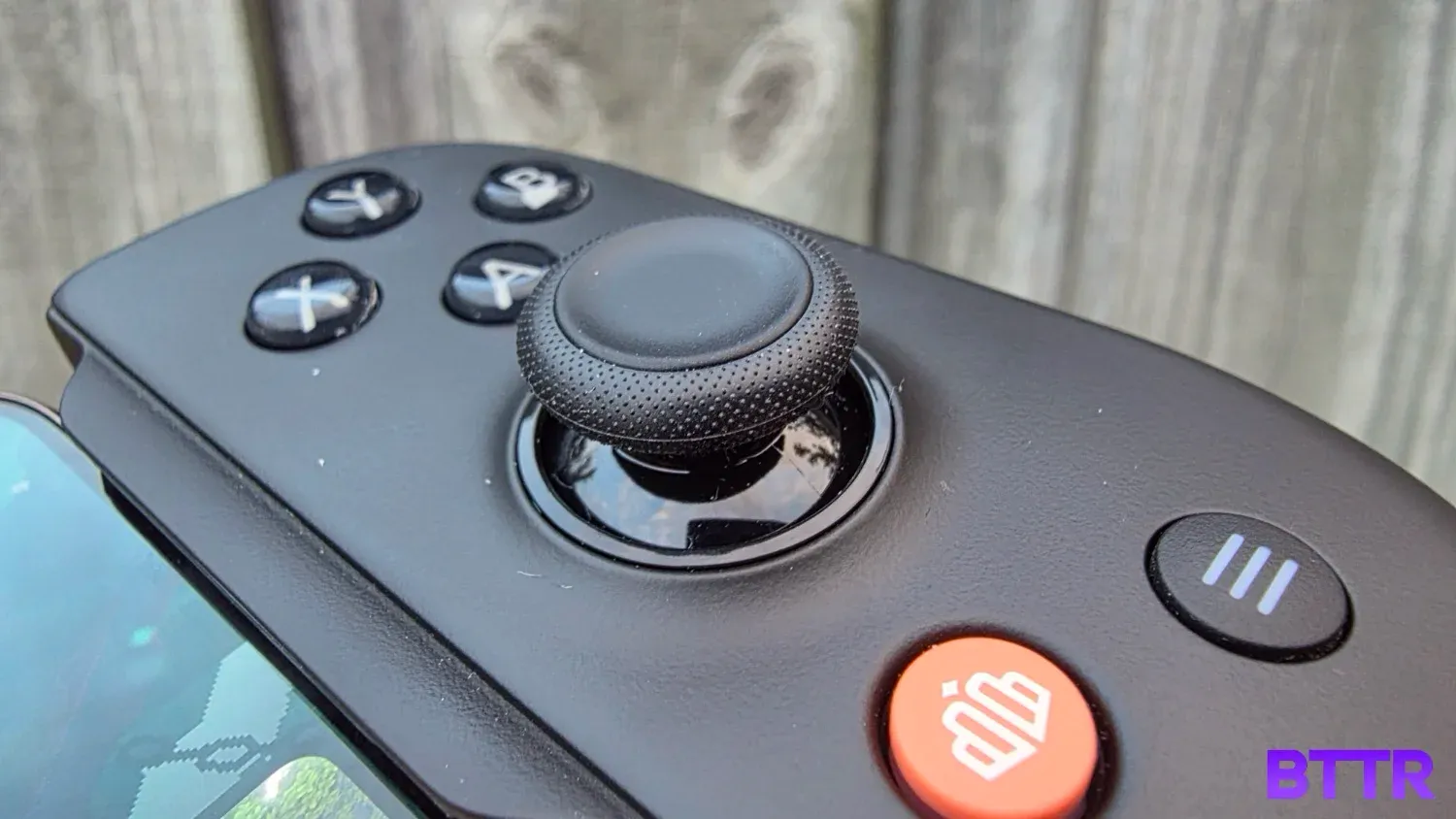
“At one point during design, as a particular anecdote, we found out that the thumbstick was actually going to be 250 microns higher up than we had hoped because of the way the design was coming together. And 250 microns, for background, is like three thicknesses of a human hair.”
“And most people, they'd be like, oh, ‘250 microns is pretty trivial. Let's just let it be.’ But the team was like, ‘no’”.
“We really obsessed over the ergonomics we don't want to miss the spec so we actually found 10 different locations to shave 25 microns from the design to preserve the original design intent”
“We really obsessed over the ergonomics we don't want to miss the spec so we actually found 10 different locations to shave 25 microns from the design to preserve the original design intent,” Khaira told BTTR.
It wasn’t just making sure the thumbstick was in the perfect position, either. Backbone engineers iterated the dot patterns on the controller’s grip to get the exact spacing for the controller to feel comfortable, while still offering enough to break the surface tension from sweat forming on your hands.
All of these physical features, from the grip to the full-sized thumbsticks, needed to adapt around Backbone’s design philosophy for the product. The goal was to create a single controller that can take advantage of the two gaming trends that were Backbone’s foundation when it was first founded: mobile gaming fidelity and cloud streaming.
And for the Backbone Pro, that meant adding wireless connectivity.
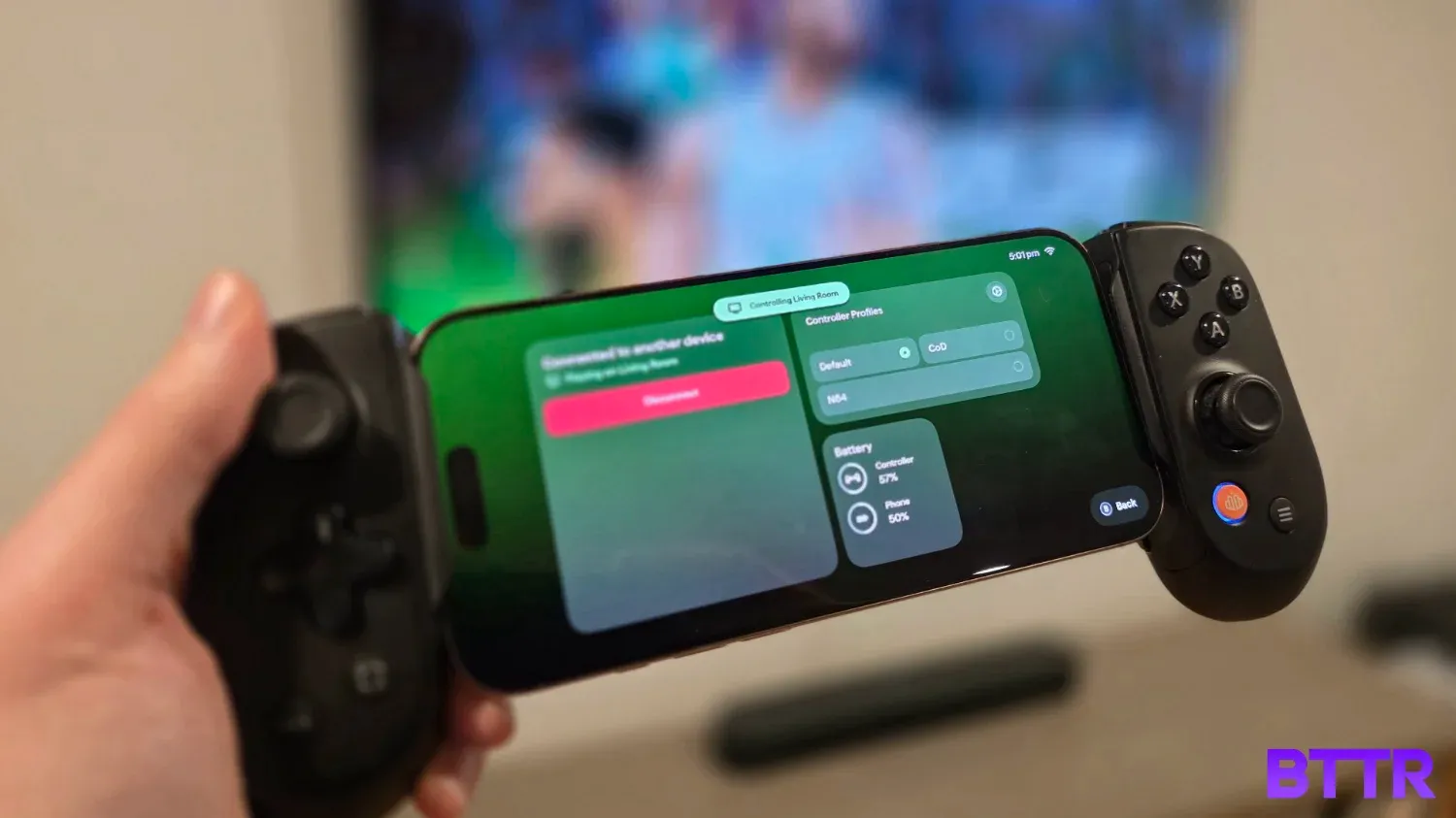
One controller, every screen
“If you think about a game controller is really designed around the notion of a single console. And that decision was sort of made 15 years ago and hasn't really been revisited since then, right? We've sort of adapted those devices to work with other screens like through Bluetooth and other means,” Khaira said.
“But in this world where you can run games on every screen, we think that players are actually going to associate more in the future with the controller that they own, perhaps even as much or more than the console because that's going to be the one thing you need to play games.”
The idea Khaira passionately describes is one where the controller is powerful enough to adapt to any screen you might play through. While it may look like the Backbone Pro is just like every other docking mobile gaming controller on the market, the truth is it is more versatile thanks to its wireless mode.
Thanks to improvements to the Bluetooth spec and improved wireless latency, the Backbone pro can now act as a controller not just for your USB-C smartphone, but also any number of screens.
While other wireless gaming controllers also offer this, it is generally a frustrating, cumbersome process.
Backbone has attempted to solve this with something it calls “FlowState”. FlowState allows the Backbone Pro controller to remember all the devices it has paired to in the past, and lets you easily swap between them.
“But in this world where you can run games on every screen, we think that players are actually going to associate more in the future with the controller that they own, perhaps even as much or more than the console because that's going to be the one thing you need to play games.”
When you pair this with a cloud streaming service like Xbox Cloud Gaming, it means that you can start a game streaming on your phone. Then, when you get home, you can easily transition to the same point in the game streamed to your compatible TV, all from the controller itself.
“When we were designing FlowState, we actually almost like killed the feature a few times because we were like, no one's going to want a Bluetooth pair through like the app UI. They're going to want to just press the button like they always do or have it work automatically,” Khaira explained.
“But we were like, no, it has to, we want it to be more like AirPods. How can we make it like the AirPods experience for gaming? And because we have access to the interface on the phone, we can design a really bespoke experience around it.”
Advanced compatibility
It’s not just about having a great feel and the ability to seamlessly swap between screens. Backbone’s vision for the Backbone Pro also requires superior support for games and platforms.
One of the greatest challenges I’ve had with mobile gaming controllers is when I try to play popular games on an Android device (like Call of Duty: Mobile), I discover that the USB-C controller isn’t supported.
"How can we make it like the AirPods experience for gaming?"
That’s why Backbone proactively works with publishers to ensure compatibility. With the example of COD: Mobile, when I plugged in the new Galaxy Z Fold7 to the BackBone Pro, the game prompted me on the type of controller I was playing with, and BackBone was an option. (The Razer Kishi Ultra, meanwhile, just didn’t work).
But Backbone’s games support goes further. You can customise every single input on the controller, mapping different buttons to support different games, and saving those layouts so you can easily.
And for games that don’t offer controller support, Backbone has a solution for that.
“We even have a feature called TouchSync. Increasingly, many [games] are supporting controllers. But for those that don't, you can actually basically automatically have the physical inputs on the controller translate to screen inputs,” Khaira told BTTR.
“So you can play games that have touch controls on the screen that are rendered they're using a controller like automagically, basically. And you can customise and edit them and improve them as well so we really tried to make that work.”
It’s behind the Backbone Plus subscription and doesn’t work with every game, but the idea is to have the physical inputs on the controller translate to screen inputs.
The other big compatibility development is support for retro games through a custom emulator. According to Khaira, Apple’s recent decision to allow emulators onto the App Store unlocked the new gaming category for Backbone users.
“Apple made it possible to have all these emulators in the App Store now with [its] new policies and […] you can go back and run any older Nintendo or PlayStation game on your phone natively now,” he explained.
“But people don't know how to do it, and it's really confusing and quite difficult; you have to download multiple different apps and set them up and configure them. So we created like a ‘super emulator’ inside the app, which basically allows you to access all the different emulators in one place.”
There is obviously a copyright consideration when it comes to emulation, particularly in Australia. Generally speaking, while it’s not difficult to find and download retro gaming ROMs online, in Australia that’s almost certainly illegal. Even if you own an old cartridge, you should be careful with downloading ROMs from a legal perspective.
But to work around this potential copyright challenge, Backbone does offer its premium subscribers access to free homebrew ROMs to play using the emulator.
“If you use our service, you can just get some out of the box and try it, and you can also bring your own files, too, if that's what you want. You have all the options. Our goal is to put every type of content in the app so you can access literally everything in one place, basically,” Khaira said.
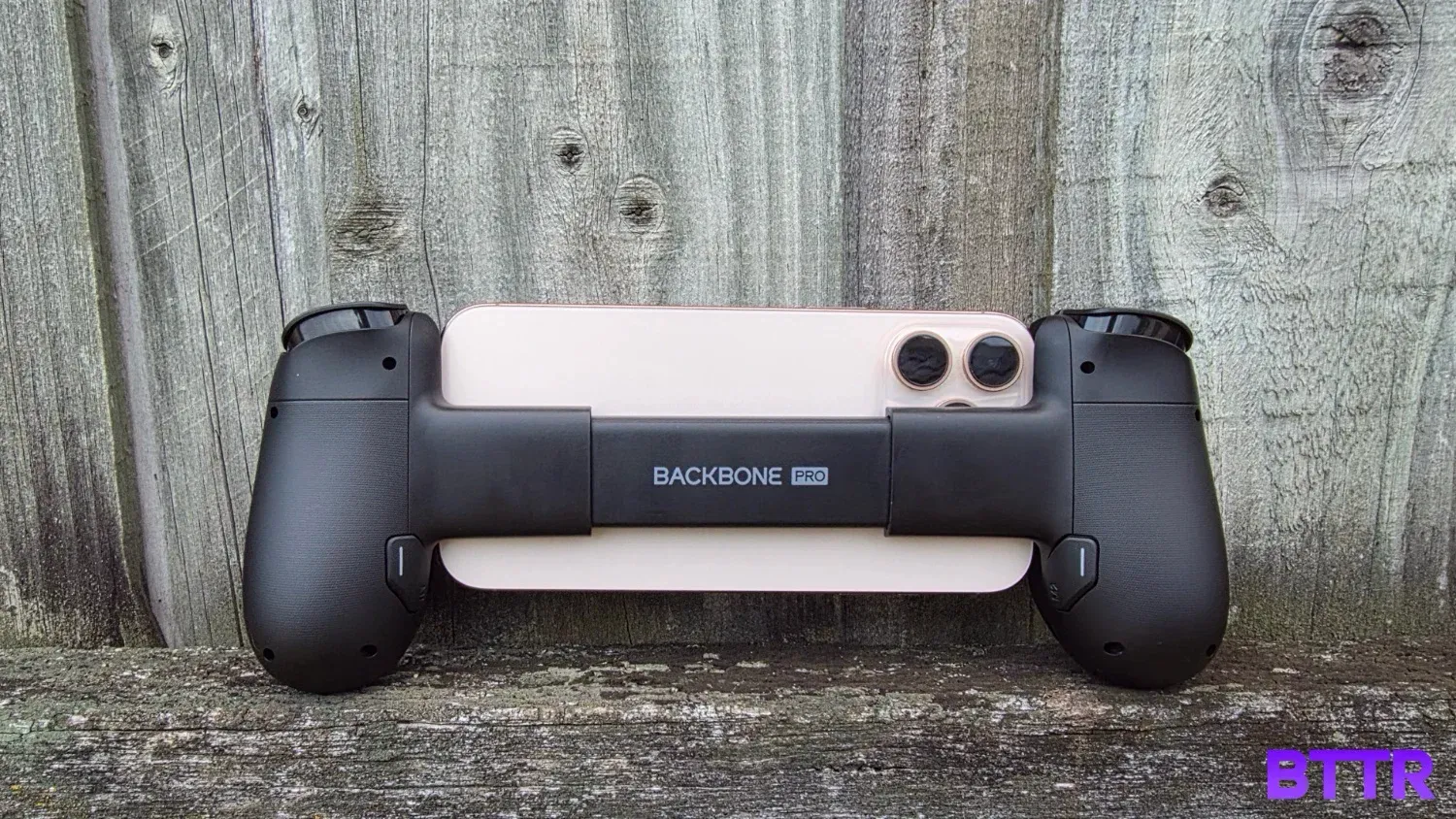
The Australian launch
While the Backbone Pro launched in the US back in May, the product landing on Australian shelves in August will be a more refined experience, with many of the early bugs fixed and a more stable software experience.
But for Khaira, the real advantage Backbone has over other mobile controllers is not necessarily the hardware, but the fact it is an ecosystem.
“We're really trying to build an ecosystem company around hardware, software, and services. And we really view our goal as like wanting to give customers the choice to play any game and make it super-simple to do that,” he said.
The Backbone Pro is available to pre-order from JB Hi-Fi today, with the product hitting retail shelves on 15 August. It’s available in black, with an RRP of $299. I’ll have my review live later this week.
Latest gaming deals