

BTTR is independent. We may earn a commission if you buy through our links.
Why trust us? | How we test
The past few years have made a solid case to invest in one of the best air purifiers in Australia.
First, we had raging bushfires across the country, filling homes and lives with ash and smoke.
Then we had the COVID-19 pandemic, which highlighted the ongoing need for proper hygiene both at home and in public.
The past year has seen epic floods across Australia, all leading to an increased likelihood of mould and other airborne pollutants.
Which is all to say, an air purifier for your home has never been a better idea.
But how do you choose the right model?
A good air purifier will help keep your home fresh, clear out small dust particles from your home's air and help you breathe easier.
There are lots of different models available, and it can be difficult to find the product that is best for your needs.
To help, we've listed out the best air purifiers we've tested at BTTR. It's worth noting that some of the best air conditioners will also help purify the air as well.
These are the best air purifiers in Australia we've tested
Samsung Versatile Plus AX46 Air Purifier
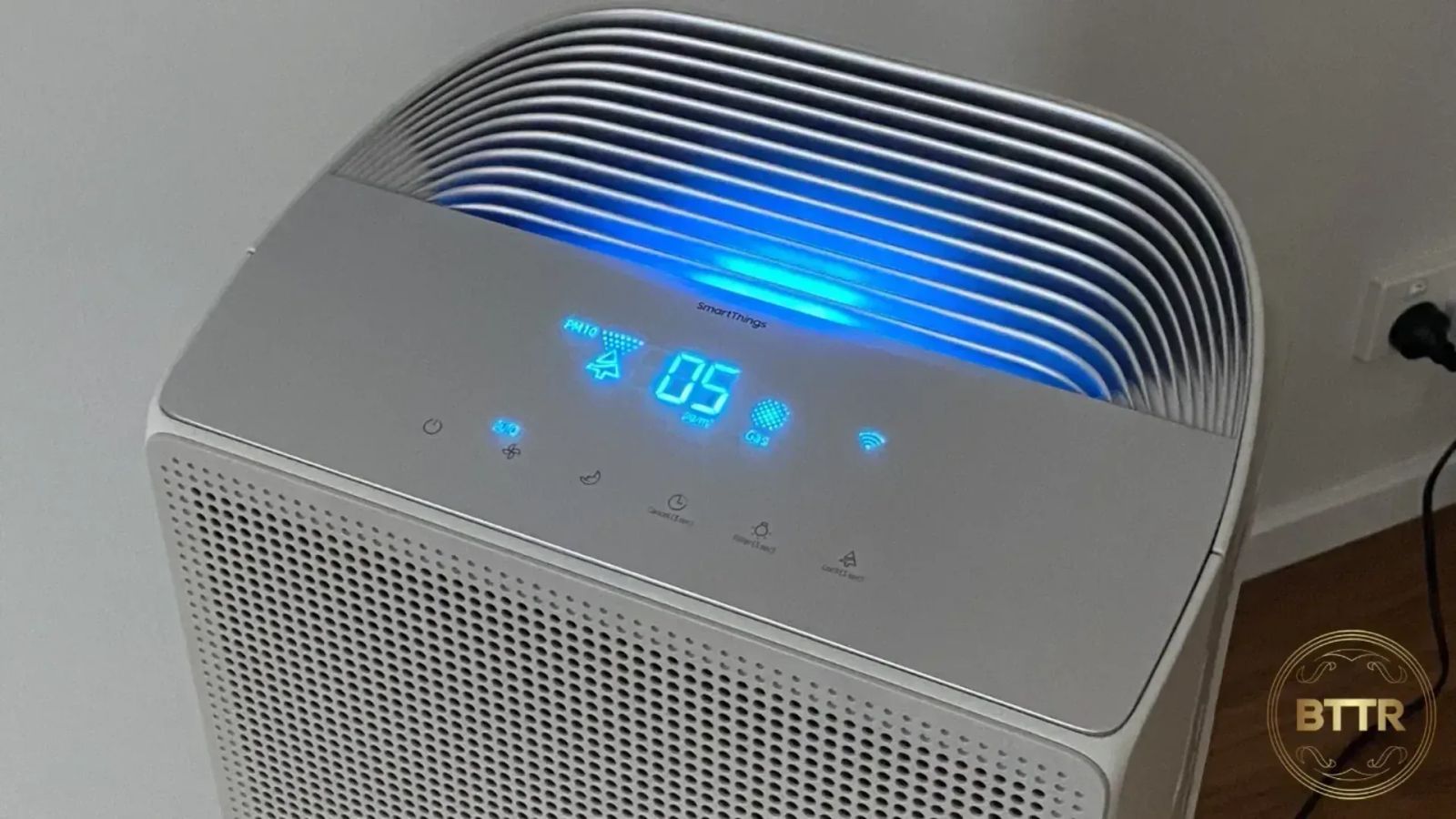
Big and bulky, the Samsung Versatile Plus AX46 air purifier is designed to clean the air in large rooms and homes, and is impressively quiet and discreet about the entire process.
The Versatile Plus AX46 Air purifier from Samsung is not a compact unit. It's big, designed to circulate and purify air in rooms as large as 60 m2, with a CADR airflow rate of 467m3/h.
But Samsung has designed it to be – as the name suggests – versatile. Its discreet wheels make it easy to roll into different rooms of your home.
And while it's large, it looks sleek, so it can match any existing decor fairly easily.
Integration with SmartThings lets you automate your air purification to a degree, to automatically switch it off when you leave the house, for example.
But even if you leave it running, the AX46 is light on the electricity usage, which makes it a great option for any Aussie home.
Acerpure Pro Vero
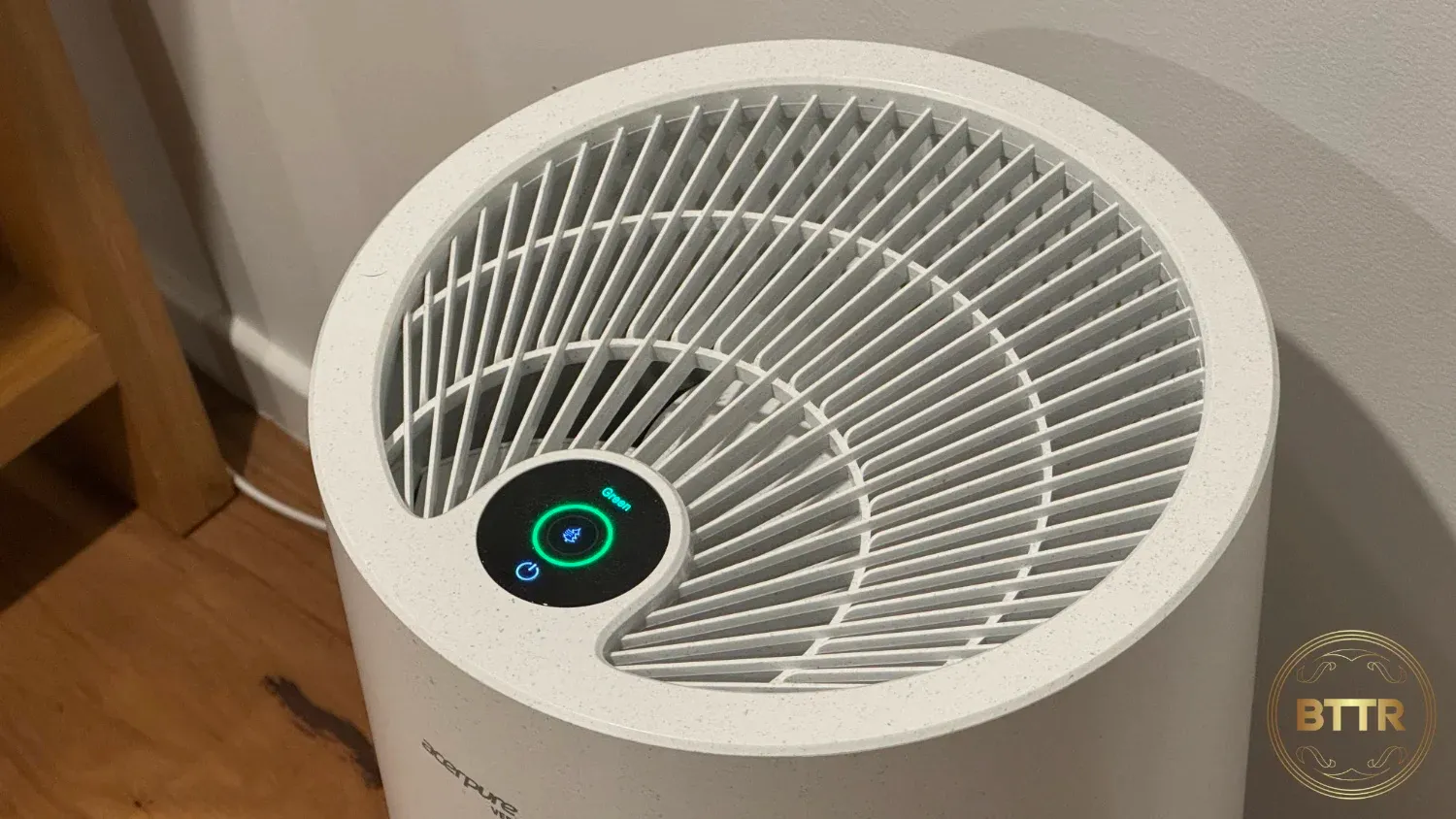
The Acerpure Pro Vero is a relatively compact and quiet air purifier, but at its price you would expect some smart connectivity features.
Acer may be renowned as a computing company, but its home appliance range is coming in hot. The AcerPure Pro Vero is a solid air purifier, with good performance for rooms up to 47.5 m2, with a 324 m³/hour CADR.
WIth 3-stage filtration, the Acerpure can remove up to 99.9% of airborne particles, and the whole unit is built from reclaimed plastics, and shipped in recyclable materials, to help minimise its footprint.
The only real downside with the Pro Vero is the price, which sits a bit high for what you get. It lacks some more advanced features like Wi-Fi connectivity and smart control, and while you don't need those for an air purifier, similarly priced units do offer those features.
Still, this is a reliable purifier that can help keep your home's air cleaner, and is worth consideration.
 Nick Broughall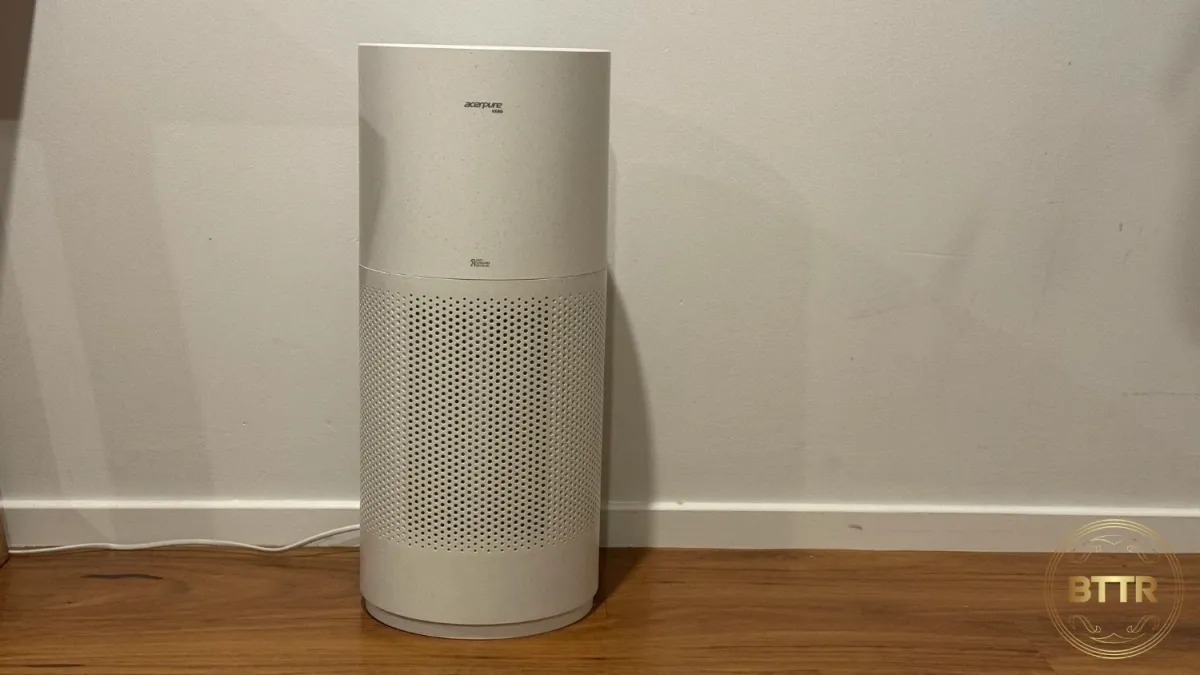
How we chose the best air purifiers in Australia
I've reviewed hundreds (maybe thousands) of products over my 20+ year career. In that time I learned that review sites - including this one - are subjective by nature. Everybody has a different opinion of what is best.
So for this guide, I’ve recommended my top air purifier choices from the models I have tested.
As I continue to test more air purifiers, I’ll update this guide to ensure it is kept up to date.
Best air purifiers buying guide
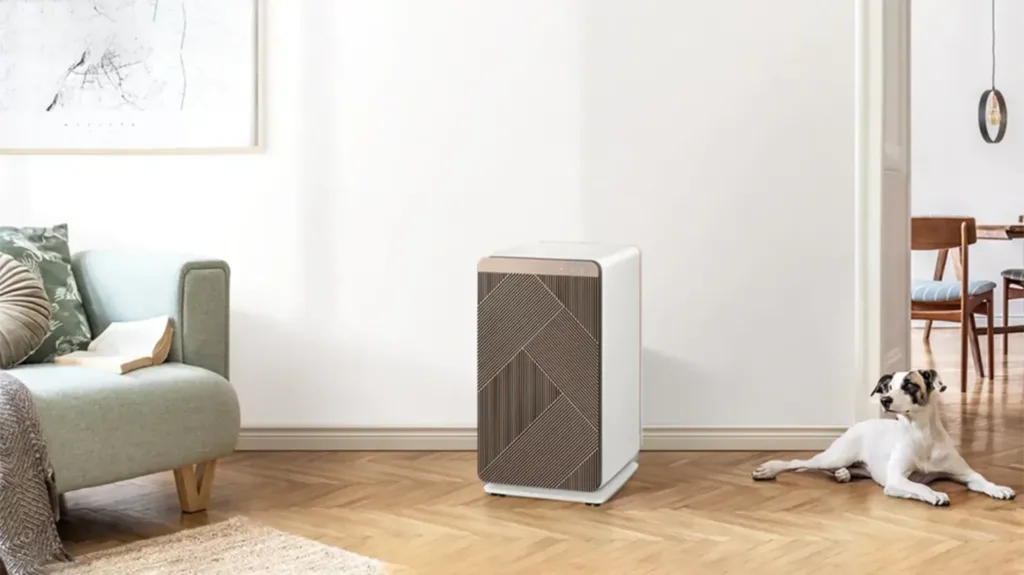
If you're looking to buy an air purifier, you likely want to try and minimise the pollutants and irritants in the air so you and your family can breathe easier, as well as keeping things hygienic and clean.
Whether you want to buy one of the products featured above or something different, these are the things to look for when choosing an air purifier.
Room size
Like portable air conditioners, air purifiers are rated to work to a certain room size.
If you buy a model rated for small rooms then try and use it in a large, open area, it won't do a very good job.
Likewise, a room rated for large areas is likely overkill in a small bedroom.
That said, if you plan on moving the purifier around your home, you'll want to ensure it can be effective in the largest room, so consider the coverage area for that room first.
Clean Air Delivery Rate
The Clean Air Delivery Rate (CADR) measures the volume of air a purifier can clean. It is measured in cubic metres per hour, and typically speaking a larger number is better.
This industry standard number is a good way to compare the effectiveness of an air purifier, though understand that in your own home, location and the purifier's settings can impact how well it actually performs for you.
Filters
The most important parts of any air purifier are the filters. The filters are the different layers that capture all the particles in your air, before circulating clean air through your home.
There are a few different types of filters you should be looking for as part of your air purifier shopping.
HEPA filter
HEPA stands for high-efficiency particulate arresting. This filter is responsible for capturing all the super-tiny particles, so small you can't see with the naked eye.
It's the HEPA filter that will block virus and bacteria particles from the air. Because it's responsible for capturing all the tiny parts, having a high quality HEPA filter is essential for an effective air purifier.
You can also find HEPA filters in some of the best vacuum cleaners as well, which can help improve the air quality of your home as well.
Carbon filter
Carbon filters are included to capture smoke, odours and chemical smells from the air.
They are particularly useful for removing the smell of cleaning products like bleach or cigarette smoke. They don't actually filter out micro particles, so need to be used in conjunction with a HEPA filter to truly purify the air.
Ultraviolet filter
UV filters don't stop anything coming through like a carbon or HEPA filter, but UV light is especially effective at killing bacteria and viruses.
By combining a UV filter with others, the air that is cycled back in your room will be especially clean.
Ionic filters
Ionic filters use a small electrical filter to remove particles from the air by charging them electrically and then having oppositely charged plates attract them from the air.
These filters are particularly useful for removing dust or smoke from the air.
Ozone filters
Ozone filters are another filter designed to remove odours from the air. They don't work on allergens or chemicals though, and are typically less effective than carbon filters.
Filter replacement notifications
It's important to be aware that you will need to clean or replace the filters in your air purifier to ensure it works effectively.
Some filters or pre-filters will be washable, but others will need to be replaced. To make things more confusing, some purifiers will let you replace filters individually, while others will offer all-in-one cartridges for sale.
Either way, you'll want to make sure your purifier notifies you when it's time to clean or replace the filter.
Noise
While air purifiers can get quite loud on the maximum settings, consider how much noise they make on the quieter settings, particularly if you plan on running them overnight while you sleep.
Sensors
For allergy sufferers, having an air purifier with sensors that detect when the air quality drops can be extremely useful.
These models will typically ramp up the fan speed when air quality drops. This helps to ensure you home is always feeling fresh.
Energy efficiency
With any appliance that you expect to run frequently, understanding the impact on your electricity bill is always important.
Typically, air purifiers are modest energy consumers, though leaving it on 24/7 will undoubtedly have a larger impact.
With electricity prices on the rise, consider how much you're willing to pay in advance.
Other features
Air purifiers are typically full of features. From scheduling when they run, to timers to shut them off once you've gone to bed.
They may come with a remote control, or offer smart features to connect to an app, or be controlled by voice assistants like Alexa or Google Assistant.
More important is the ability to control the fan speed, as fan speed is going to help circulate the air through your room.
Portability
If you plan on moving the air purifier around the house, look at how portable it is. Consider the weight, and also whether it has wheels or a handle to help move it.
Price
Depending on features and size, you can expect to pay anywhere from about $200 to $800 for an air purifier.
Work to your room size and features when deciding what's best for you, and don't forget to factor in the ongoing cost of replacement filters when deciding the right model for you.
Latest air purifier deals