

BTTR is independent. We may earn a commission if you buy through our links. Why trust us?
The Motorola Signature is the flagship Moto has been threatening to build for years. Gorgeous design, a standout camera system and top-shelf performance make it one of the best Android phones you can buy right now. The lack of Qi2 magnetic charging is a real frustration, and some of the pre-installed software is unwanted, but at $1,499 for the 256GB model it undercuts top rivals while surpassing them on style.
- Stunning Pantone-validated linen-textured design that stands out in a sea of glass slabs
- Excellent triple camera system anchored by the Sony LYTIA 828 sensor
- Top-tier Snapdragon 8 Gen 5 performance, stable even under heavy load
- Outstanding 6.8-inch AMOLED display with 165Hz and 6,200 nits peak brightness
- Bose-tuned Dolby Atmos speakers are a cut above most rivals
- Seven years of OS and security updates is a serious commitment
- No Qi2 magnetic wireless charging support
- Pre-installed bloatware, including Microsoft Copilot, you can't avoid on first setup
- AI features don't integrate naturally into everyday use
- The dedicated AI button can't be reprogrammed for non-AI functions
It’s been a few years since Motorola gave us a proper, good old-fashioned flagship smartphone. It’s launched premium devices like the RAZR 50 Ultra, but the processor in that phone was not that of a flagship device.
I even discussed this a bit back when I reviewed the Edge 60 Pro last year.
But the Signature is a flagship phone. It takes the stunning design ethos Motorola has been cultivating over the past few years, and combines it with a proper top-tier processor and camera array.
That means you get a stunning 6.8-inch Extreme AMOLED display and officially Pantone-coloured, linen-inspired back, alongside a Sony LYTIA 828 camera sensor and the Snapdragon 8 Gen 5 processor.
The end result is a stunning Android smartphone that is arguably more refined than both Apple and Samsung’s flagships, (though technically, it can’t match them for power).
So far, it’s my favourite phone of the year. Let me tell you why.
What makes the Moto Signature stand out?
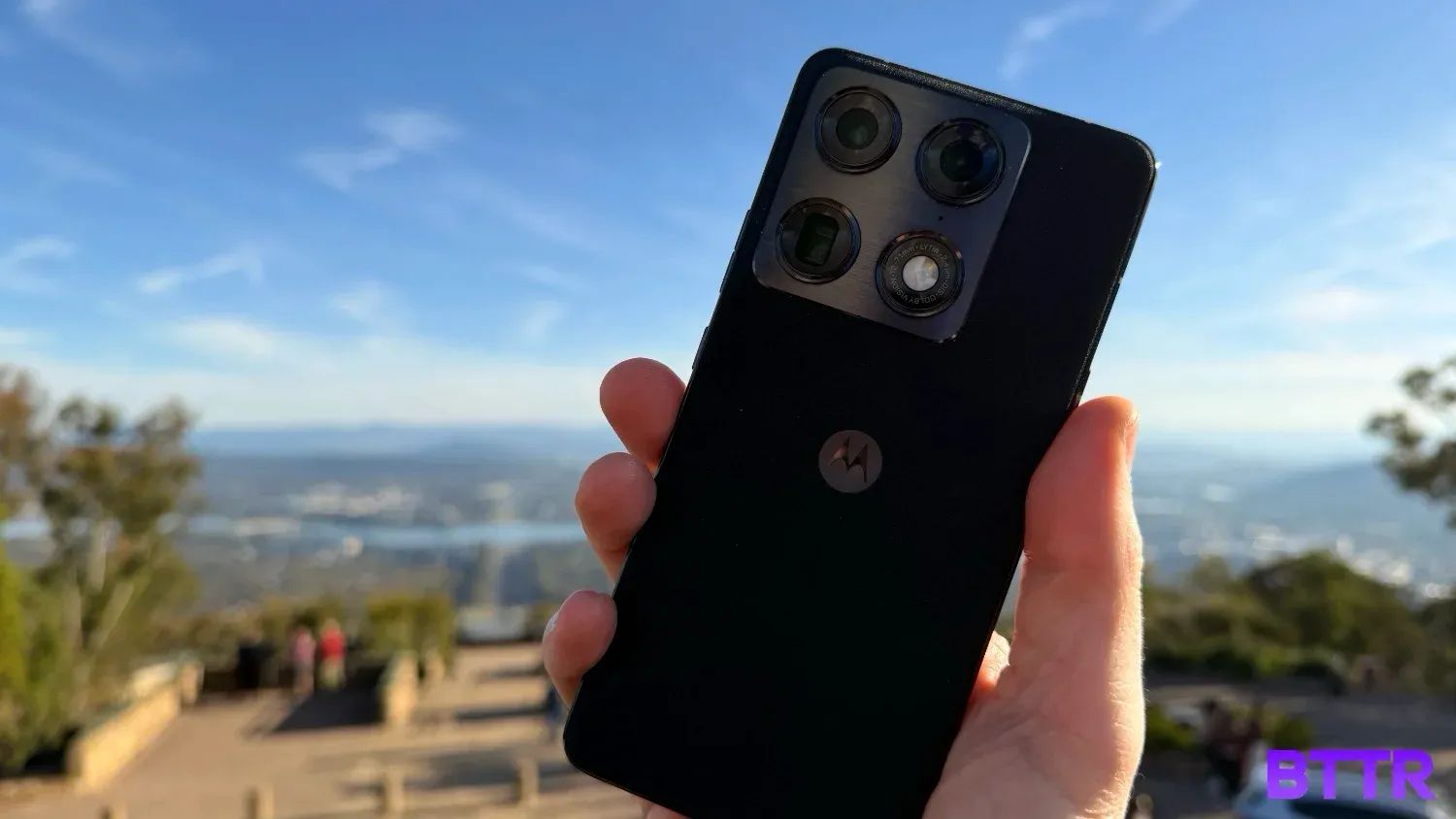
The Signature is a gorgeous smartphone. Sleek at the front, textured on the back and packed with high-end specifications, it’s the missing link in Motorola’s smartphone lineup.
Considering Moto has a history of releasing four Edge variants at slightly different mid-tier price points each year, it’s even more surprising that the flagship space has sat empty in Motorola’s range.
While there are plenty of small things that make the Signature a fantastic device, what stands out most is how well the whole package comes together.
The phone is superb in the hand. The tapered front edges, tiny bezel and textured back make it comfortable to hold, even though it still boasts a large 6.8-inch display.
The camera bump protrudes in a way that the phone still sits stable when rested on a table, without rocking back and forth or sliding off. The entire thing just slides in and out of your pocket effortlessly.
And when you turn it on, it works like a dream. It’s fast, responsive and has enough sophistication to make it interesting beyond “just another smartphone”, thanks to Motorola’s own software additions to Android.
Motorola Signature specs
| Category | Specification |
|---|---|
| Colours | PANTONE Carbon, PANTONE Martini Olive |
| Storage & RAM | 256GB, 512GB / 12GB RAM |
| Display |
6.8-inch Extreme AMOLED Super HD 1.5K (1264 × 2780 pixels) Up to 165Hz refresh rate Peak brightness 6,200 nits Pantone Validated Colour + SkinTone validation Dolby Vision + HDR10+ Gorilla Glass Victus 2 |
| Processor | Snapdragon 8 Gen 5 (3nm) Up to 3.8GHz CPU / ArcticMesh copper mesh liquid metal cooling |
| Rear cameras |
50MP Wide (f/1.6) — Sony LYTIA 828 main sensor 50MP Ultrawide (f/2.0) 50MP Periscope Telephoto — Sony LYTIA 600 (f/2.4, 3x optical / 100x Super Zoom Pro) |
| Front camera | 50MP (f/2.0) |
| Video | 8K Dolby Vision; 1080p slow motion at 240fps |
| Battery & charging |
5,200mAh silicon-carbon Up to 41 hours battery life 90W TurboPower wired (50% charge in 15 minutes) 50W TurboPower wireless (flat Qi — no Qi2 magnetic alignment) |
| Audio | Bose-tuned stereo speakers, Dolby Atmos |
| Size & weight | 162.1 × 76.4 × 6.99mm / 186g |
| Connectivity | Bluetooth 6 | Wi-Fi 7 | NFC | Dual-SIM (1 Nano SIM + eSIM) | 5G (sub-6) |
| Durability | IP68 + IP69 (1.2m for 30 min) / Gorilla Glass Victus 2 / Military-grade certified |
| OS | Android 16 |
| Software support | 7 years of OS and security updates |
| Retail price (AU) | $1,499 (256GB) / $1,699 (512GB) |
Design and build quality
I’ve already given a bit of a glowing summary of the Moto Signature’s design, but let me dive in a little deeper.
While Apple pioneered what I like to think of as the premium unboxing experience, Motorola is one of the few companies that has tried to add its own flavour to the experience.
It starts from the moment you open the box, and are hit with the slight hint of perfume. This isn’t something new, by the way – it’s something Motorola has been doing for a number of years.
Once you pull the phone out though, the Signature feels like a clear step up from the Edge Series. It’s noticeably thinner, with much smaller bezels. It looks elegant, even though the front is just another sheet of black (until you turn it on, of course).
The screen uses Gorilla Glass Victus 2, which means better scratch and drop protection, while the phone is rated IP68 and IP69, giving it good protection against dust and water.
The phone comes in both Pantone Carbon and Pantone Martini Olive colour options. I tested the Carbon, and while it’s close enough to black to make it look basic at a distance, the linen-inspired textured back makes it unique in a market of plastic and glass.
Motorola has included the dedicated AI button on the left-hand side of the device, which still can’t be programmed for non-AI functions, unfortunately.
On the right, you have a volume rocker and power button, which ironically has more customisation available than the AI key.
The entire phone is just 6.99 mm thick, and weighs just 186 grams. It’s built around the 3 nm Snapdragon 8 Gen 5 processor, has a copper mesh liquid cooling system to keep things humming, and offers speakers that are tuned by Bose, with support for Dolby Atmos.
Display performance
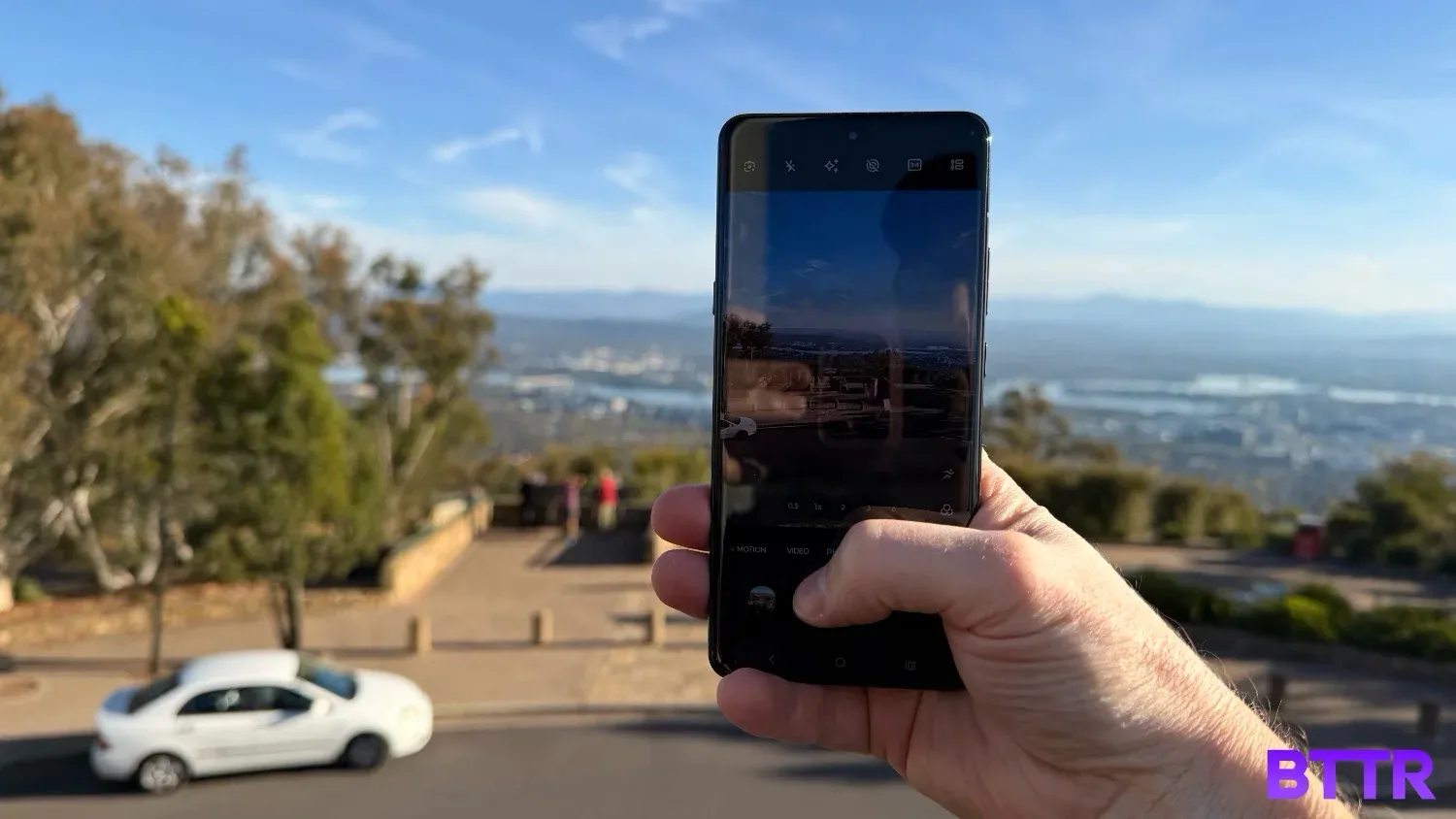
It’s pretty difficult to find a bad display in the flagship part of the smartphone market, but Motorola’s 6.8-inch Extreme AMOLED display is definitely up there as one of the best I’ve ever seen.
It packs in a 1.5K resolution (1264 × 2780), which is nice enough in itself. But the screen can also reach a 165 Hz refresh rate, giving it exceptionally smooth scrolling and motion.
That’s all combined with a peak brightness output of 6,200 nits, which honestly feels like overkill to me, but is worth pointing out.
If you’re worried that the brightness will blow out the colours, Motorola has continued its partnership with Pantone on this phone, with the screen still offering Pantone Validated Colour and Pantone SkinTone validation.
That means the photos and videos you see on the phone are as real to life as you could hope. The display offers over a billion colour shades, hitting 100% of the DCI-P3 colour space.
The phone supports both Dolby Vision and HDR10+, giving plenty of clarity in dark and bright scenes too.
But perhaps one of the most useful features is that alongside the IP ratings, the phone also works when you touch the screen with slightly wet hands.
Camera performance
Motorola hasn’t skimped on the camera quality here, either. Motorola are one of the few smartphone manufacturers to have their device’s camera array receive the DXOMARK Gold Label.
The rear camera array includes a 50MP main camera with an f/1.6 aperture using the Sony LYTIA 828 sensor. There’s a 50MP ultra-wide lens with an f/2.0 aperture, and a third 50MP periscope telephoto lens, with a 3x optical zoom and an f/2.4 aperture.
Around the front, there’s a 50MP f/2.0 pinhole camera for your selfies as well.
The phone can shoot 8K video at 60 frames per second, and it looks fantastic on the Signature’s screen. It will also shoot 1080p 240 frames per second slow motion, in case you want to have some fun.
What I like most though is that focus is fast, and the images come out great. If you like to be more in control, Pro mode is brilliant, offering real-time feedback on things like histograms and white balance.
As you would expect from the Pantone validation, colour reproduction is bright and vibrant. Low-light shots still have a good amount of detail without getting noisy, and the zoom gives plenty of detail at the 6x setting.
Once you hit the 100x digital zoom, things get a bit messier, but it’s still better than you might expect (though not as good as Samsung’s Galaxy S26 Ultra 100x zoom performance).





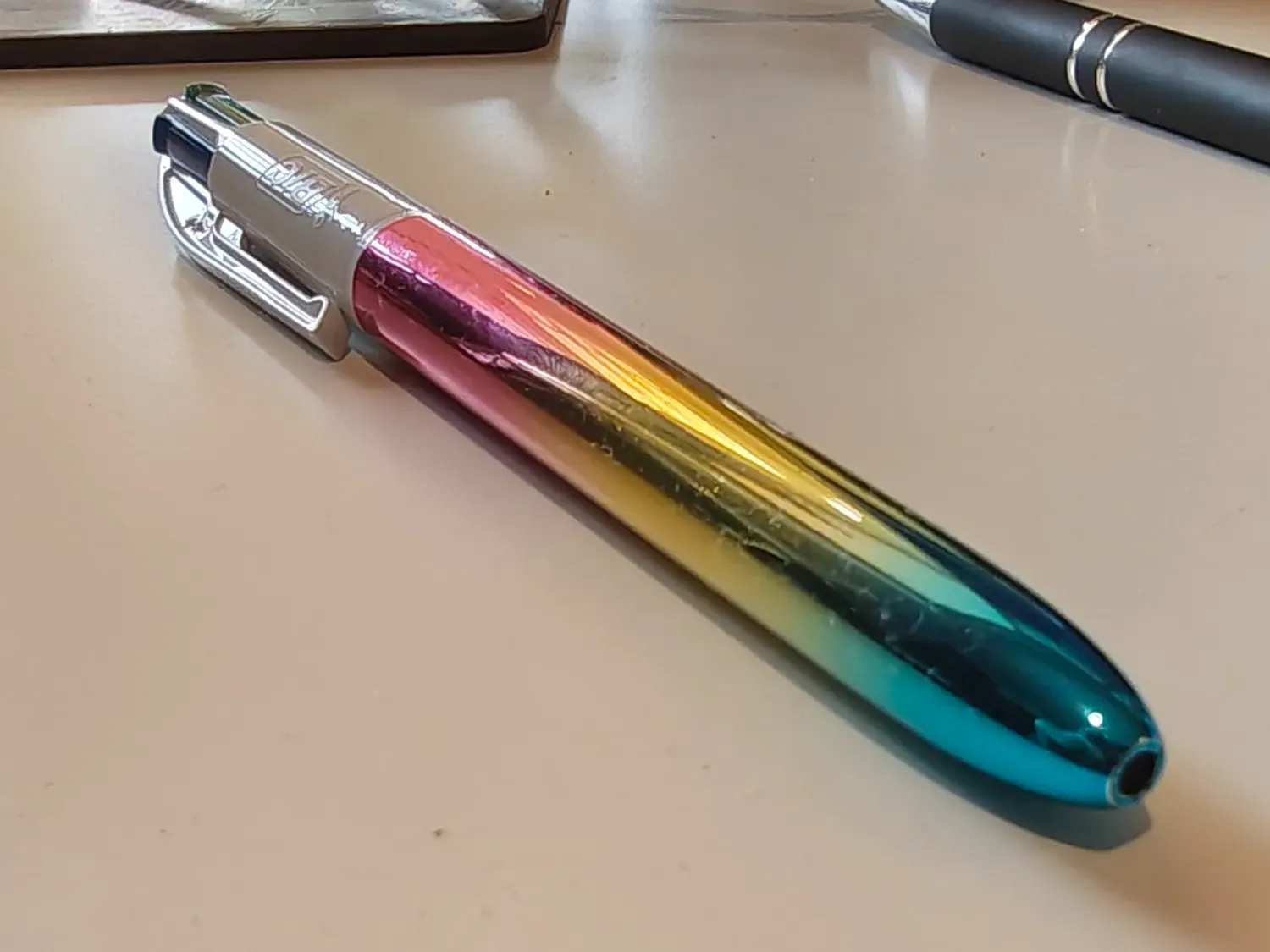

A range of sample images from the Motorola Signature
Performance and software
Motorola’s Edge phone models have typically offered a premium design and solid camera, but a mid-tier processor that falls behind when pushed to the limit.
The Signature’s Snapdragon 8 Gen 5 is a premium processor for a premium phone.
When it comes to benchmarks, the Signature performs well, though it still comes in behind flagships from Samsung and Apple across all of GeekBench 6’s scores.
What the benchmarks don’t tell you is how stable the phone is. Even playing Fortnite for a couple of hours (it was a rainy Sunday, don’t judge me!) with the BackBone Pro and the phone didn’t miss a beat, looking fantastic on screen as it played with the visual settings on high.
At this point of the review, it’s worth pointing out that Motorola has committed to offering seven years of OS and security updates, so the Signature promises to work well into the next decade.
Motorola has added a solid collection of its own apps to the device, as well as some unwanted bloatware pre-installed. I don’t care how much Microsoft is paying you, Motorola, but I don’t ever want to open CoPilot.
There's also TikTok, Facebook, Instagram, and LinkedIn preloaded. Perplexity comes pre-installed too, though Motorola offers six months of Perplexity Pro for free, which softens the blow.
For the most part, it’s all fine, though your early interactions tend to require you to agree to the terms of service for every separate app. It can feel frustrating, especially when apps like Moto AI and the recorder app – which can do similar things – require separate acceptance processes.
And speaking of AI apps – Motorola has gone for a digital assistant that lets you take notes or remember things, or get an update from across your comms apps.
I didn’t find it slid into my day-to-day workflow overly well, if I’m honest, and I wish the button were more customisable. But I feel that AI is an area no phone manufacturer is really nailing, aside from photo editing features.
Battery life and connectivity
The Signature’s battery has a 5,200 mAh capacity, so you know you’ll get through a day without any real dramas.
Because everyone uses their phone differently, I don’t worry about benchmarking battery life. But know that I could get through a day comfortably even when using the phone a lot, or up to two when I was a bit more productive doing other things.
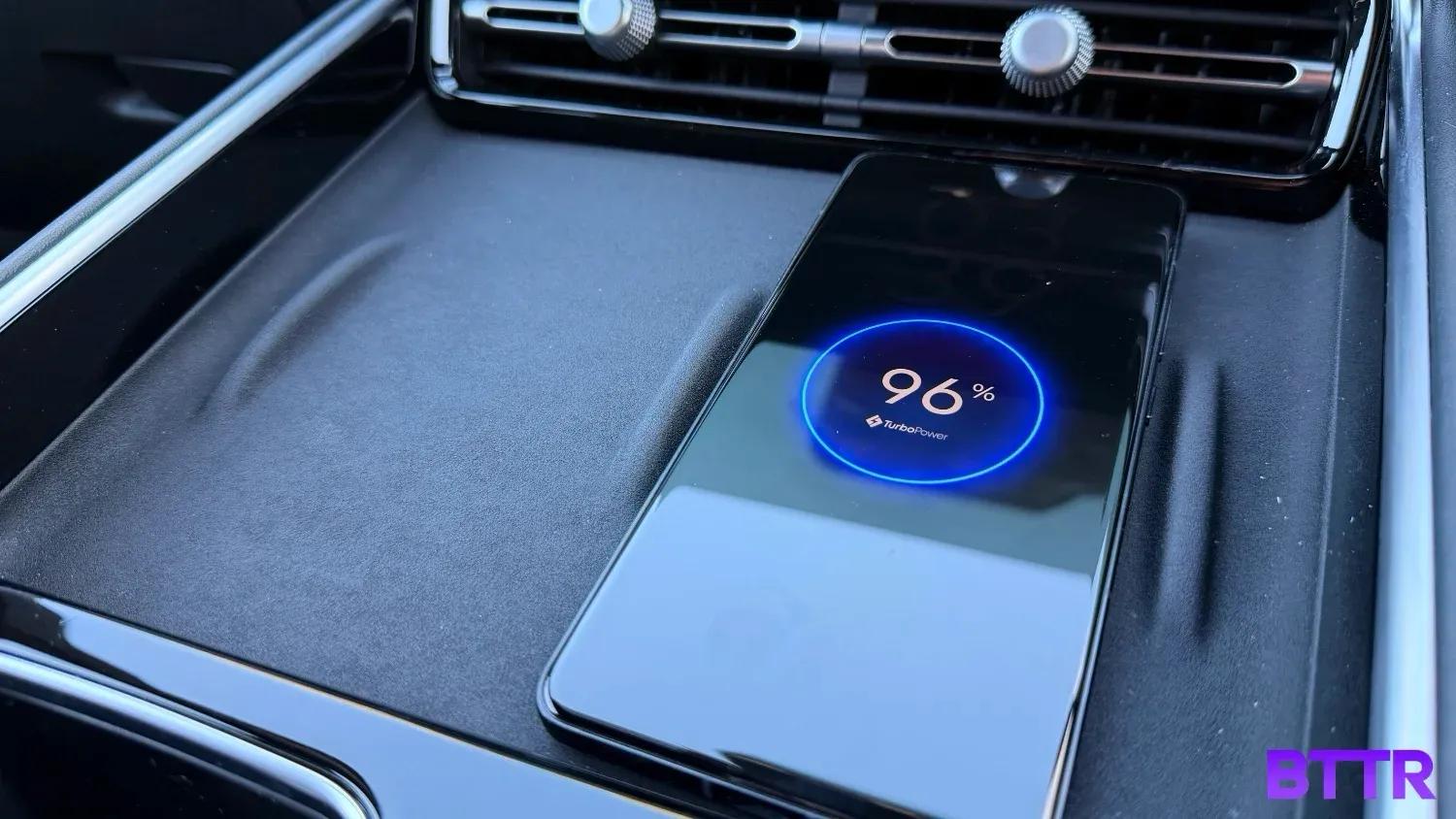
What’s even better is that Motorola supports both 90W wired charging and 50W wireless charging, though you need to buy a specific new charger to get those fast-charging speeds.
Unfortunately, though, the Signature does not support the magnetic attachment of Qi2 wireless charging. It’s probably the biggest disappointment in this phone for me – if I could bang it on a Qi2 charger at the end of the day, I’d be a happy man.
It still charges wirelessly, it just has to lay flat and in the right position.
Verdict
I know market share won’t change overnight, but the Motorola Signature is precisely the type of phone Moto needs to try to take on the duopoly of Apple and Samsung.
It’s gorgeous, powerful and well specced. Battery life is great, and the cameras are even better.
What’s more, it’s competitively priced compared to the flagship phones from the big two phone makers. At $1,499 for 256 GB or $1,699 for 512 GB, it not only holds its own in a competitive premium space, but stands apart from the traditional leaders as well.
I’d argue it’s one of – if not the best Android phone to buy right now.
Buy the Motorola Signature if:
- You want a premium Android flagship that looks and feels different to every iPhone and Galaxy on the market, at a lower starting price than either.
- Camera performance is a top priority. The Sony LYTIA 828 system is competitive with the big two, and the DXOMARK Gold Label recognition backs that up.
- You care about longevity. Seven years of OS and security updates means this phone will be relevant well into the 2030s.
Skip the Motorola Signature if:
- Qi2 magnetic wireless charging is part of your daily routine. The Signature charges wirelessly, but flat and in position only, which is a real step back from the convenience of magnetic alignment.
- You're deeply embedded in the Samsung or Apple ecosystem. The Signature is a great phone, but ecosystem lock-in is a real consideration when switching.
- AI-forward features are important to you. Moto AI exists, but it doesn't integrate as naturally as the AI tools Samsung and Apple have been building out for longer.
Latest smartphone deals
Frequently asked questions
Does the Motorola Signature support Qi2 wireless charging?
The Motorola Signature supports wireless charging at up to 50W, but it does not have built-in Qi2 magnets, so you can't use magnetic accessories or snap-on charging pucks the way you can with a MagSafe-compatible iPhone. The phone needs to lay flat and centred on a wireless charger to charge.
How does the Motorola Signature camera compare to the iPhone and Galaxy flagships?
It's competitive. The triple 50MP system, anchored by the Sony LYTIA 828 sensor, has earned a DXOMARK Gold Label, and in real-world use the images are sharp with fast, accurate focus. In benchmark terms, the Signature still sits just behind Samsung and Apple's top cameras, but the gap is narrower than the price difference would suggest.
How long will the Motorola Signature receive software updates?
Motorola has committed to seven years of OS and security updates for the Signature, matching what Samsung offers on its Galaxy S series and putting it well ahead of many Android rivals.
What does the dedicated AI button on the Motorola Signature do?
The physical button on the left side of the phone launches Moto AI, Motorola's built-in digital assistant. It can take notes, pull information from across your apps, and help you remember things. Its limitation is that it can only open Moto AI and cannot be remapped to any other function or app.
Is the Motorola Signature waterproof?
The Signature holds both IP68 and IP69 ratings, which means it can handle submersion and high-pressure water jets. The screen also works with slightly wet hands, which is a practical bonus for everyday use.