
BTTR is independent. We may earn a commission if you buy through our links. Why trust us?
The Sonos Play delivers the fantastic audio quality you'd expect from the brand, and its IP67 rating makes it the most water-resistant mid-size speaker in the Sonos lineup. At $499, though, it feels more like Sonos plugging a gap than bringing something new to the table, and the decision to ship without an AC adapter is baffling at this price point. If you're already in the Sonos ecosystem and want a portable speaker that can pull double duty around the home, it's a solid pick. If you're not already a Sonos household, there are more compelling entry points.
- Fantastic, well-balanced sound with a surprising amount of bass
- IP67 water and dust resistance is better than the Move 2's IP56
- Up to 24 hours battery life means it rarely needs a mid-day charge
- Charging dock lets it pull double duty as a home speaker on Wi-Fi
- No AC adapter in the box is inexcusable for a $499 speaker
- Bass distorts slightly at maximum volume on bass-heavy tracks
- Doesn't bring any real innovation to the Sonos lineup
- Sonos Voice Control requires you to americanise your pronunciation to register reliably
With the launch of the Play, Sonos now has a pretty respectable range of portable speakers.
There's the Move 2, with its superior sound, but bulky body that's less "portable" than "movable". Then there's the Roam 2, which is so compact it's almost pocketable, but doesn't really deliver the oomph you would expect for a network-connected speaker.
The Play sits happily in the middle of these two models, balancing the portability of a mid-size speaker with the sound quality the extra space allows.
But sometimes, being the middle option means that you're okay at most things, but not great at anything. Other times, it means you're just right.
So which is the Sonos Play?
What makes the Sonos Play stand out?
What you're actually buying with the Sonos Play is not so much the speaker itself, but the ecosystem it connects into. It's a Sonos speaker, so it fits into a networked home environment where your entire house can be playing the same music, or different rooms can be streaming different music depending on your needs.
But it's also a portable wireless speaker. It has Bluetooth connectivity, so you can take it with you, pair it with your phone, and listen to whatever you want, wherever you want.
Functionally, it's not too different from the Move 2. It has similar controls that let you adjust volume and skip tracks, it will connect to a voice assistant when on Wi-Fi, and you can mute the microphone with the switch on the back.
Where the Play does separate itself from the Move 2 is on waterproofing. The IP67 rating matches the compact Roam 2 and is a step up from the Move 2's IP56.
The Play also includes automatic TruePlay tuning. Sonos has offered TruePlay for years, but previous versions required a manual calibration step through the app. On the Play, it's fully automatic, which is important for a portable speaker you're going to use in different environments.
For a speaker you're taking to the beach, the pool, or out in the rain, that extra protection is worth knowing about.
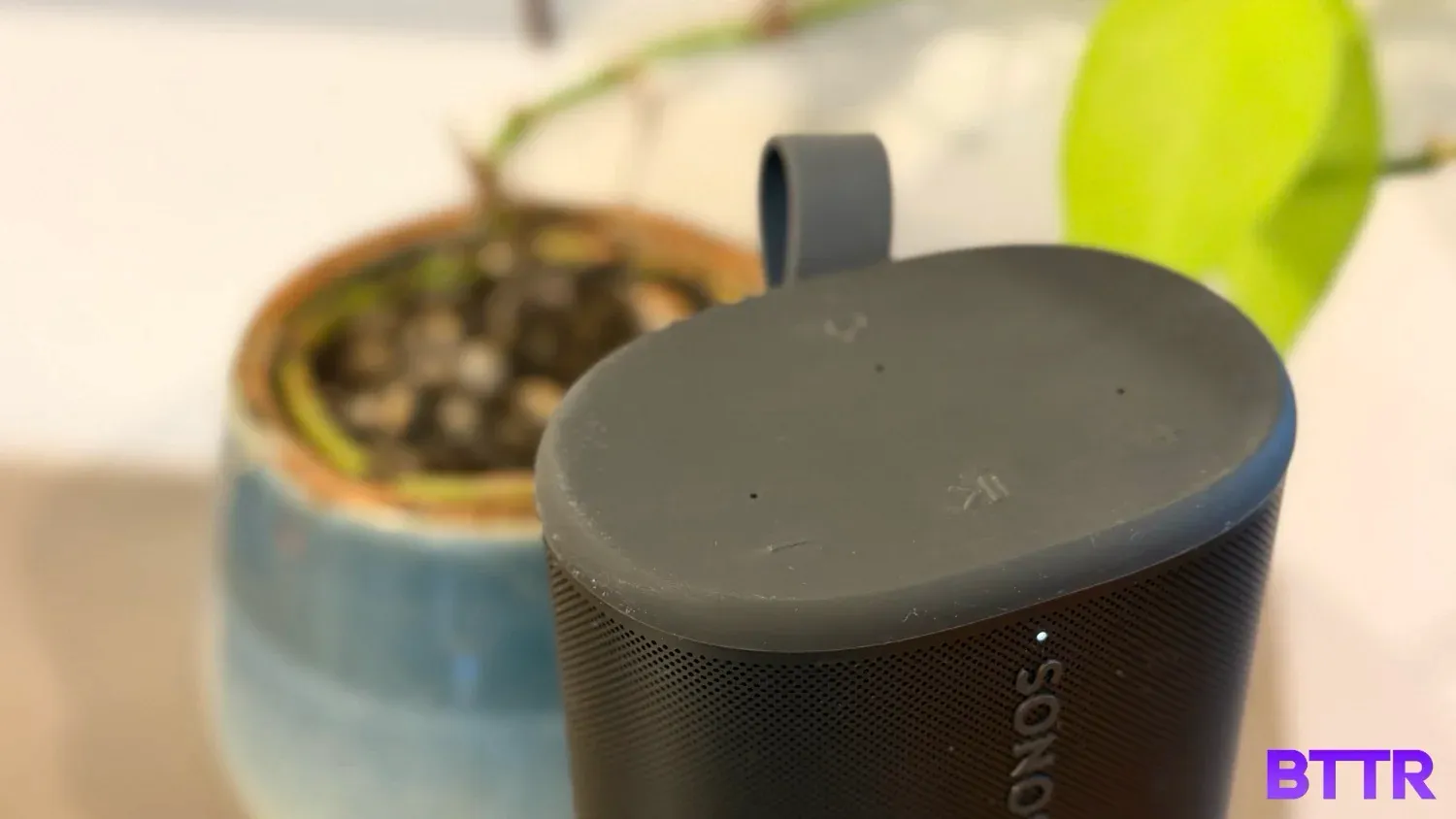
Sonos Play specs
| Specification | Value |
|---|---|
| Price | $499 RRP AUD |
| Dimensions | 192.3 x 112.5 x 76.7 mm |
| Weight | 1.3 kg |
| Colours | Black, White |
| IP Rating | IP67 |
| Battery capacity | 35 Wh |
| Battery life | Up to 24 hours |
| Bluetooth | Bluetooth 5.3 |
| Wi-Fi | Wi-Fi 6 |
| Voice assistant | Sonos Voice Control |
| What's in the box | Sonos Play (with integrated strap loop), charging base, documentation |
Design and build quality
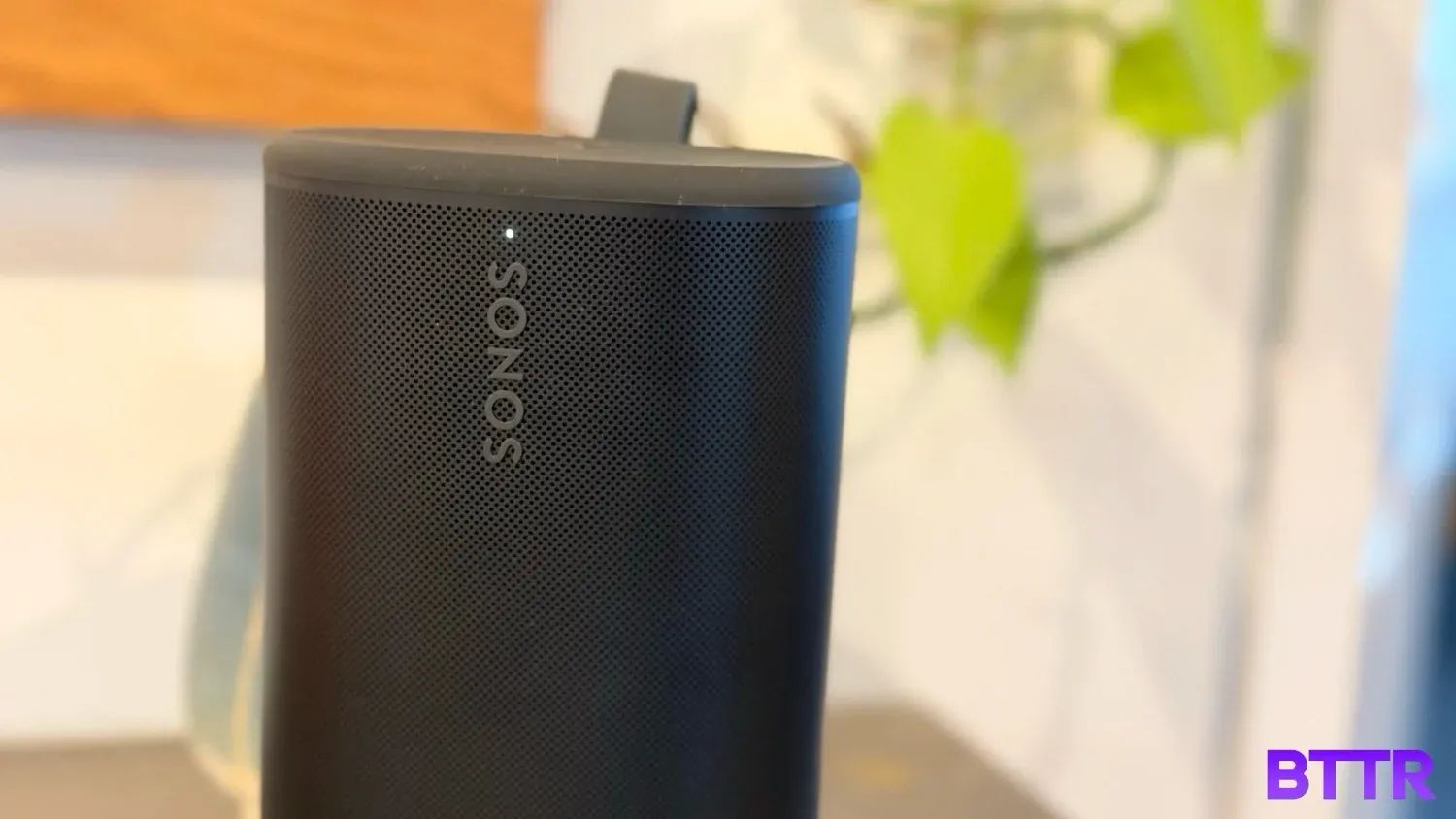
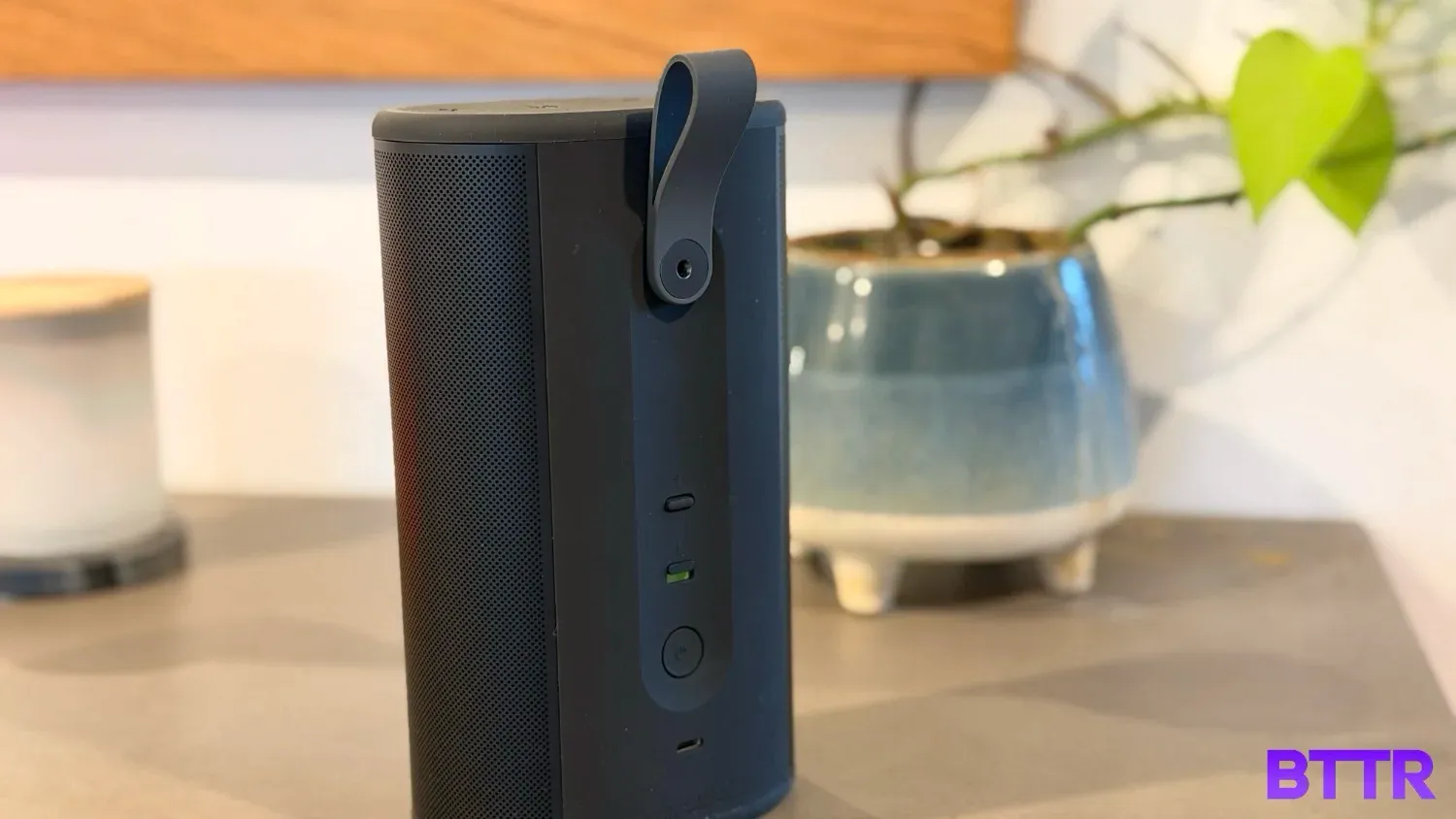
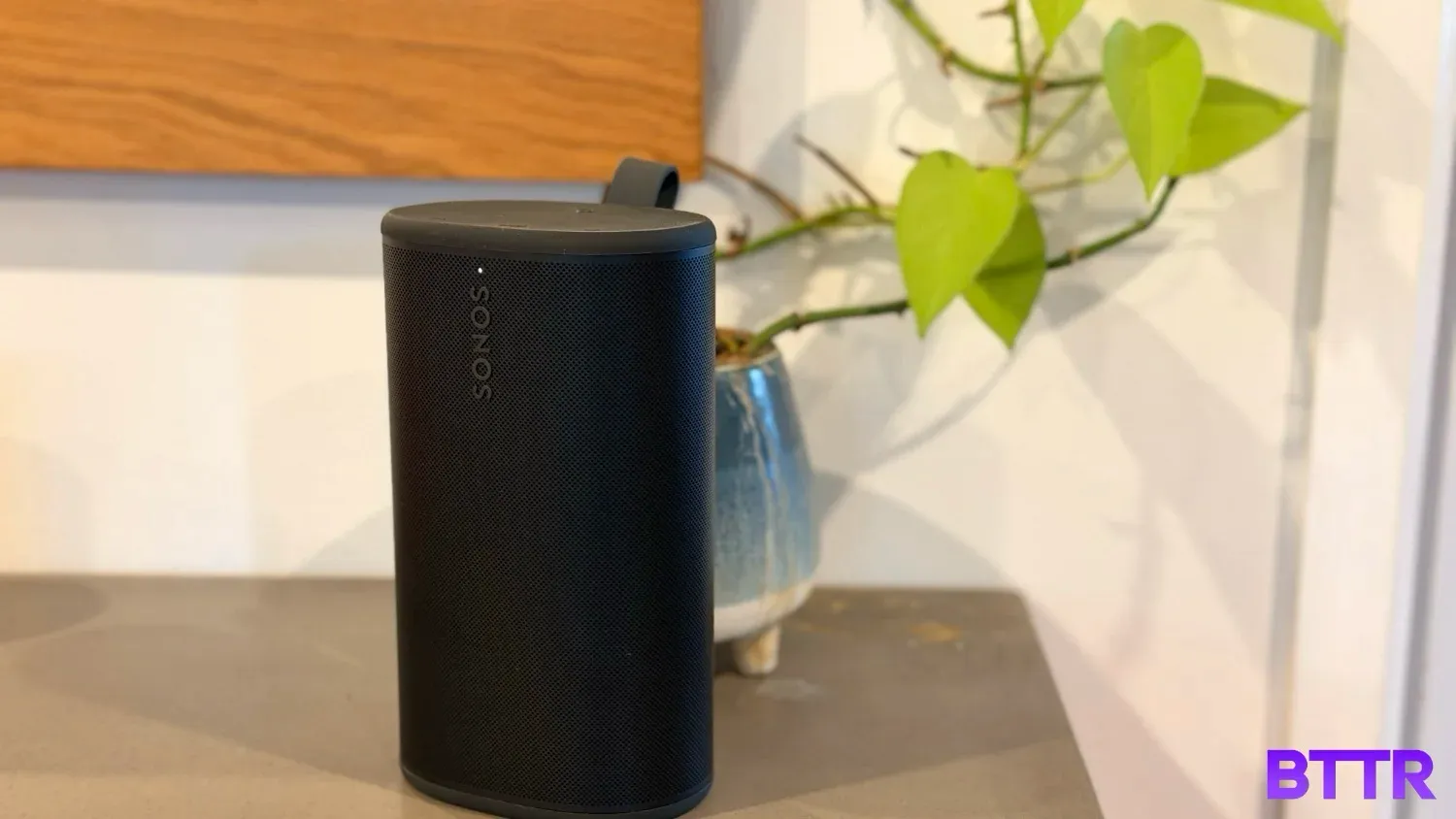
It's a Sonos speaker, so it looks good, it's sleek, and it has a solid build. It comes in black and white, like most Sonos speakers, with physical buttons on the top for volume and track controls. On the back, there's a pairing button and a hardware microphone mute switch.
The strap loop is integrated into the speaker rather than being a separate accessory, which is a sensible choice for something designed to be carried around. It’s a discreet inclusion designed more for a single digit than your wrist, but you can use it to attach the Play to a bag hook, or a fence post at a barbecue.
Because it's also a home networked speaker, the Play comes with a charging base that plugs in via USB-C. You can dock it there to keep it charged and have it available on your home wireless network. It's a smart bit of design: the speaker transitions naturally between portable Bluetooth mode when you head out, and home Wi-Fi mode when it's sitting on the bench in the kitchen.
The extremely frustrating catch is that the base does not come with an AC adapter.
There is a growing trend, particularly in mobile devices, to not offer the wall adapter for a device, and sometimes not even the cable. For phones, I can kind of understand that because you update your phone every couple of years, and if you've got a USB-C adapter that has USB-C ports it's going to work on pretty much anything.
But for a speaker that is designed to be plugged in at home? Not including that adapter doesn't make sense.
For what is a $499 speaker, to not include an adapter that probably costs five bucks, ten bucks, or even twenty bucks, it's ridiculous. I don't have spare USB-C adapters just lying around my house (which is surprising given the amount of product that comes through here).
So for most of the review period, I had to plug the Sonos Play directly into a USB port to charge it up. That's very frustrating at this price.
Performance
This is, by and large, where Sonos dominates the market, and the Play is no exception. The sound quality is fantastic. It offers a surprising amount of bass, but stays very well-balanced across all different types of music.
I listened to a lot of Mumford & Sons during the review period and consistently came away impressed. The mids and highs are both really good.
The one exception is that the bass does wash out a little at the highest volumes. It was more the bass-heavy tracks that distorted a bit, and it's probably something to do with the size of the enclosure and how much volume it can physically produce.
For the most part, it was fine… if you're not regularly listening at maximum volume, you may never notice. But it's worth flagging, especially compared to the Move 2, where the larger body gives it more room to breathe at the low end.
Part of the reason the Play sounds good regardless of where you put it is the automatic TruePlay tuning. Because it's fully automatic, it's hard to discern whether it's actively making a difference in any given moment, but I think that's kind of the point. The speaker always sounded good, whether I was playing it in a small room, a large room, or outside.
Battery life is solid. Sonos rates the Play at up to 24 hours, and in practice I never really worried about it because you dock it when it's at home. You never really listen to a speaker for 24 hours straight, so it's hard to properly verify the claim, but I never struggled. It didn't die on me unexpectedly.
The Sonos app is fine. It's improved a lot since the troubled period around the Sonos Ace launch. I know some people still have issues with it, but I haven't had any ongoing problems during this review period.
Adding the Play to an existing speaker setup is simple. The only thing to remember is to turn it on manually when it's not on the base and has gone to sleep. It won't wake up automatically the way a dedicated home speaker would.
The Sonos Voice Control works as advertised, with one quirk: you have to americanise your pronunciation of "Sonos" to get it to register reliably. It's a small thing, but noticeable when you're using it day to day.
Verdict
The Sonos Play is a great speaker that feels like it's plugging a gap rather than bringing any real innovation to the lineup.
Sonos has spoiled us over the past decade with some really great tech — the TruePlay room calibration, the Arc's Dolby Atmos support, the Move's introduction of a proper portable Sonos speaker.
The Play doesn't have a moment like that. It's a well-executed product that fits neatly between the Move 2 and the Roam 2, and that's fine.
The sound quality is where it earns its keep. Well-balanced audio with a good low end, IP67 water resistance, 24 hours of battery life, and that seamless transition between Bluetooth and home Wi-Fi. The no-adapter decision remains baffling at $499, though.
Its price and feature set mean the Play is still going to be best served for someone who already has Sonos speakers around the home.
If you're in that camp, it's a great portable option that slots right into your existing setup. If you're not already a Sonos household, there are more compelling first Sonos speakers to start with, and cheaper Bluetooth-only options that deliver excellent portability without the ecosystem premium.
Buy the Sonos Play if:
- You're already in the Sonos ecosystem and want a portable speaker to match. The Play integrates seamlessly with existing Sonos setups and moves between Bluetooth and home Wi-Fi without any fuss.
- You need serious waterproofing in a mid-size portable speaker. The IP67 rating beats the Move 2's IP56, making it the stronger choice for outdoor use around water.
- You want a speaker that works both around the house and out of it. The charging dock and Wi-Fi support make it a proper home speaker when it's not on the move.
Skip the Sonos Play if
- You're not already in the Sonos ecosystem. At $499, a big part of what you're paying for is Sonos integration — without the rest of the ecosystem, there are better options at this price.
- You already own a Move 2. There's not enough differentiation here to justify the smaller speaker.
- You just want a great portable Bluetooth speaker. There are cheaper alternatives that deliver comparable sound without the ecosystem premium.
Latest speaker deals
Frequently Asked Questions
How does the Sonos Play compare to the Sonos Move 2?
The Play is smaller and lighter than the Move 2, and carries a higher IP67 water resistance rating versus the Move 2's IP56. The trade-off is that the Move 2's larger enclosure gives it more room for bass at high volumes. Both speakers use a charging dock and support multi-room audio via Wi-Fi, with Bluetooth available when you're away from home.
Does the Sonos Play come with a wall adapter?
Frustratingly, no. It's a real disappointment at $499. The charging base is included, but the cable terminates in a USB-C connector, with no AC adapter in the box. You'll need to supply your own USB-C wall charger.
How long does the Sonos Play battery last?
Sonos rates the Play at up to 24 hours from its 35 Wh battery. In practice, the docking setup at home means you'll rarely be tracking the battery closely, but it held up well across the review period without any unexpected dead moments.
Does the Sonos Play work as a home speaker?
Yes. When docked on its charging base and connected to Wi-Fi, the Play functions as a standard Sonos home speaker. You can add it to a multi-room group, control it through the Sonos app, and use Sonos Voice Control. It's designed to move between portable Bluetooth use away from home and networked home speaker use when it's on the dock.
Is the Sonos app still a problem?
It's improved significantly since the troubled period around the Sonos Ace launch. Some people still report ongoing issues, but across this review period there were no major problems. Adding the Play to an existing setup was straightforward, and day-to-day performance was reliable.