

BTTR is independent. We may earn a commission if you buy through our links. Why trust us?
The Tiggo 9 is a good car. It's comfortable to drive, it looks pretty stylish, and there's a fair amount of room in there. But what driving it for a week defined for me is that I don't think I need a plug-in hybrid — and I suspect that's true for most people considering one. You suddenly have twice the responsibility to refuel; You need to fill the petrol tank and manually recharge the battery.
- Quiet cabin with a fantastic Sony sound system — including headrest speakers that send navigation to the driver only, which is brilliant
- EV mode is great for short daily drives — doing a school run without using any petrol is a nice preview of EV life
- 315kW/580Nm combined output delivers a real kick in the back of your seat for such a big car
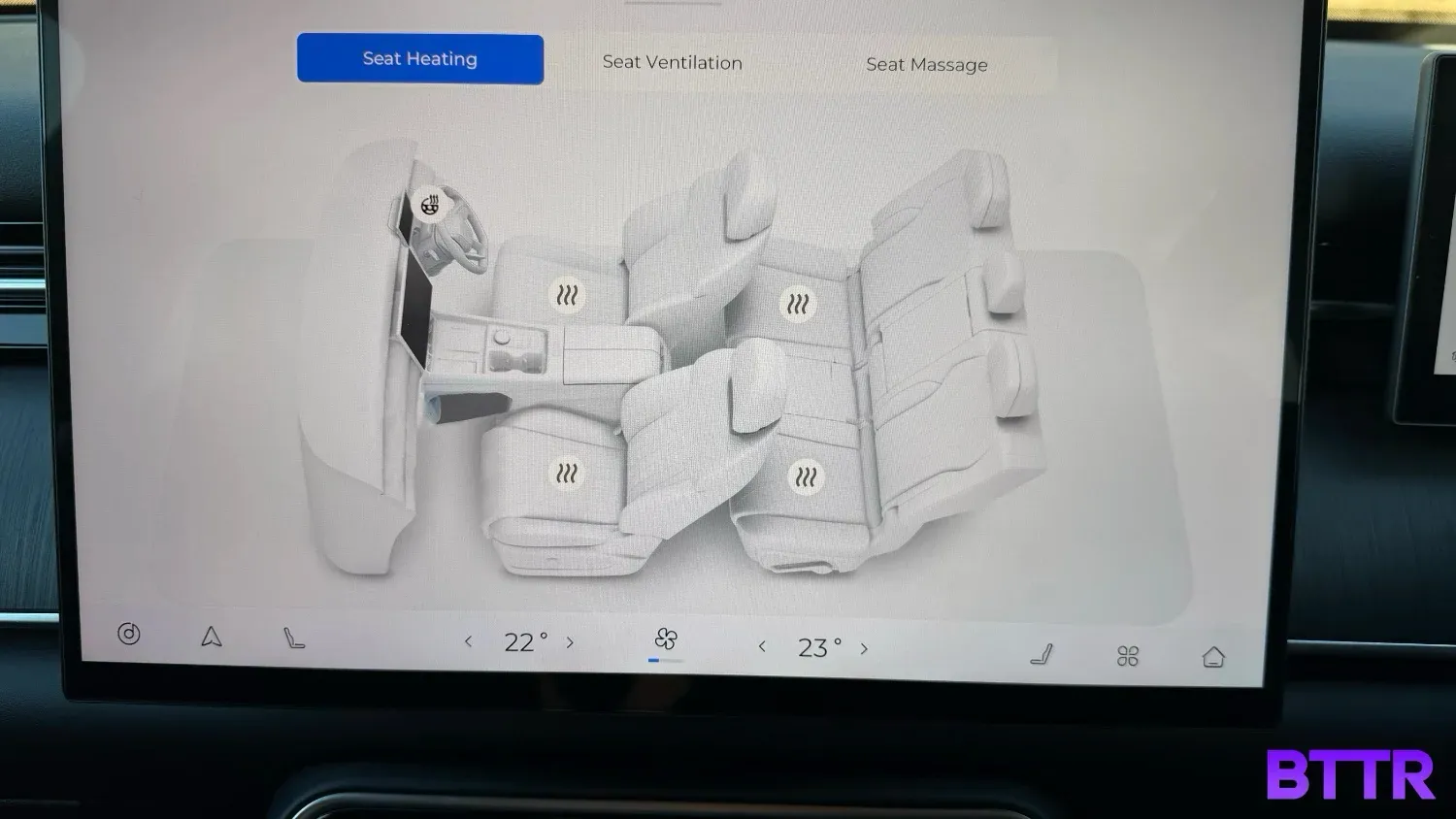
- Massively equipped for $59,990: massage seats, auto parking, wireless CarPlay, heated and cooled seats, head-up display
- Steering wheel controls are spongy and need a very precise press, which means you end up looking at the wheel while driving
- Boot floor doesn't lie flat with the third row folded, and the tyre repair kit lives in a Velcro bag with no dedicated storage space
- Drink holders are nowhere near big enough for anything larger than a 600ml bottle or a takeaway coffee
I've been driving a Hyundai Santa Fe for five years now and I love that car. It's such a good car that’s really comfortable to drive and has heaps of space.
The only downside is that it's a diesel, and the cost of diesel at the moment is ridiculous. So my wife and I are in the early stages of working out what comes next.
I want to go electric, but she's not ready. She does most of the driving, covering a fair bit of ground for work, and she has serious range anxiety. The idea of being stuck somewhere with a flat battery worries her.
So when the opportunity to spend a week with the Chery Tiggo 9 Super Hybrid came up, I jumped at it. A plug-in hybrid felt like the happy go-between: you get the battery, which offers emissions-free driving with a limited range, but if you need to go a little further, you kick into petrol mode.
The combination of both means you can achieve greater range than you would with a traditional petrol vehicle.
Testing the Tiggo 9 for a week did something I wasn't expecting. It didn't sell me on plug-in hybrids. But I'll get to that.
What makes the Chery Tiggo 9 Super Hybrid Ultimate AWD stand out?
This is a seven-seat plug-in hybrid that has a range of over a thousand kilometres in hybrid mode, apparently. I didn't quite get there during the week, and there are some conditions attached to that figure, so I'm not going to stress about it too much. What I will say is that the range held up very well in the real world.
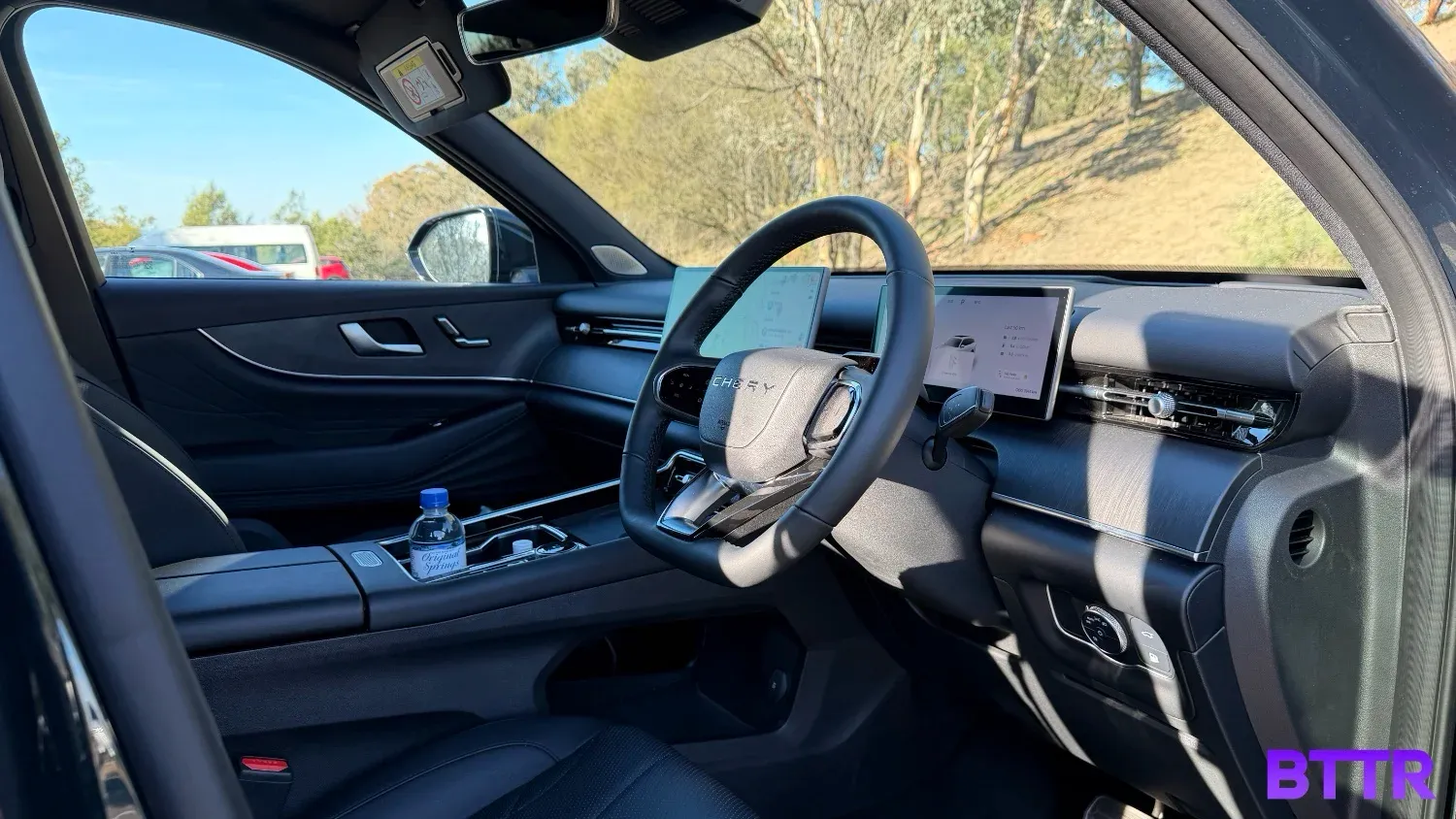
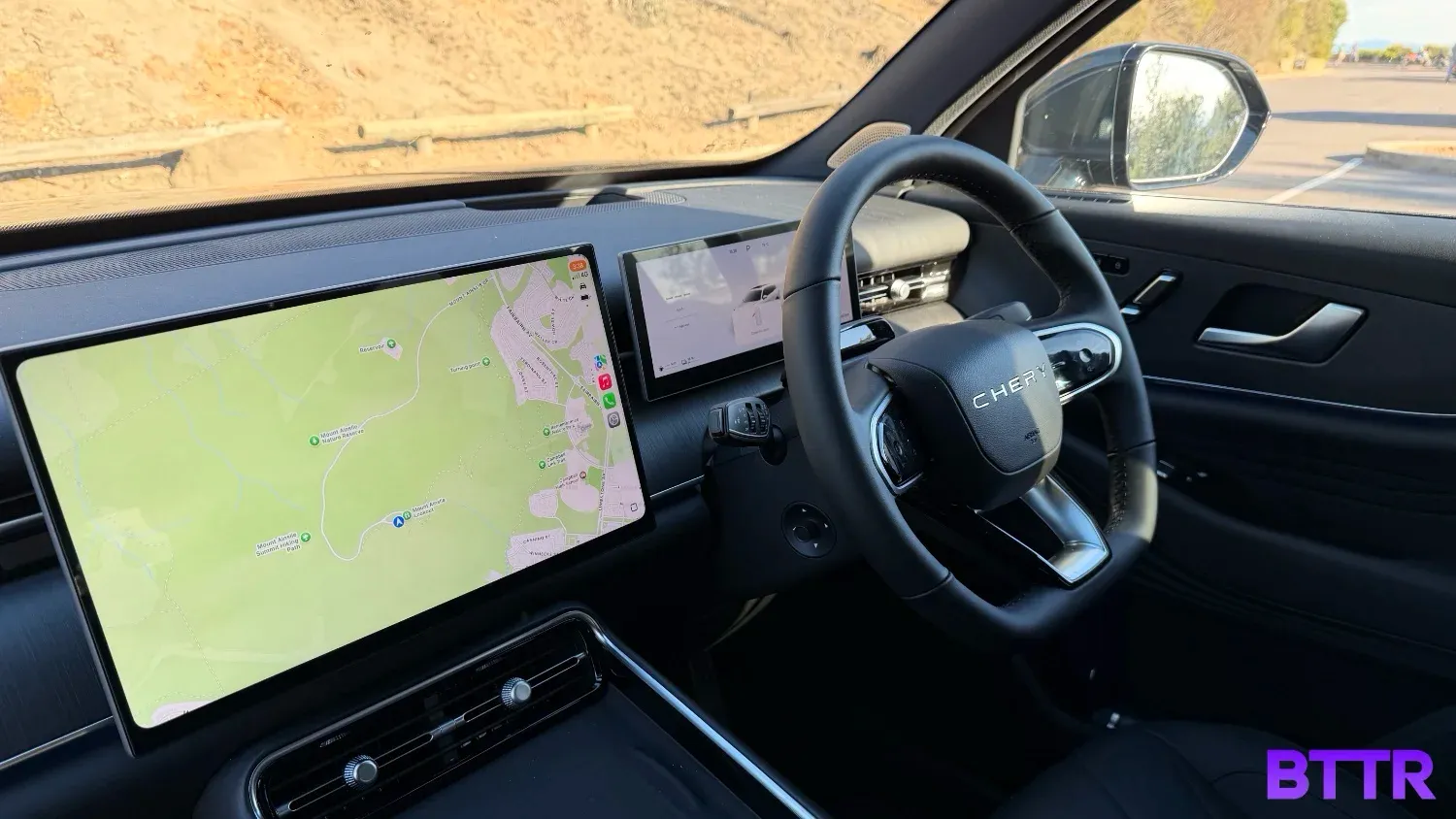
In terms of what you get, the list is long. There's a massive digital display in the centre of the dash, a secondary digital display behind the wheel for all your key information, wireless CarPlay and Android Auto, heated and cooled seats, voice control, wireless charging for your phone, cameras everywhere, and (because why not?) massage chairs for the front seats.
At $59,990 for the Ultimate AWD, it's a lot of car for the money.
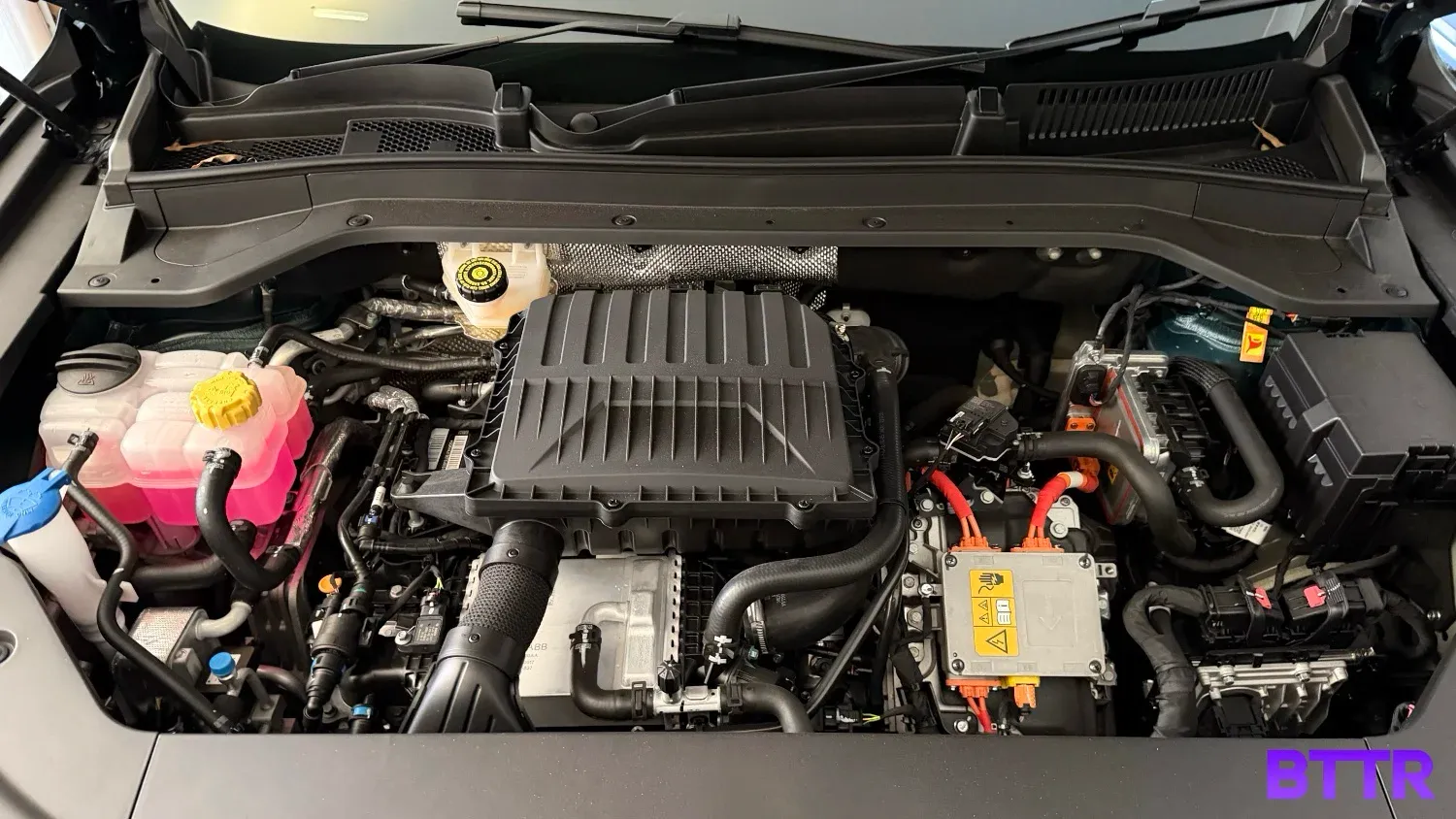
The powertrain uses three electric motors – two at the front, one at the rear – combined with a 1.5-litre turbocharged petrol engine through a Dedicated Hybrid Transmission.
All-wheel drive comes from that rear motor independently powering the back axle. The safety list covers autonomous emergency braking, adaptive cruise control, blind spot detection, lane keeping, rear cross-traffic braking, and a Driver Monitoring System, among others. There are ten airbags.
It is, on paper, a very serious family car.
Chery Tiggo 9 Super Hybrid Ultimate AWD specs
| Specification | Value |
|---|---|
| Price | $59,990 RRP (Ultimate AWD) |
| Engine | 1.5L Turbocharged Petrol + 3 Electric Motors |
| Combined Power | 315kW |
| Combined Torque | 580Nm |
| Transmission | Dedicated Hybrid Transmission (3DHT) |
| Driven Wheels | All Wheel Drive (AWD) |
| Battery Capacity | 34kWh Lithium-ion |
| Electric Range (NEDC) | 170km |
| Total Range | Up to 1,250km |
| Fuel Consumption (combined) | 1.4L/100km |
| Fuel Tank Capacity | 70L |
| AC Charging (Type 2) | 6.6kW Max |
| DC Charging (CCS 2) | 71kW Max |
| Dimensions (L x W x H) | 4,800 x 1,930 x 1,730mm |
| Wheelbase | 2,750mm |
| Tare Mass | 2,220kg |
| Seats | 7 |
| Wheels | 20" Alloy (Machined Finish) |
| Colours | Aurora Green, Star White, Technical Grey, Cosmic Black, Mercurial Grey Matte (Ultimate only) |
| Warranty | 7 years / unlimited km (vehicle); 8 years / unlimited km (battery) |
Design and build quality
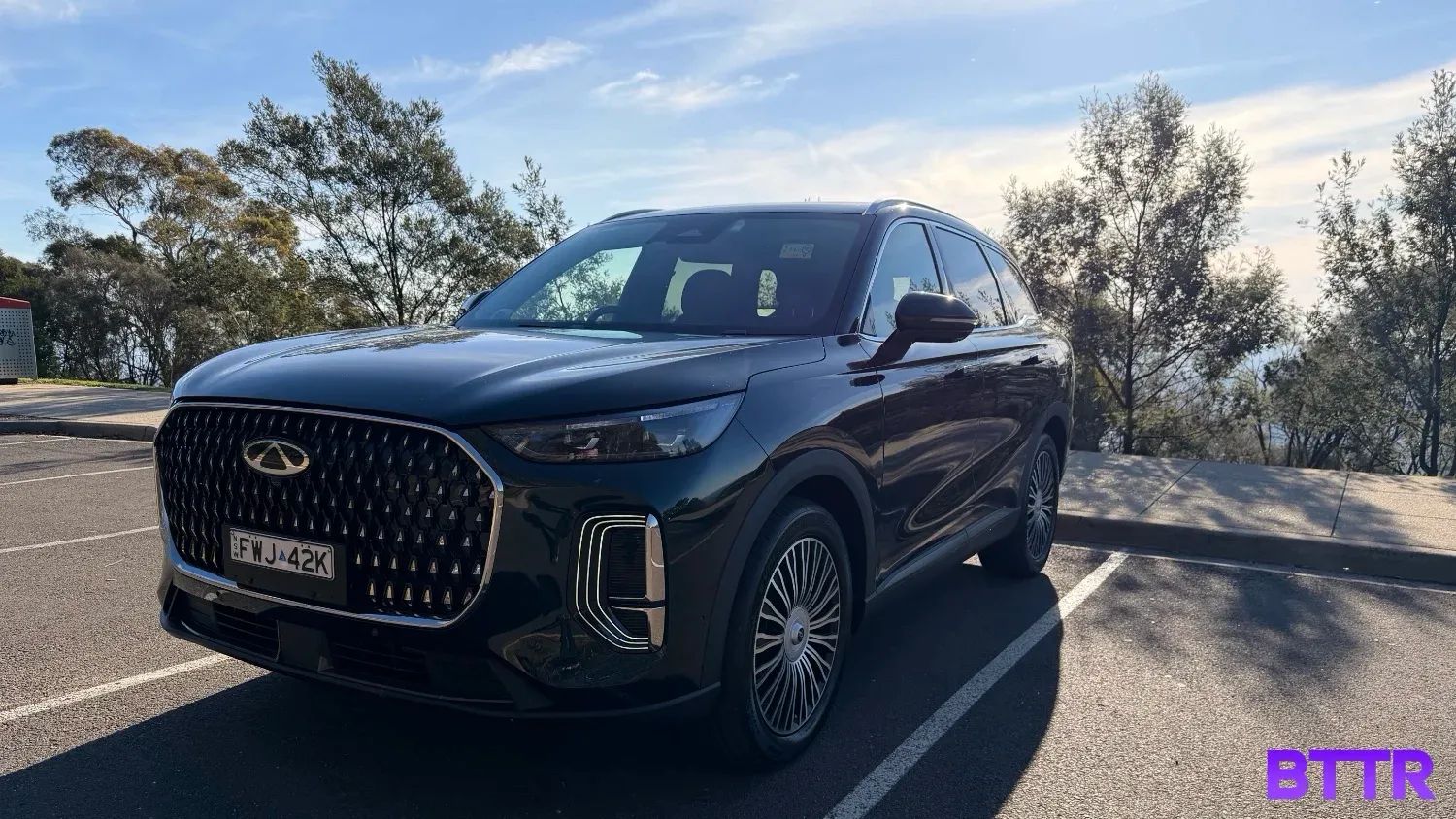
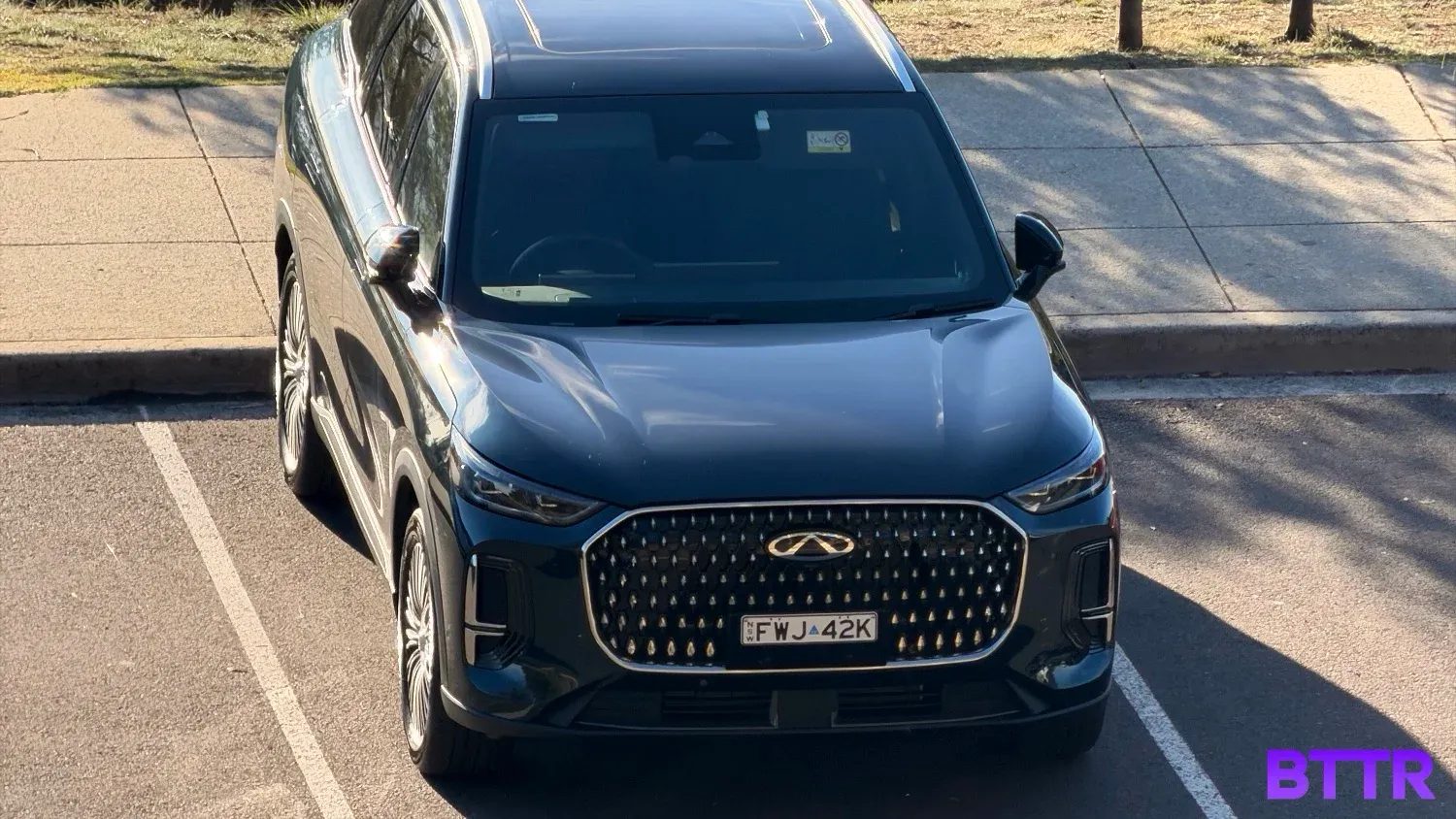
From the outside, the car is really quite nice. It's large, it's sleek, and it's clearly designed for families.
It’s the kind of vehicle that can pick up all the kids and drive them around without looking like it's trying too hard. I do like the grille at the front, and with the recessed handles on the doors it feels sleek from the side.
The model I tested was Aurora Green, which is a deep, rich colour that looks great in person, though it’s probably not the colour I would choose if I was buying the car.
The full panoramic sunroof is on the Ultimate, and yeah, I love a sunroof.
Like a lot of seven-seaters, there's not a huge amount of space in that back row if you actually try to sit back there. If you keep them down (which is what I do with the Santa Fe most of the time), you end up with a reasonable amount of storage space.
You do lose a bit compared to a straight petrol or diesel SUV, because you've got to have both the engine and the battery in there, somehow. But the Tiggo 9 is not lacking for storage space overall.
It's the details where things get interesting, and not always in a good way. The floor of the boot with the third row seats down doesn't lie flat.
That seems a little odd to me. My Santa Fe lies flat, and it's one of the reasons I really like that car.
When I first opened the boot, I was surprised to see there was also a little bag with a tyre repair kit attached to the side with Velcro. It doesn’t have a dedicated home, it just sits there, taking up space, stuck on with Velcro.
Whoever designed the storage of this car didn't leave space for the tyre repair kit that needed to be in there. That’s really surprising.
Inside, the central screen is gorgeous. But there are a few smaller things that you wouldn't notice until you actually lived with the car.
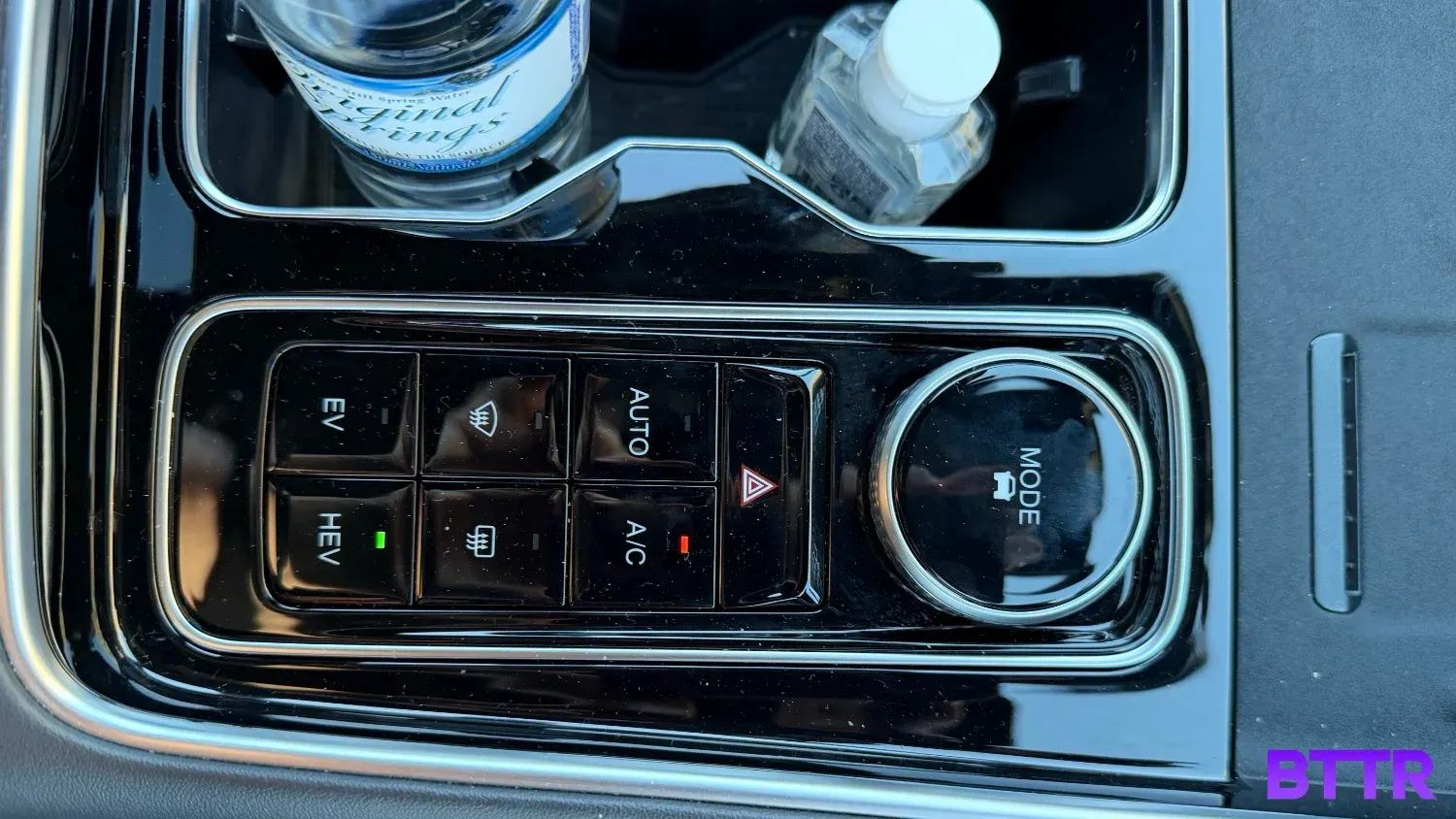
The drink holders in the centre console are nowhere near big enough. I've been using the Thermos Icon series water bottle, and it doesn't fit. Not only that, but most of the drink bottles my family use don't fit either.
The size is fine for a takeaway cup of coffee, or a 600 ml purchased bottle of water, but if you've got anything larger, it's going to struggle. That just doesn't make sense to me in a family car.
The lower storage compartment beneath the wireless charging pad is a bit hard to get into from the driver’s side. And the USB ports are buried down in there, but on the passenger side.
When I first got the car and tried to set it up, I knew it had wireless CarPlay so I tried to connect my phone wirelessly, and it wouldn't work. It took me ages to figure out that I needed to plug in via cable first to approve the car for CarPlay.
When I hopped in the car by myself in the driver’s side, I had no idea where the cable port even was. It ended up taking my wife and I together to track it down, (which probably says more about me than I should let on).
I'm also not a fan of the gear selector being on the steering column. I'll admit that's a personal preference. But when you're trying to park – reversing into a spot, then moving forward, then going to reverse again – it often goes into Neutral when you wanted Reverse.
You don't notice because it's just a tiny letter on the display, so you try to accelerate and go nowhere, and you're sitting there while people are waiting behind you.
There is a rotary dial in the centre console for cycling between Eco, Sport, and Snow drive modes — and honestly I don't know why you need a dial for that. That dial would be much better served as the gear selector, like the MG S5 does.
Performance
On the road
I am not a car guy. I don't love driving. But I will say I found the Tiggo 9 to be a very comfortable drive. I took it around the neighbourhood a few times and then did a day trip down to Canberra from Sydney, and it was really comfortable to drive for an extended period of time.
On the highway and on suburban roads it does a great job of letting you cruise along comfortably. The cabin at 110km/h is quiet, which I assume means the acoustic glass on the windscreen and front doors makes a real difference.
It's also got power. It can really take off for a big car. Trying to overtake someone on the freeway, when you put your foot down just a little bit heavier than normal, there is a real kick in the back of your seat as the car takes off. I was impressed for such a big vehicle.
Sound system and cabin tech
The sound system is fantastic. It sounds great, and you only have to take it to about a quarter to a third of maximum volume to hear everything really clearly. There’s good bass and plenty of detail.
Doing 110km/h down the freeway towards Canberra, the cabin was so quiet that you barely need to turn up the music at all.
There is also in-cabin lighting that syncs to the music, which is not functionally useful but is pretty cool.
The headrest navigation speaker is worth calling out separately, because I really loved it. Your navigation instructions come through a speaker built into the driver's seat headrest, rather than through the front speakers.
That means you can have the music going and only the driver really needs to hear the navigation instructions. It's brilliant. The one caveat is that when those headrest instructions fire, the car still lowers the volume on the main speakers, which it doesn't really need to do, because the sound is coming through right next to your ears in the headrest.
There may be a setting to change that somewhere in the menus, but I didn't look too hard to find it.
The steering wheel controls
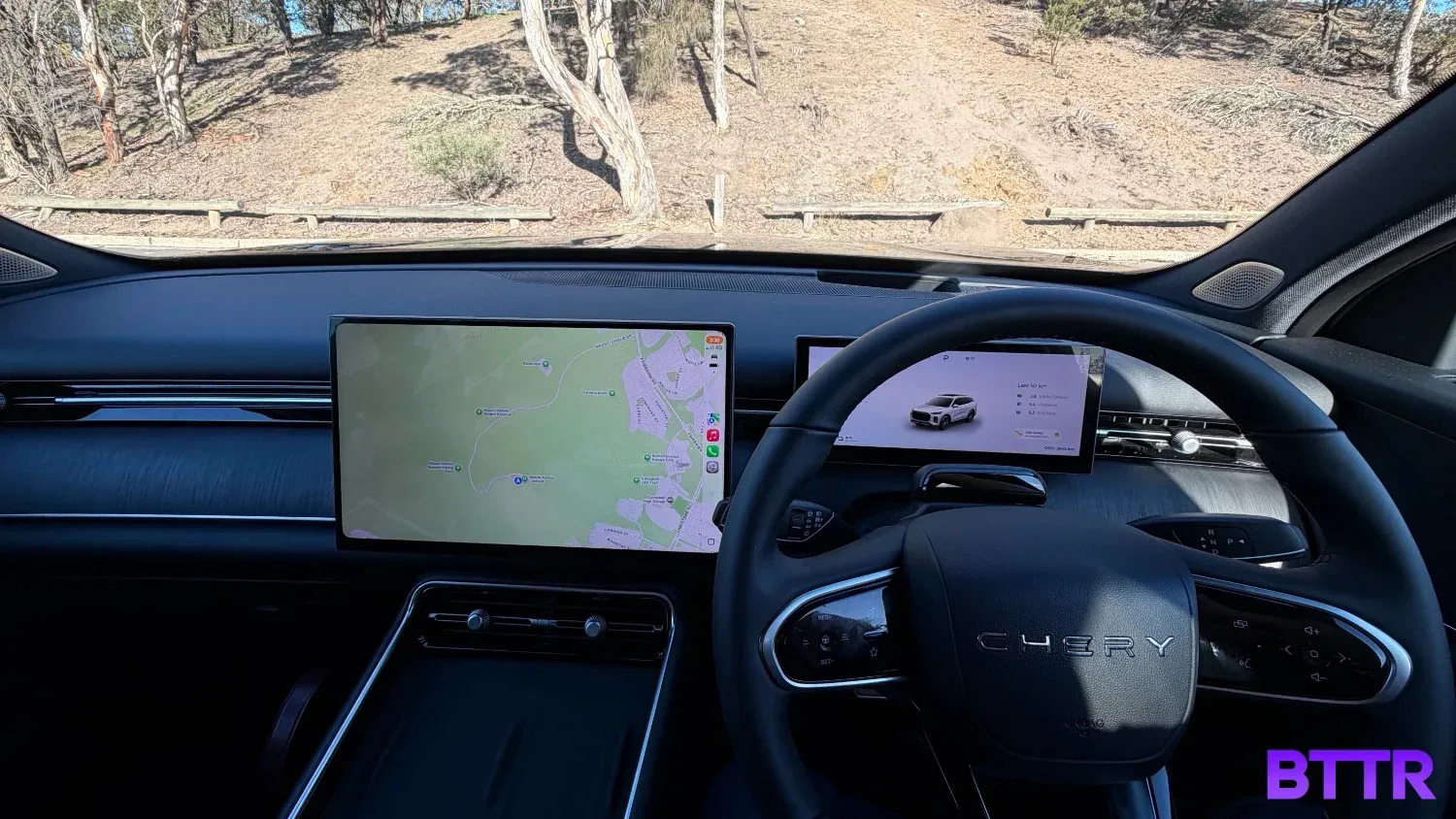
The controls on the steering wheel are spongy and unresponsive. You need to press them in exactly the right spot for anything to register.
I noticed this particularly with cruise control, but also with music playback. The control is a D-rocker (up, down, left, right) but the button itself is more like a square, so you can press anywhere in that area and nothing happens unless you're very precise.
That means you end up looking at the controls to find the right spot. And when you look down while you're driving, you'll get a little alert from the Driver Monitoring System saying you're not paying attention to the road.
That alert, while it may save lives, can be a little annoying when the reason you looked down was that the controls didn't respond in the first place.
Range and the EV experience
The EV mode is great. It's just so good to be able to do a school run without using any petrol… You go for a short drive, you come back, and you haven't burned a drop of fuel.
The range held up well on the longer drive too.
I don't believe I had a completely full tank when I got the car, and one thing to note is that the Tiggo 9 doesn't show you a fuel gauge, just a range estimate, which is a bit of an adjustment if you're used to watching a needle.
It showed about 970km when I set off. Even after the Sydney to Canberra and back trip, I still had around 500km remaining.
I found that in hybrid mode, the system leans heavily on the battery for the first 75% or so of the battery's charge. Watching the display, you're using around two litres per hundred kilometres from the petrol engine, with the battery doing most of the work.
Once you drop to about 25% battery, it inverts: the petrol engine takes on more of the responsibility. Petrol consumption jumps to 6-7 L/100km, and regenerative braking tries to build the battery back up. The battery won't fully deplete, which is reassuring.
But it also won't fully recharge through regenerative braking alone. After a long drive, you will need to charge it manually.
Verdict
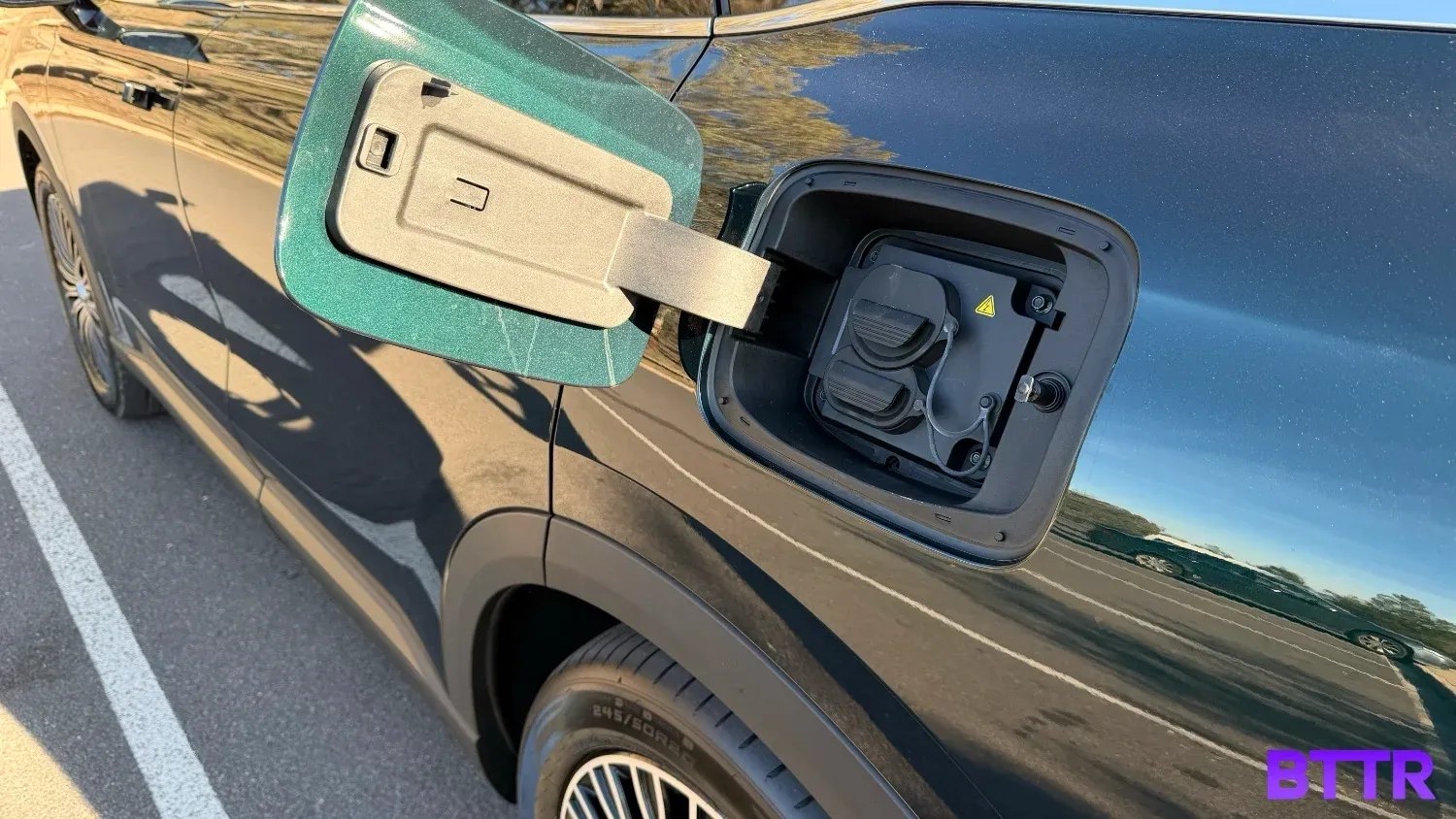
The thing I discovered while testing the Tiggo 9 is that when you drive a plug-in hybrid, you suddenly have twice the responsibility to refuel. You need to refuel the battery and you need to refuel the petrol.
If you can refuel the battery at home overnight, great. If you're on a road trip, the battery won't run out, but it doesn't help with the overall calculation either way.
Chery didn't supply a charger with the review car. I checked with the PR team if this was true for all purchases and was initially told that chargers weren't provided.
After I published the review, I was informed that the Tiggo 9 does, in fact, come with a charging cable when purchased through a dealer.
That's better news for buyers, but meant that during my review, in order to recharge the battery, I would have needed to drive to a service station, plug in to charge, and then duck over to the bowser to fill up with petrol as well. That's a lot of admin for a car that's supposed to simplify your relationship with fuel.
The Tiggo 9 is a good car. It's comfortable to drive, it looks pretty stylish, there's a fair amount of room in it, and it comes with a feature list that's hard to match at $59,990.
But ultimately it comes down to what your needs are, and what driving this car for a week defined for me is that I don't think I need a plug-in hybrid. I feel like a fully electric vehicle is a better option for most people who are considering one.
What you don't necessarily know before you buy or try a plug-in hybrid is that you need to refuel twice. You now need to top up both the battery and the petrol tank. If you're driving an EV, you only have to do one of those. And that's a big thing.
Buy the Chery Tiggo 9 Super Hybrid Ultimate AWD if
- You mostly drive short distances but want the option of longer trips without range anxiety. The EV mode is great for daily driving without using any petrol, and the petrol engine removes the anxiety that might rule out a full EV for you or your household.
- You need seven seats and proper boot space for a family. This is designed for families, and it does that job well with seats for seven and solid cargo room with the third row folded.
- You want a very long list of features at this price point. Massage seats, wireless CarPlay, heated and cooled front and rear seats, auto parking, and a 14-speaker Sony system at $59,990 is impressive value.
Skip the Chery Tiggo 9 Super Hybrid Ultimate AWD if
- You want the simplicity of a single fuel source. A plug-in hybrid means keeping both the battery and the petrol tank topped up, and if either runs low, you'll know about it. A full EV removes half that equation entirely.
- An EV is actually a realistic option for you. If range anxiety isn't a deal-breaker and you can charge at home, a full EV removes the double-refuelling responsibility entirely and will cost less to run day-to-day.
- A flat boot floor matters. If you regularly load up with camping gear, flat-pack furniture, or any large items, the Tiggo 9's uneven boot floor will frustrate you every single time.
Latest automotive deals
Frequently Asked Questions
What is the real-world range of the Chery Tiggo 9?
The claimed combined range is up to 1,250km on a full tank and charge, with an electric-only range of 170km under NEDC testing. In my week with the car, I started with around 970km showing on the range display, drove the return trip from Sydney to Canberra, and still had around 500km remaining. It held up well. One thing to note: the car displays estimated range rather than a fuel gauge, which takes a little getting used to if you're used to watching a needle.
Does the Chery Tiggo 9 support wireless Apple CarPlay?
Yes, but with a catch. When I first got the car and tried to connect wirelessly, it didn't work. It turned out I needed to plug in via USB cable first to approve the phone for CarPlay. The USB ports are buried in the lower storage compartment beneath the wireless charger on the passenger side, so they're not easy to find. Once that wired approval is done, wireless CarPlay works as expected from there.
How does the hybrid system actually work day to day?
In EV mode it runs on battery only, with no petrol involvement — great for school runs and short commutes. In hybrid mode, the system leans heavily on the battery for the first 75% or so of charge, with the petrol engine only kicking in here and there. Once you're down to around 25% battery, it inverts: the petrol engine takes on more of the load and regenerative braking works to maintain what's left. The battery won't run flat, but it won't fully recharge through driving alone — so after a long trip, you need to charge it properly.
Is the Chery Tiggo 9 a good car for families?
It is. Seven seats, a big cabin, heated and cooled seating for front and rear passengers, and a boot that handles everyday loads without complaint. The third row is tight for adults over any real distance, which is pretty typical for this class of vehicle. A couple of things I'd flag: the drink holders are too small for larger reusable water bottles, and the boot floor doesn't lie completely flat with the third row folded, which limits loading larger flat items.