


BTTR is independent. We may earn a commission if you buy through our links.
Why trust us? | How we test
Laptops get treated badly. They get shoved into bags with water bottles that aren't quite closed, dropped off the edge of a desk, sat on in an Uber, and left in the boot of a car through a 40-degree Aussie summer. Most business laptops are engineered to survive the showroom, not your actual life.
ASUS took a different approach with the ExpertBook Ultra, and showed its work at the Singapore launch event last month, with interactive live demos highlighting the laptop's rugged nature.
Have you ever slammed a laptop lid closed with a pen on the keyboard and not smashed the screen? Or loaded up 100 kilos of metal plates on your laptop's body? At the Singapore launch, ASUS did this and more to highlight its new flagship business laptop.
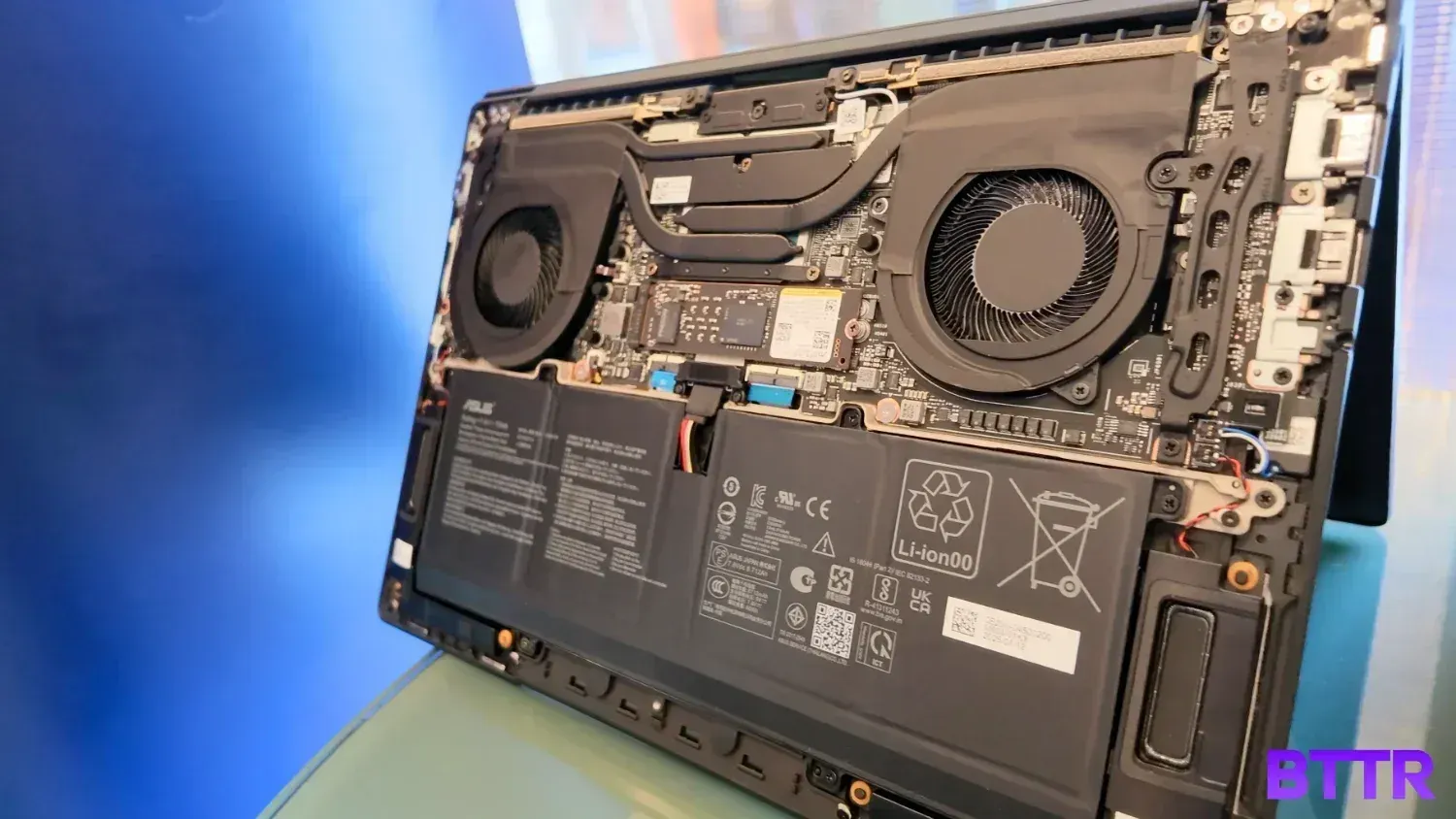
How is it possible? Let's break down what's going on under the hood to make this 0.99 kg laptop as tough as it is.

Under a kilogram, tested to military spec, and built to handle whatever the workday throws at it. The ExpertBook Ultra is available now across Australia, starting from AU$3,399.
Military-grade testing, but properly done
Plenty of laptops slap a "MIL-STD" sticker on the box and call it a day. ASUS has put the ExpertBook Ultra through 24 individual test procedures across 11 categories under the MIL-STD 810H standard, the US military's benchmark for equipment reliability.
That means the laptop has been through functional shock tests (18 shocks at 40G), simulated 5,000 km of road transport vibration, altitude testing that replicates a 15,000ft cabin environment, and temperature cycling from -33 °C storage through to 63 °C operational heat.
There's a dedicated humidity test that holds the device at 95% relative humidity for ten straight days, and a solar radiation test that blasts it with the equivalent of direct desert sunlight for three 24-hour cycles.
On top of the military standard, ASUS runs its own internal durability regime, which it calls the ASUS Superior Durability Test.
That's another 157 procedures designed to simulate the kind of day-to-day abuse a laptop actually goes through, rather than the abuse a military spec sheet assumes.
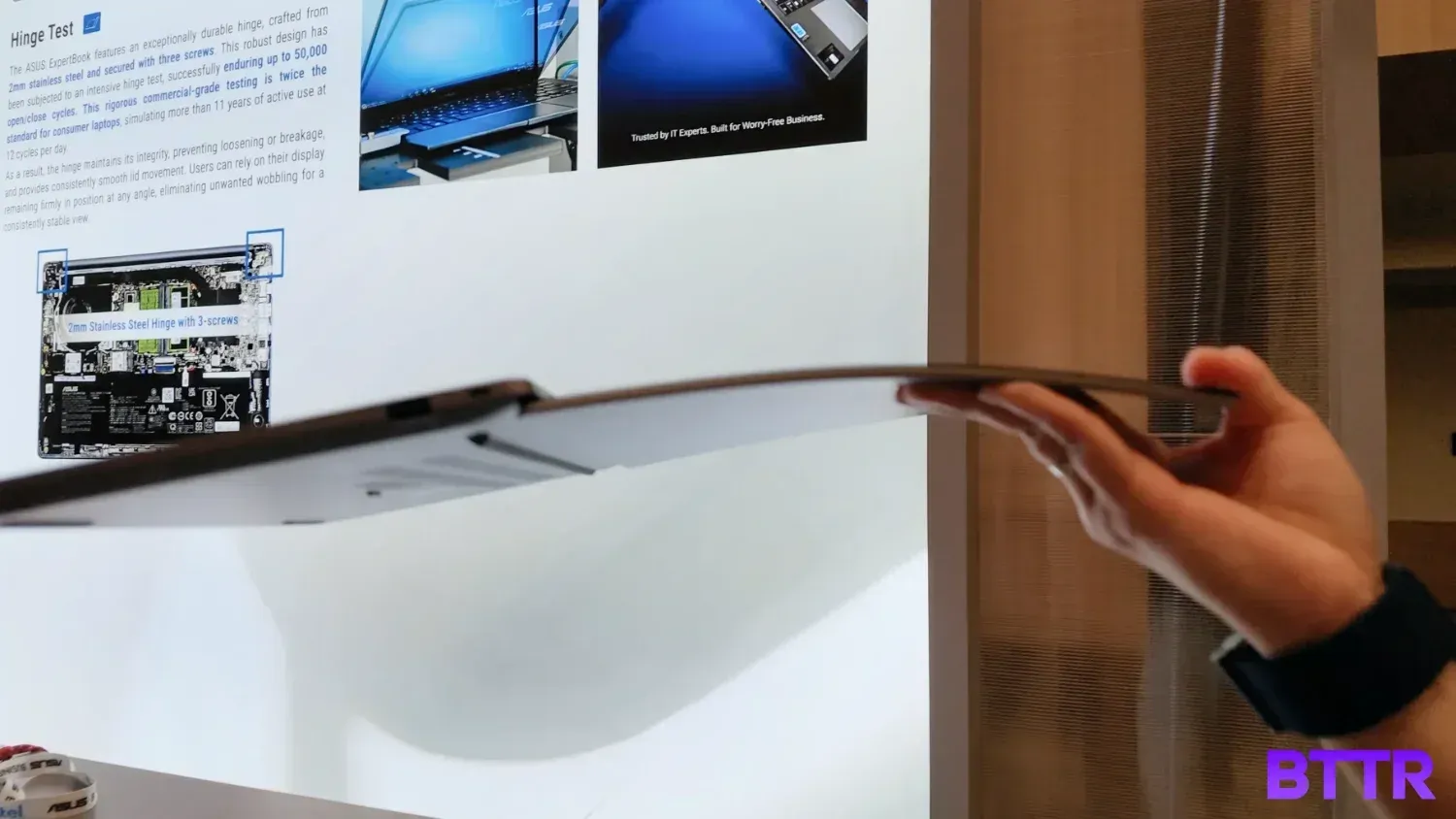
Keyboards get hit 10 million times to simulate six years of solid typing. Hinges get opened and closed 50,000 times (which ASUS says is double what it tests on consumer laptops), working out to roughly 11 years of use at a dozen open/close cycles a day.
The chassis gets twisted 50,000 times to mimic being carried one-handed. USB-A ports get plugged and unplugged 5,000 times, and the Thunderbolt USB-C ports get tested to 15,000 cycles.
The chassis and base are rated to survive a 120 cm drop onto concrete, and both the lid and the base can take a 50 kg squashing force without giving way.
The demos that prove it
Specs on a slide are one thing. ASUS backed its claims with live demonstration areas, plus a live stress test on stage.
Across the showroom floor, attendees were encouraged to stress test the ExpertBook Ultra's build quality.
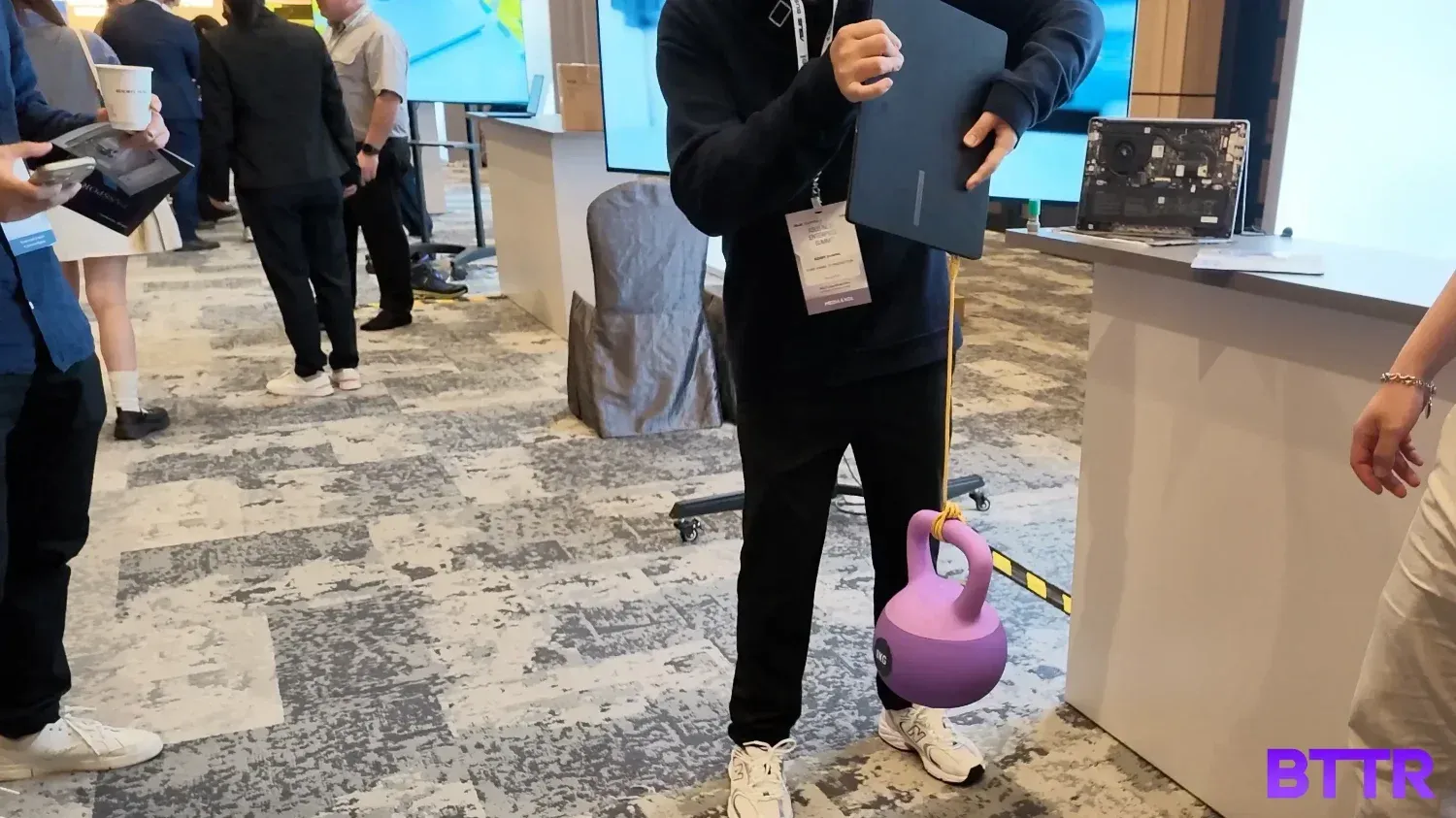
That included picking the entire laptop up one-handed from the corner of the display. Even though ASUS were telling me to do it, it was stressful, and I fully expected the screen to crack under the pressure. But the ExpertBook's strong frame managed to hold without smashing the screen.
Another demonstration involved slamming the laptop screen closed with a pen resting on the keyboard. Not just gently closing the laptop, either. It was a hard, physical slam that made an audible "bang" echo through the convention hall.
Needless to say, the display held up fine, with no damage or marks to be seen.
I watched people stand on the ExpertBook Ultra's screen. Another demo saw people lifting an 8 kg kettlebell by the I/O ports on the side of the laptop.
Then, during the keynote, ASUS took things up a level. A team of people stacked ten 10 kg metal plates directly on top of an open ExpertBook Ultra, one at a time, for a total of 100 kg sitting on a chassis that weighs under a kilogram itself.
The laptop came away without a scratch and powered on normally afterwards.
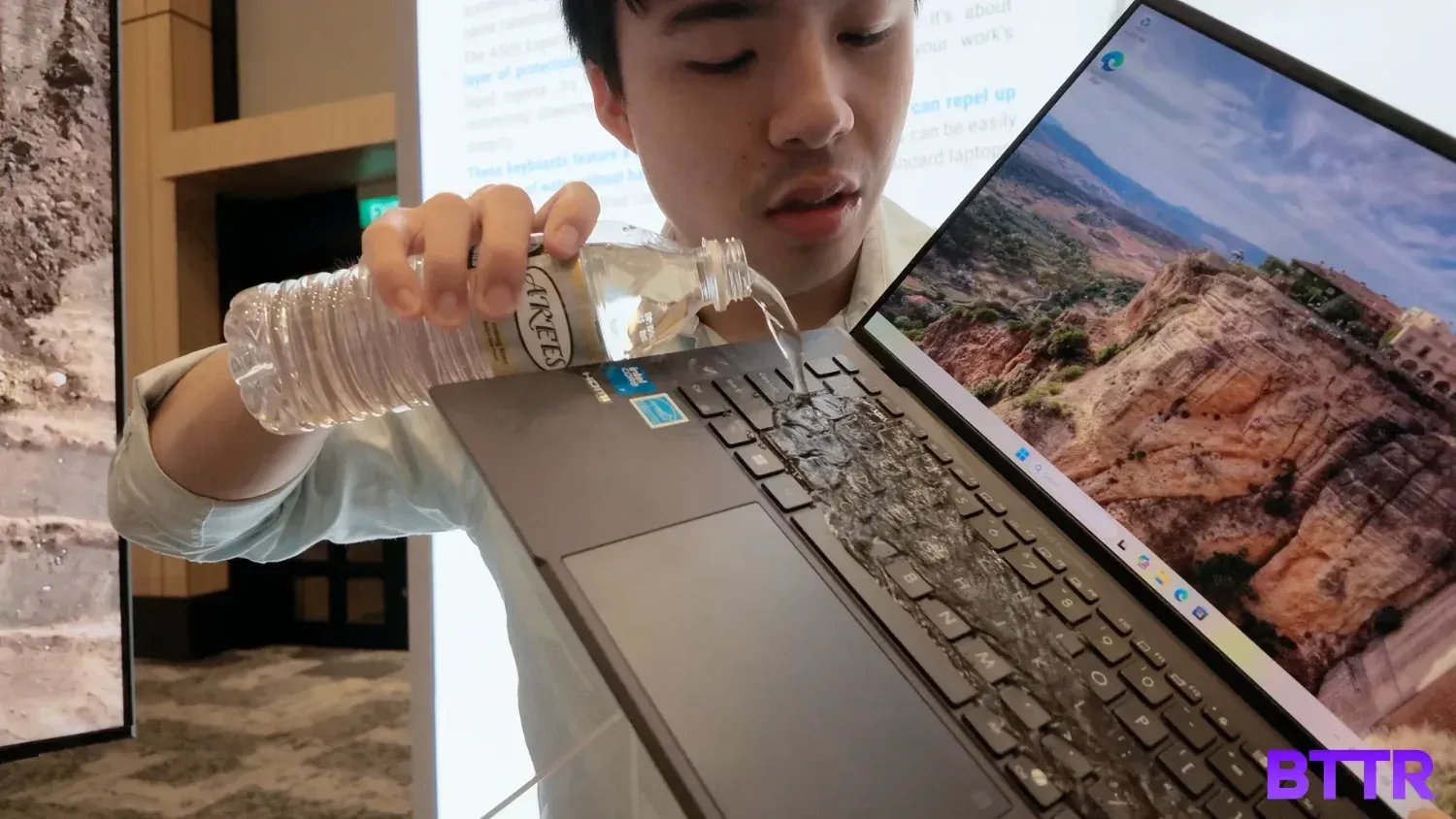
Then came the water test. Industry standard for keyboard spill resistance usually sits around 400ml. ASUS poured two full 500ml bottles, a litre of water, straight across the keyboard while it was running. It kept working.
ASUS's own lab testing rates the keyboard to repel up to 405 cc of water without damage, which is roughly the industry benchmark. The litre poured on stage was well beyond that, making the live demo the tougher of the two tests.
During the keynote, ASUS also showed off Project Everest, where it sent an ExpertBook Ultra to an altitude higher than the summit of Mount Everest itself, above 8,850 metres. This pushed the laptop to temperatures as low as -42 °C, plus dramatically reduced air pressure, and heavy vibration during its flight.
The engineering behind the toughness
None of this happens accidentally. The chassis is built from AZ31B magnesium-aluminium alloy, shaped using CNC precision machining, which is how ASUS gets the ExpertBook Ultra down to 0.99 kg and 10.9 mm thick while still being 34% lighter than a laptop built from standard aluminium.
Despite that thinness, ASUS says the overall chassis can handle a simulated 100 kg of pressure.
The display gets its own dedicated test on top of that: a Panel Pressure Test that simulates up to 28 kg of aircraft luggage stacked on the lid, aimed at protecting the screen specifically when it's buried in an overhead bin or a checked bag.
The exterior surfaces use what ASUS calls Nano Ceramic Technology, a coating process built on plasma electrolytic oxidation (PEO) that's been through 60,000 cycles of simulated hand pressure testing.
The result is a 9H hardness rating, which ASUS pegs at five times the industry standard for scratch resistance, plus stain and fingerprint resistance that should keep the lid looking new well past the warranty period.
Separately, ASUS applies a UV coating to the keyboard and surrounding deck for scratch and stain resistance. It’s distinct from the Nano Ceramic finish used on the lid and chassis, so the surface you actually touch all day gets the same durability thinking as the exterior.
Then there are the smaller, less flashy details that add up. Magnet latches instead of mechanical ones because anything with moving parts eventually wears out or misaligns.
There's a chassis intrusion sensor that powers the device down the moment the back cover is opened, aimed squarely at businesses handling sensitive data.
Metal plate reinforcement around every I/O port, rated to withstand 9 kg of connector overload, so an accidental yank on a charging cable doesn't take the port with it.
Even the display cable, the thing connecting your motherboard to your screen, gets its own protective cover against wear and environmental damage.
Robust and solid for peace of mind
Between the 24 MIL-STD 810H tests, the 157 procedures in ASUS's own durability program, a hinge good for 50,000 open and close cycles, and a chassis that shrugs off 100 kg of pressure, this is a laptop meant for real work.
For an IT manager, that should mean fewer accidental damage claims and a longer stretch between fleet refreshes.
For anyone buying one outright, it means you can throw it in a bag without wrapping it in a jumper first, work through a spilled coffee without panicking, and still expect the hinge to feel tight in year four.
The ASUS ExpertBook Ultra is available now across Australia, with pricing starting from AU$3,399 for the entry configuration.