

BTTR is independent. We may earn a commission if you buy through our links.
Why trust us? | How we test
Ecovacs may be known as a robotics company, a global leader in robot vacuums that's pushing hard into outdoor products like robot lawnmowers and window cleaners. But as I discovered last week on a trip to China with the company, it also builds its own batteries.
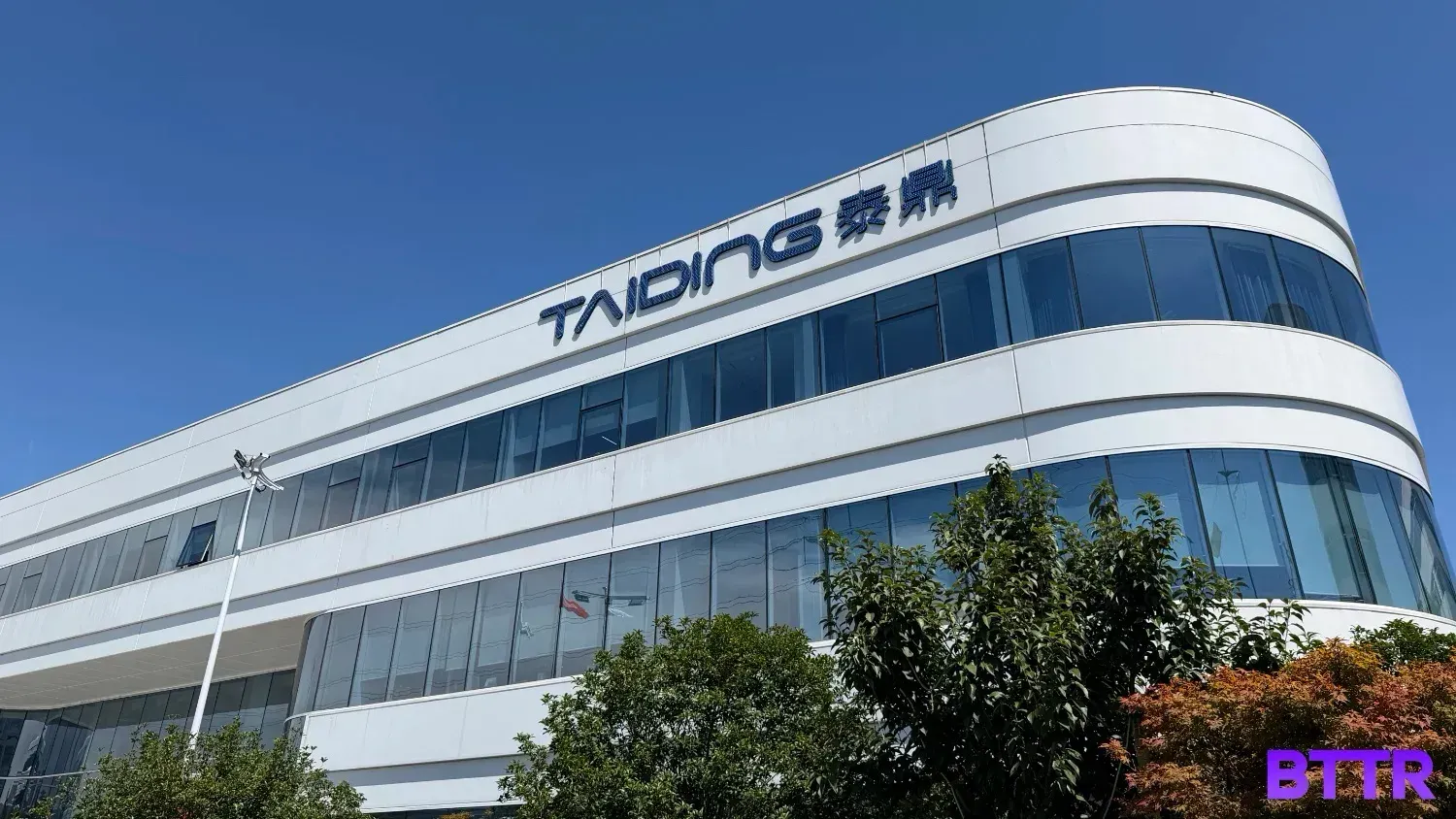
Alongside its wet and dry floor care subsidiary Tineco, Ecovacs owns Taiding, a dedicated battery manufacturing arm based in Nanxun, about 90 minutes southwest of Suzhou.
Taiding's plant supplies batteries for the Ecovacs and Tineco lineup of cleaning and robotics products, and also produces cells for other companies, including Panasonic.
I had the opportunity to tour the Taiding plant, watching the process and discovering just how much precision engineering sits behind the batteries you never think about, until the day they stop working.
If you've ever wondered what actually goes into making a high quality battery, this guide breaks it down.
1. Mixing
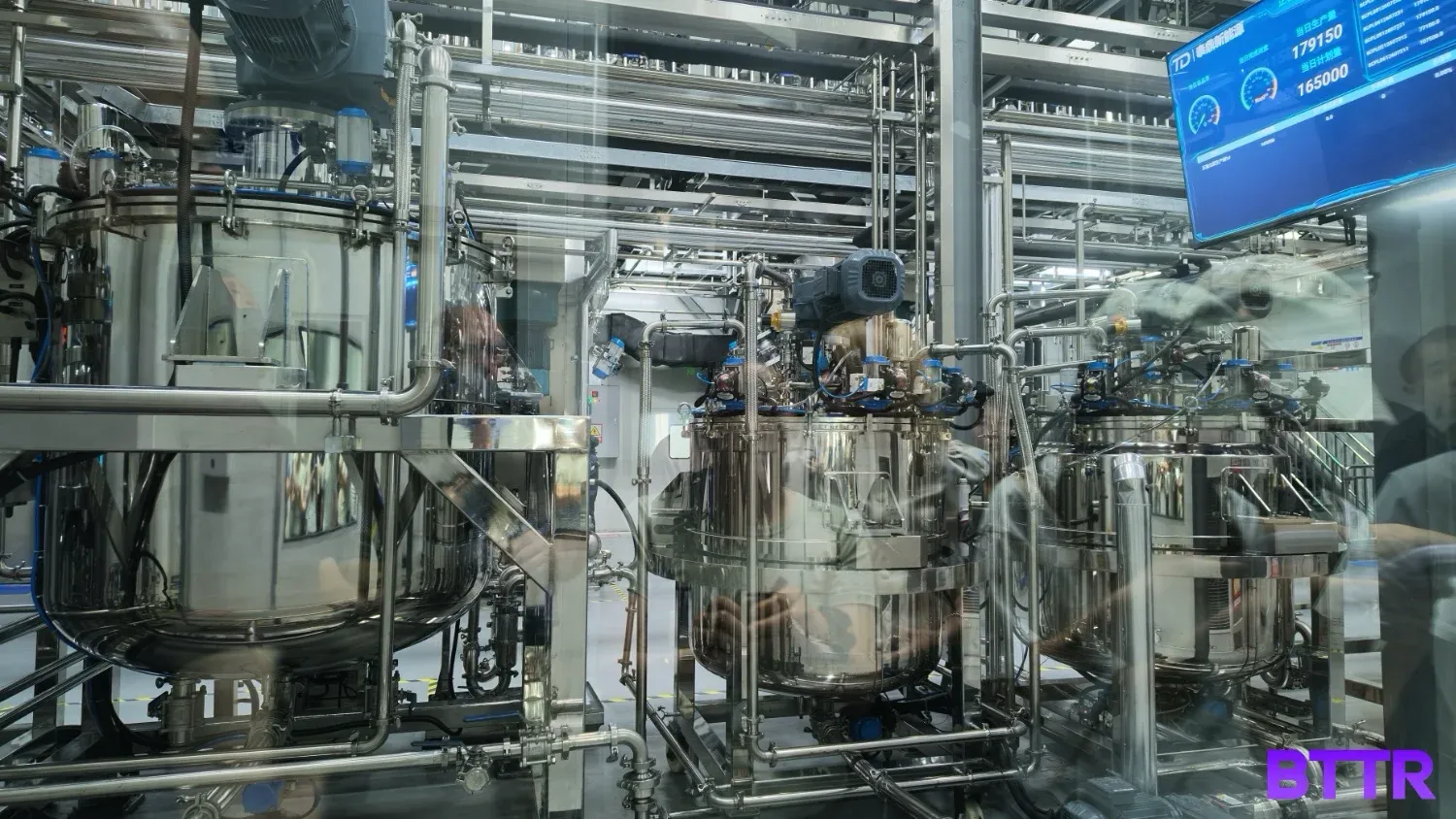
Every battery starts as a paste. The active materials (the stuff that stores the charge), a conductive agent, a binder, and a solvent get combined in huge mixers until they form a smooth, stable slurry.
The mixers on this line use a dual-planetary blending method paired with high-speed dispersion, which the plant says cuts mixing time by 40 percent.
The slurry then travels through food-grade stainless steel piping, passing through five demagnetising stages along the way to strip out any stray metal particles or dust before it goes anywhere near a battery cell.
2. Coating
Once the slurry is ready, it gets spread onto thin sheets of copper or aluminium foil (these become the current collectors) in a layer of carefully controlled thickness. The coated foil then runs through a drying oven to evaporate the solvent, leaving behind a thin, even film.
This stage runs on automated guided vehicles that keep the line moving without stopping to swap rolls, and the coating head uses a dual-channel design with onboard cameras and radiation sensors to keep that layer perfectly even.
Get this step wrong and you end up with an inconsistent battery. Get it right and you get more consistent capacity across every cell that comes off the line.
3. Rolling and slitting
The coated foil then passes through rollers that compress it to a precise thickness, which improves how well the coating bonds to the foil underneath. From there it's slit down to the correct width for the cells being produced.
This plant combines the rolling and slitting into a single machine, with camera-based inspection checking for defects and width issues as the material moves through.
Zero-tension handling keeps the delicate sheet from tearing.
4. Laser die cutting
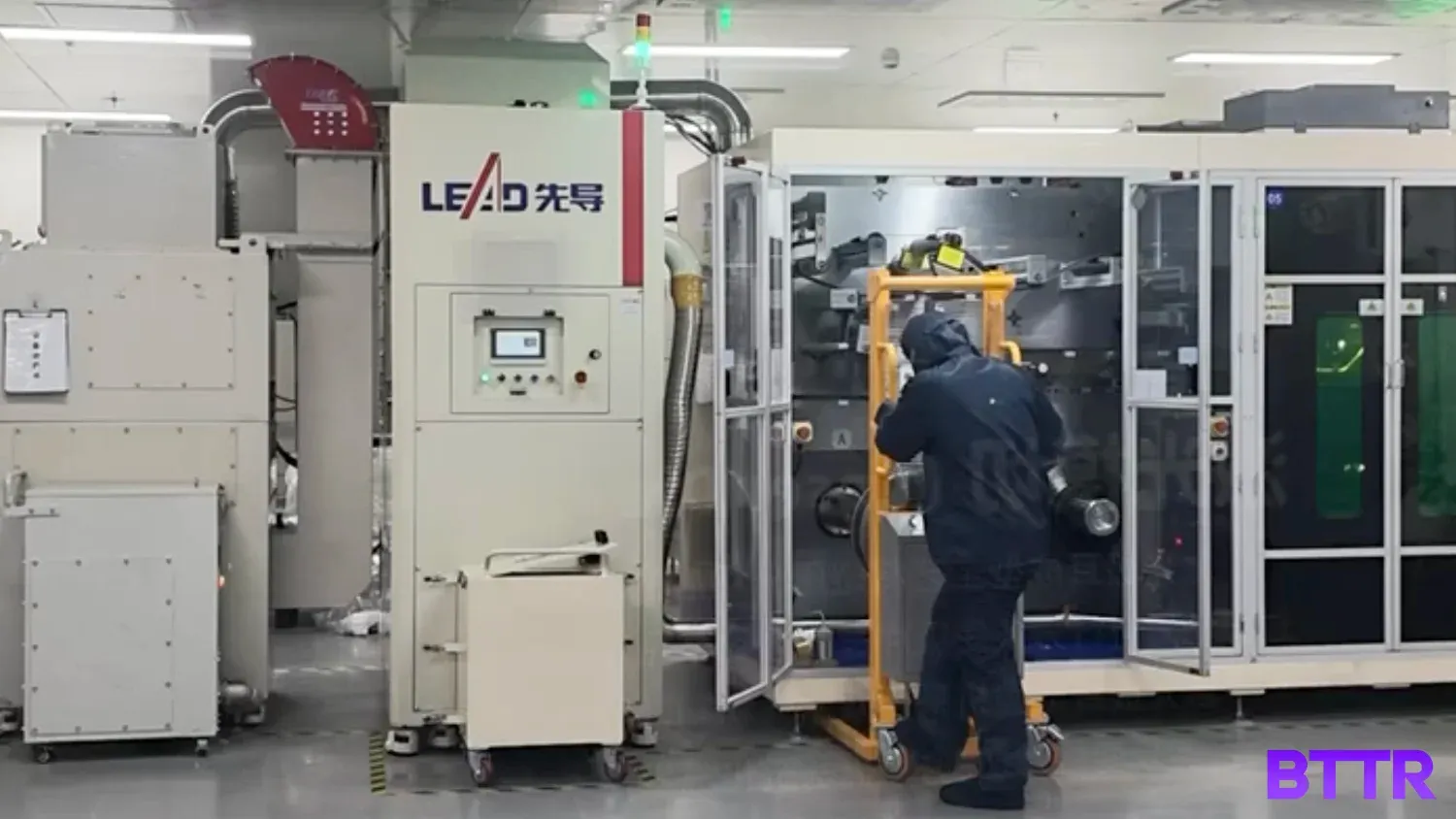
Next, lasers cut the shape of the "tabs", the little metal tags that will eventually connect the cell to the outside world, into the edges of the electrode sheets. The sheets are also cut down to their final width here.
Using dual lasers instead of a single cutting head roughly doubles the cutting speed compared to older methods, and the system automatically adjusts tab spacing depending on what's being produced.
The whole area runs under strict dust control, since even a small particle can cause problems later in the cell's life.
5. Winding
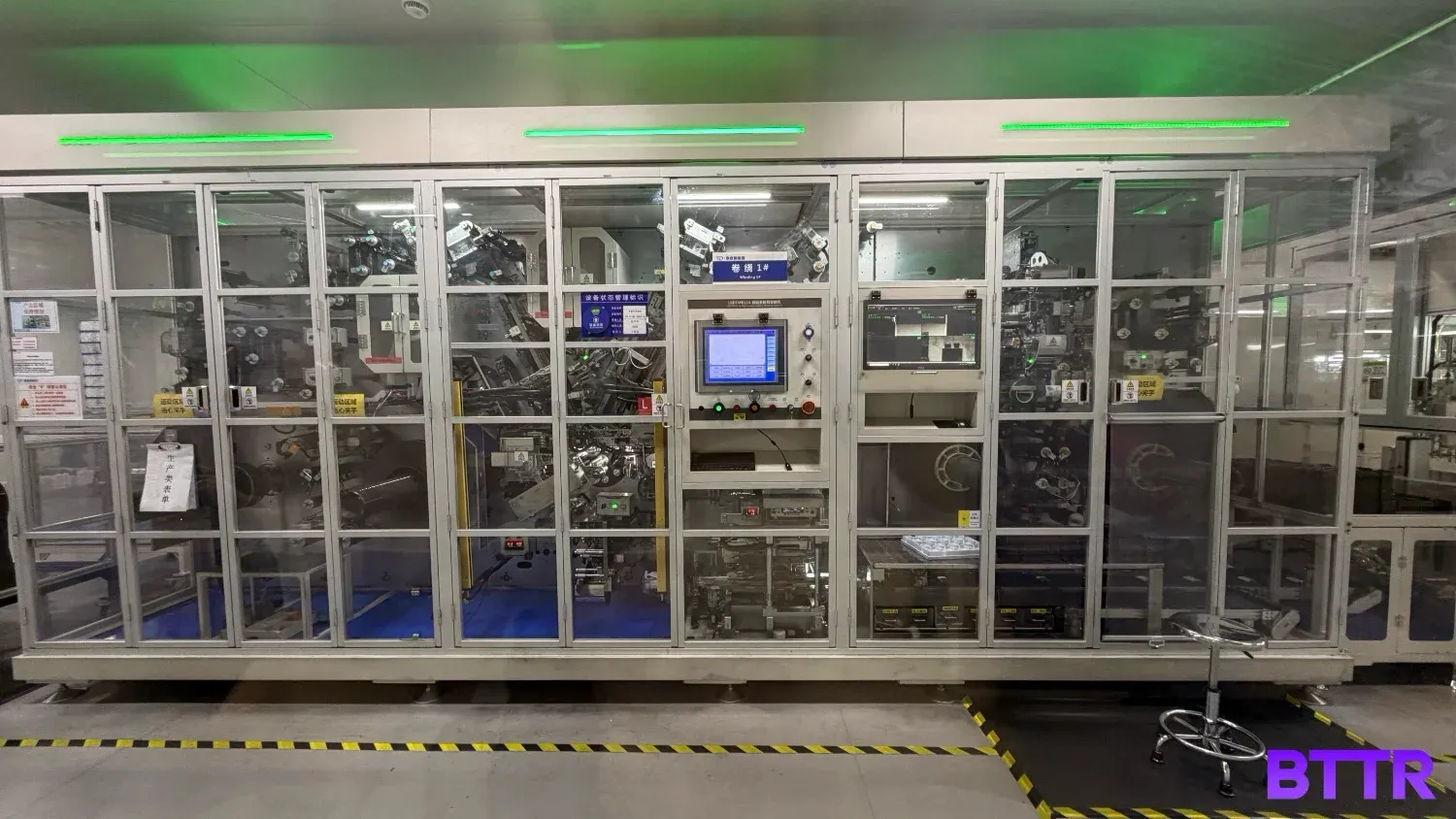
This is where the battery actually starts looking like a battery. The positive electrode, negative electrode, and separator are wound together into a tight spiral, forming what's called a "jelly roll", the core structure inside most cylindrical and pouch cells.
Tension control is everything at this stage. Too loose and the layers shift, too tight and you get damage. This plant uses a patented variable-diameter winding needle to keep the tabs aligned automatically, and every wound core goes through a high-potential short-circuit test with a 100 percent detection rate before moving on.
6. Welding and encapsulating
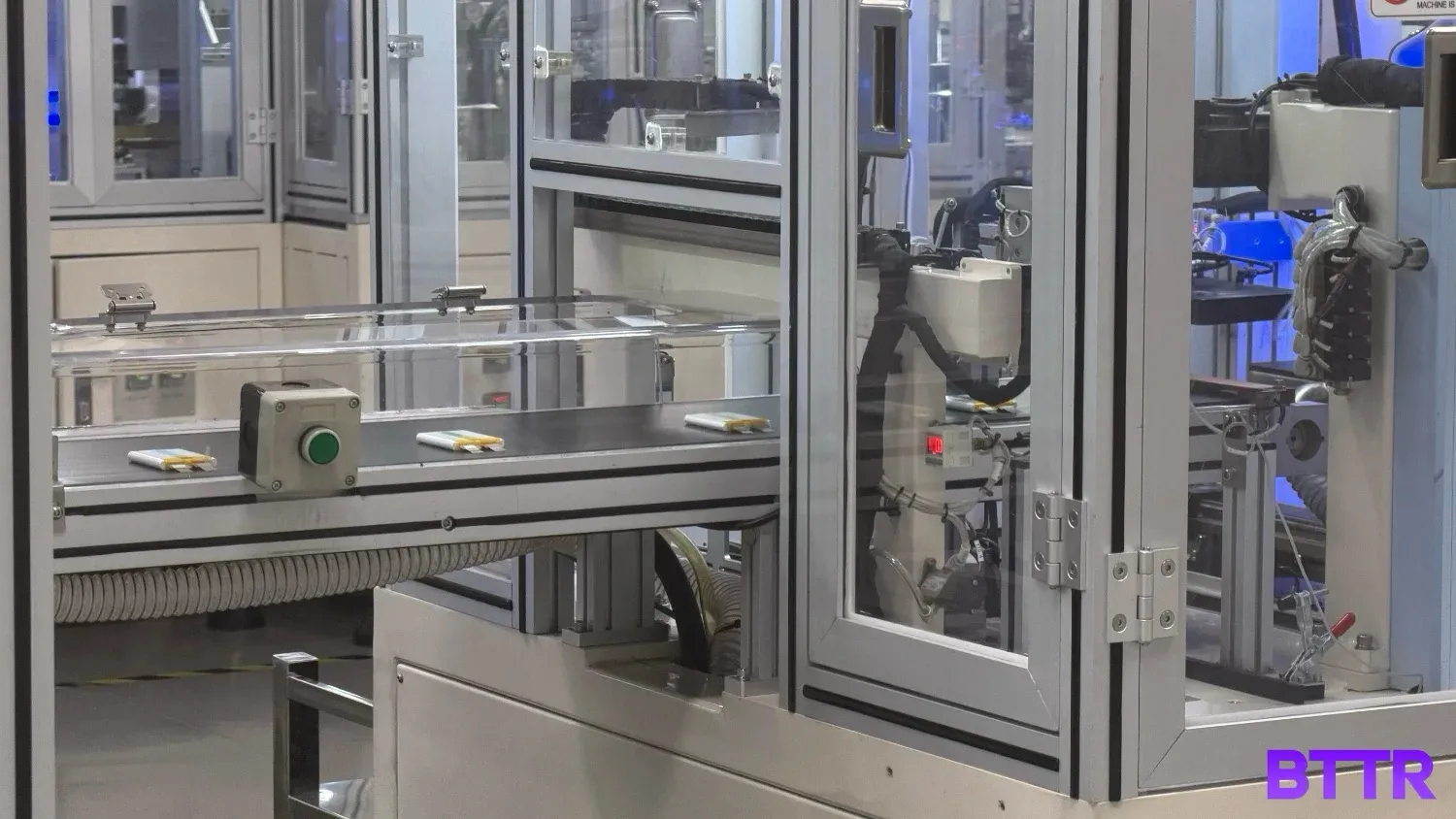
The tabs are welded to draw the positive and negative connections out of the wound core, and the whole thing is then wrapped in an aluminium-plastic laminate pouch. Heat sealing closes the top and sides to create an airtight seal.
This stage uses a turntable design to save floor space and imported ultrasonic welders that can detect inconsistencies in the weld automatically. Every cell is checked for short circuits before it leaves this step.
7. Baking
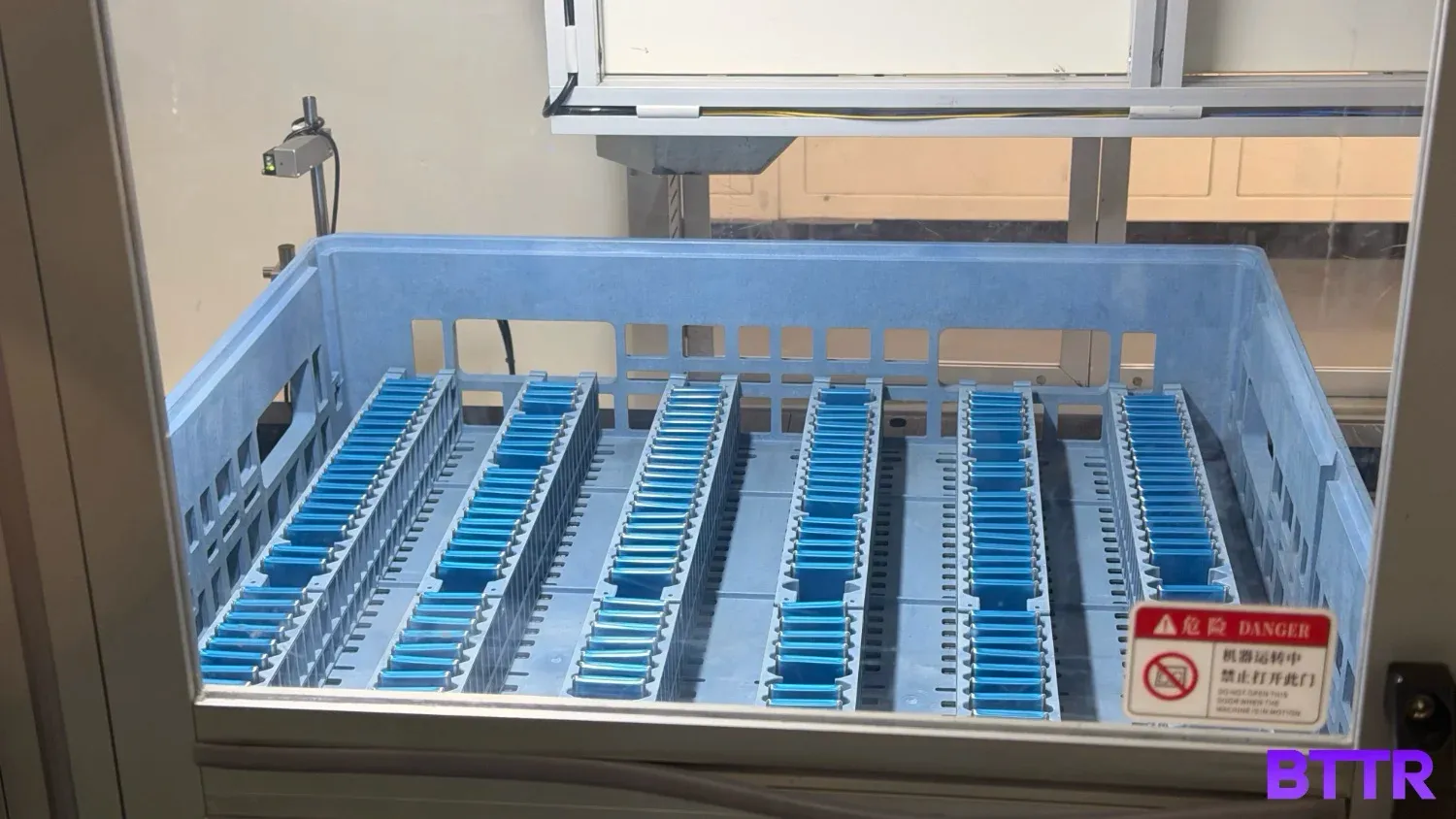
Before the cell can be filled with electrolyte, any trace of internal moisture needs to go. That happens in an oven, using a combination of heat and vacuum to dry the cell out completely.
Rather than a traditional convection oven, this plant uses a contact-based drying line, where each heating plate is independently controlled to keep temperature consistent across every cell.
The plant claims this halves drying time and energy use compared with older oven designs, while needing far less floor space for the same output.
8. Formation and capacity testing
This is where the cell gets its first taste of electricity, though it doesn't happen straight away. After the electrolyte is injected, the cell is left to sit for around 48 hours so the electrolyte can properly work its way through the electrode structure.
The first charge is a slow, low-rate one. It activates the cell and forms a thin, dense layer on the electrode surface called the SEI (solid electrolyte interface), essential for the battery's long-term stability. That first charge also produces gas inside the cell, which gets pulled out under vacuum before the pouch is resealed.
From there, the cells go through an ageing period, roughly three days at high temperature followed by another two to three days at room temperature, before being charged and discharged again to measure actual capacity and grade the batch.
An energy feedback system recovers a large portion of the power used during this process rather than wasting it as heat, and shared high-temperature clamping equipment across both formation and testing steps helps keep the process quick and space-efficient.
9. Automated logistics and sorting
The last stop isn't really part of the cell-making process at all, it's the system that keeps everything moving.
Pallets shuttle materials and finished cells through an automated, multi-storey warehouse that makes use of vertical space rather than sprawling floor area.
Given how flammable lithium battery materials can be, the fire safety setup here is serious: dedicated fire doors, gas suppression systems, and layered protection covering temperature, smoke, and sprinklers.
A warehouse management system tracks everything, letting the whole space run with minimal human intervention.
The bigger picture
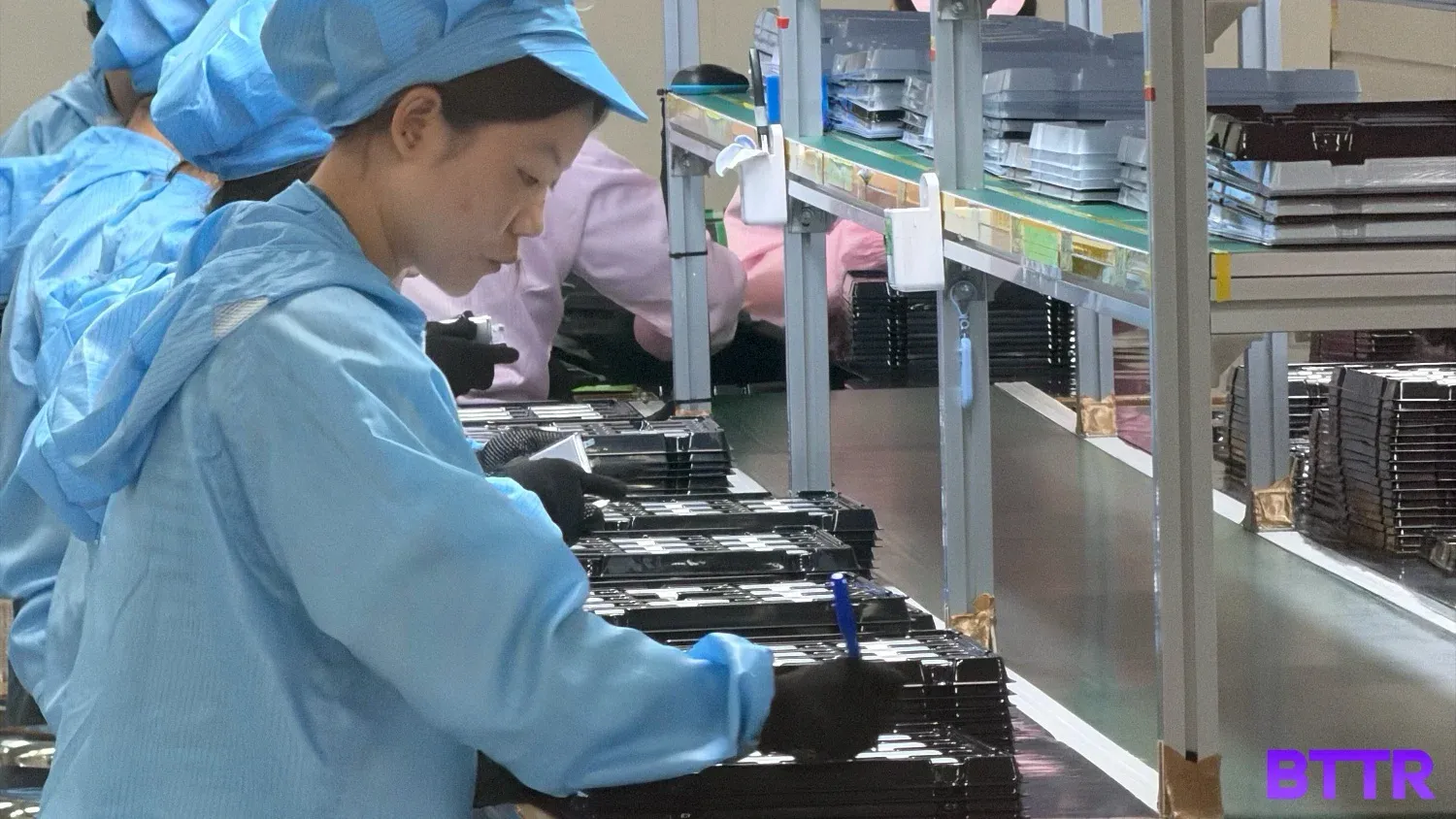
The Taiding factory was largely automated, with few workers on display for the bulk of the process. Those that were there monitored the progress to ensure things continued to progress smoothly.
That level of automation is largely necessary. Making a battery requires a level of precision that humans can't produce the same way automated factory robots can.
Even with robots doing most of the heavy lifting, it was the handful of technicians quietly doing their jobs that stuck with me most.
Their job isn't to physically build the battery, it's to ensure things run smoothly before becoming a faulty product in someone's vacuum or phone. That's the part no amount of automation replaces.
Latest tech deals