

BTTR is independent. We may earn a commission if you buy through our links.
Why trust us? | How we test
At Computex this year, while NVIDIA was focused on building a processor capable of the next generation of AI PC, Intel was focused on the gaming market.
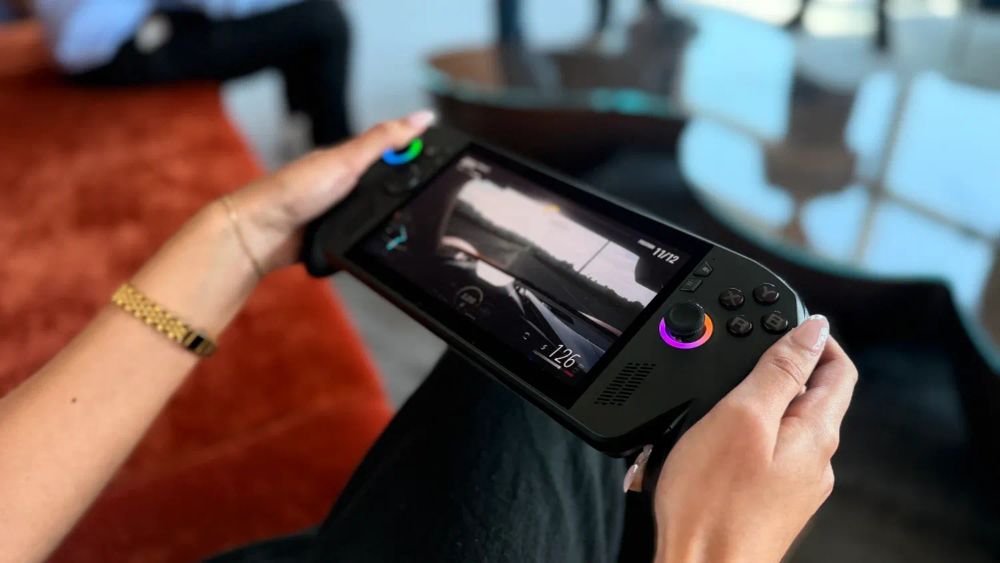
Intel's new Arc G-Series processor are specifically designed to deliver the combination of performance and battery life needed for the growing suite of portable gaming handhelds like the ASUS ROG Ally and Steam deck.
What is the Intel Arc G-Series?
The G-Series comes in two versions: the Arc G3 and the more powerful Arc G3 Extreme. Unlike the general-purpose chips Intel puts in laptops, these were designed from scratch for gaming handhelds.
That means making deliberate trade-offs, trimming back parts of the chip that don't matter for gaming so more of the power budget can go to graphics.
Both chips use the same 14-core CPU layout: two fast performance cores for heavy lifting, eight efficiency cores for everyday tasks, and four ultra-low-power cores that handle background work without draining the battery.
The graphics side is where the two chips differ. The G3 has 10 GPU cores running up to 2.2GHz, while the G3 Extreme pushes to 12 GPU cores at 2.3GHz.
Both support up to 96GB of fast LPDDR5X memory, Wi-Fi 7, Bluetooth 6, and two Thunderbolt 4 ports.
One other detail worth noting: these chips are built on Intel's 18A process, which is Intel's most advanced manufacturing node and is produced in the United States. That's largely a supply-chain story rather than something you'll feel in gameplay, but it's a point of difference Intel is proud of.
| Arc G3 | Arc G3 Extreme | |
|---|---|---|
| GPU | Arc B370 | Arc B390 |
| GPU cores | 10 | 12 |
| Max GPU frequency | 2.2 GHz | 2.3 GHz |
| CPU cores | 14 (2 performance + 8 efficiency + 4 ultra-low-power) | |
| Power range | 8 to 30W | 8 to 35W |
| Memory | LPDDR5X 8533 MT/s, up to 96GB | |
| Connectivity | Wi-Fi 7, Dual Bluetooth 6, 2x Thunderbolt 4 | |
| Process node | Intel 18A (US-manufactured) | |
AI upscaling: what XeSS 3 means for you
One of the biggest advantages the G-Series has over competing chips is XeSS 3, Intel's AI-powered graphics suite. Think of it as Intel's version of what NVIDIA does with DLSS.
XeSS 3 has three parts working together. Super Resolution renders the game at a lower resolution internally, then uses AI to reconstruct a sharper image on screen, boosting performance without a visible quality hit.
Multi-Frame Generation goes further, using AI to create additional frames between the ones the GPU actually renders, which makes games feel noticeably smoother.
Xe Low Latency reduces the delay between pressing a button and seeing it happen on screen, which matters more than you might think when you're playing on a handheld.
In Intel's own testing, the G3 Extreme runs Cyberpunk 2077 at 199 FPS with XeSS 3 fully enabled, compared to 89 FPS for AMD's competing chip with its own frame generation turned on.
Across 36 games tested at maximum power, Intel claims the G3 Extreme is 42% faster than AMD's Z2 Extreme on average.
Battery life and power management
Handheld gaming has always had a battery problem, and this is where Intel has put real effort in. The chip uses something called Intelligent Bias Control, which constantly monitors what you're doing and shifts power between the CPU and GPU in real time.
When you're in a GPU-heavy game, it redirects more power to graphics and parks CPU cores that aren't being used. Intel says this delivers a 13% average frame rate improvement at low power settings, which translates to longer sessions without plugging in.
Endurance Gaming mode goes further still. It caps frame rates at a stable 30, 40, or 60 FPS and manages the chip's power very aggressively to stretch the battery as far as it will go.
The results in Intel's testing on the MSI Claw 8 EX AI+ are impressive: Team Fortress 2 ran for nearly 12 hours in Endurance mode, compared to 3 hours 37 minutes at full power. Forza Horizon 6 stretched to 5 hours 51 minutes versus 2 hours 47 minutes normally.
It won't be the right mode for every session, but for long flights or travel days it's a significant upgrade.
Better game loading and software
Games on handheld PCs have long had a frustrating quirk: the first time you launch a new title, there's often a painful wait while the device compiles graphics data in the background.
Intel has tackled this by pre-building those files in the cloud and delivering them automatically when you install a supported game. Launch times are more than 3x faster on average, meaning less waiting and more playing.
The G-Series also ships with day-0 driver support, so new game releases are optimised for the hardware from launch rather than requiring a driver update weeks later.
And for when you want to play on the couch, the chip supports Xbox Mode, Windows 11's controller-friendly interface that presents your game library in a clean, console-style layout.
Dan Rogers, Intel's Vice President and General Manager of PC Product, said the chips deliver "uncompromising PC performance in the palm of your hand, combined with the console-like accessibility and immediacy gamers expect."
Pricing and availability
Devices powered by the Intel Arc G-Series began rolling out from June 2026. The first handhelds to feature the new chips include the MSI Claw 8 EX AI+, Acer Predator Atlas 8, and devices from OneXPlayer, with more partners expected throughout the year.
Australian pricing and availability have not been confirmed at the time of writing.
Latest gaming deals