

BTTR is independent. We may earn a commission if you buy through our links.
Why trust us? | How we test
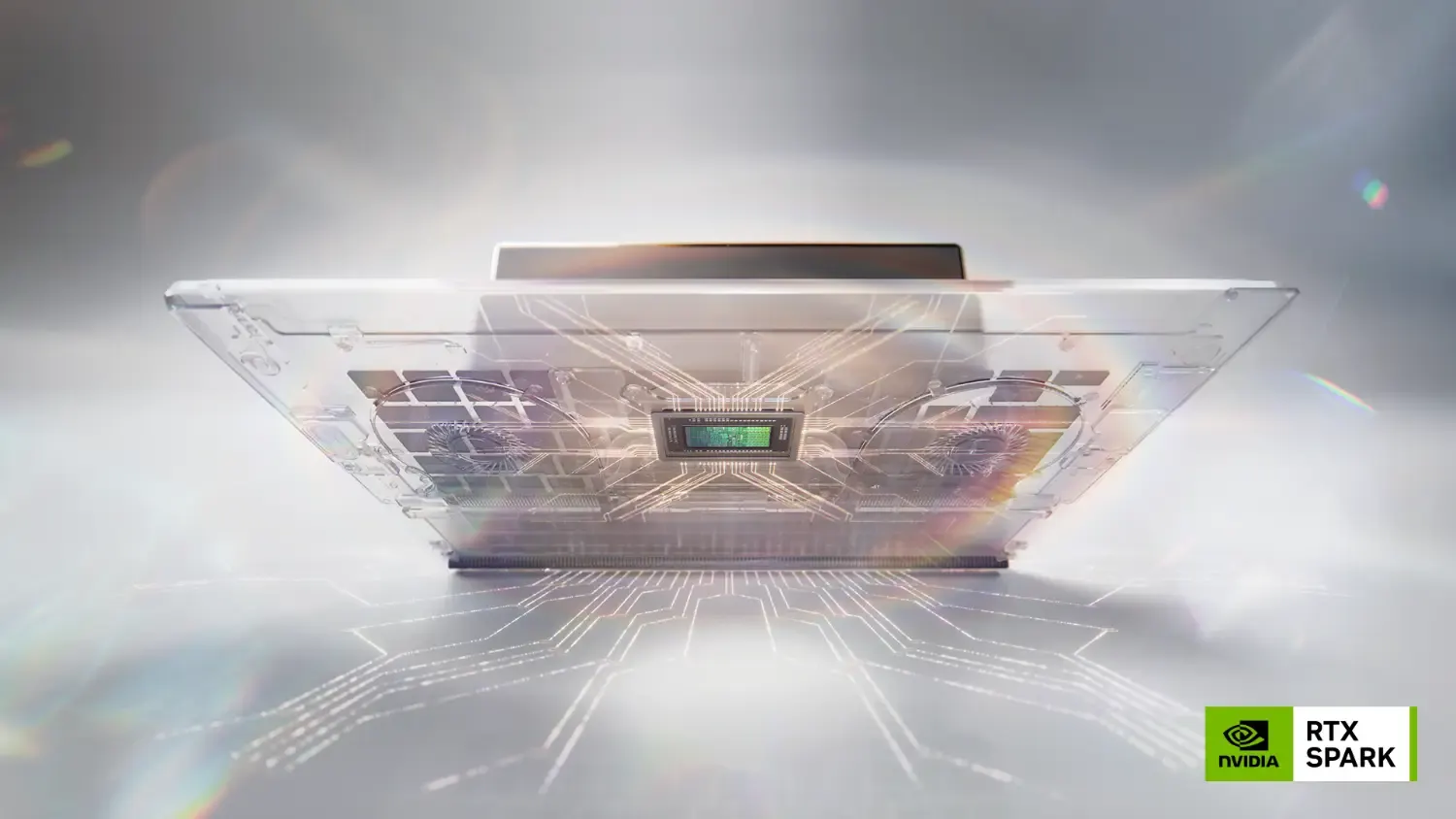
One of the big announcements out of Computex this year was NVIDIA's unveiling of the RTX Spark, a 1 petaflop superchip designed to bring Windows PCs into the AI personal agent age.
But what is the RTX Spark exactly? What makes it work. Let's dive in.
What is the RTX Spark?
The RTX Spark is a new type of chip that combines two things that normally live separately inside your PC: the GPU (the graphics processor, which NVIDIA has always made) and the CPU (the general-purpose processor, typically made by Intel or AMD).
NVIDIA's GPU side is built on its latest Blackwell architecture, packing 6,144 CUDA cores and fifth-generation Tensor Cores.
These are the same building blocks found in NVIDIA's data centre chips, just tuned for a laptop.
The CPU side is a custom 20-core design called NVIDIA Grace, co-developed with MediaTek, the Taiwanese chip giant best known for its Arm-based processors inside Android phones and Chromebooks.
The two halves are connected via NVLink-C2C, a chip-to-chip interconnect that lets the GPU and CPU share memory at extremely high speeds.
That shared memory pool is the other number worth knowing: up to 128GB of unified memory, accessible by both the GPU and CPU simultaneously.
To put that in context, a typical gaming laptop today ships with 16 GB of RAM and a GPU with 8 GB of its own separate video memory. RTX Spark throws out that separation entirely.
Why does that memory pool matter so much?
Running an AI model locally requires loading the entire model into memory.
A capable large language model can easily be 40-80 GB in size. Today's laptops simply can't hold them in memory, so you either run a tiny, cut-down model locally or send your prompts to a cloud server.
With 128 GB of unified memory, an RTX Spark laptop can load a 120-billion-parameter model and run it entirely on-device, with room for a 1 million token context window.
It means the AI has access to vastly more information at once, making it significantly more capable at tasks like summarising long documents, reasoning across complex problems, or managing multi-step workflows.
What's a "personal agent" actually doing?
The pitch from NVIDIA and Microsoft is that RTX Spark PCs aren't just faster laptops. They're the foundation for personal AI agents – software that can take instructions and carry out multi-step tasks on your behalf, across multiple apps, without you clicking through each step yourself.
It makes AI less like a chatbot and more like a capable assistant that can open Photoshop, apply an edit, export the file, draft an email about it, and send it, all from a single prompt.
To make that work safely, NVIDIA has built OpenShell, a runtime that lets agents run locally with clear rules about what they can and cannot access.
Microsoft is adding new Windows security primitives alongside it, so agents have sandboxed access to your system rather than running unchecked.
The idea is that your data stays on-device, and cloud queries can have personal information stripped out before they're sent.
Agent platforms like Hermes Agent and OpenClaw are among the first to support the new stack.
"RTX Spark and NVIDIA OpenShell give Hermes users a powerful and secure environment for agents to run and work alongside you," said Dillon Rolnick, CEO of Nous Research. "You realise you're buying a full-fledged assistant, not a typical laptop."
What about creators and gamers?
The AI agent story is the big new thing, but RTX Spark is still a full-fat GPU platform. NVIDIA is quoting 1 petaflop of AI compute, which is 1,000 trillion operations per second.
For reference, that's server-grade territory squeezed into a laptop chassis as thin as 14mm.
For creative work, NVIDIA is partnering with Adobe to re-architect both Photoshop and Premiere from scratch for the platform, promising up to 2x faster AI and graphics performance.
On the gaming side, the chip handles AAA titles at 1440p and over 100 frames per second with ray tracing, using DLSS and Reflex to keep things smooth.
The new DLSS 4.5 update, with a second-generation transformer model for ray reconstruction, will come to Blender 5.3 and dozens of games.
For video editors, the Blackwell decoder handles 12K 4:2:2 footage natively. For 3D artists, the unified memory means you can load scenes larger than 90GB directly into memory, something impossible on today's discrete GPU setups.
Who's making RTX Spark laptops?
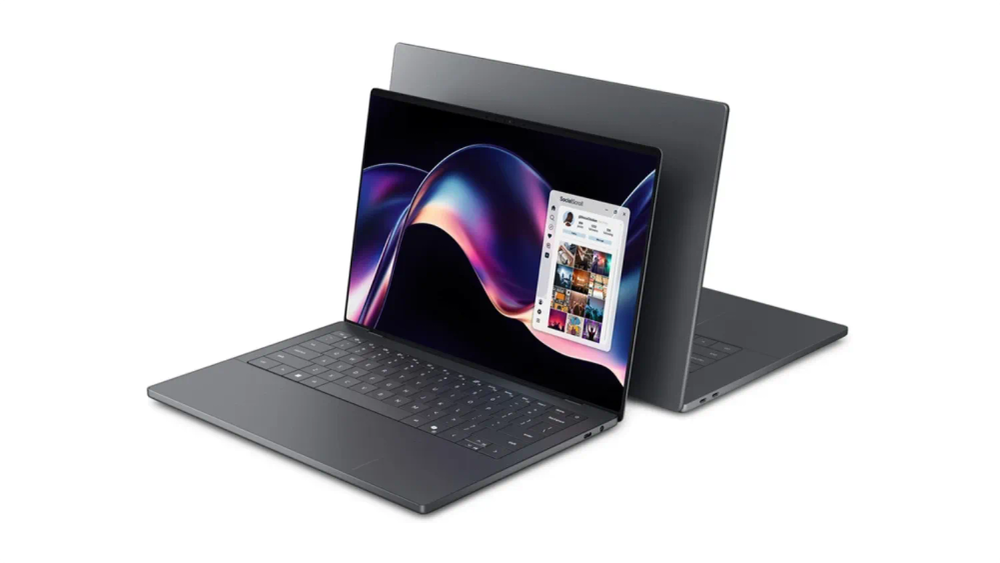
The short answer is everyone. ASUS, Dell, HP, Lenovo, Microsoft Surface, and MSI have all confirmed RTX Spark devices arriving this northern hemisphere autumn (which potentially means early 2027 availability in Australia), with Acer and GIGABYTE to follow.
The form factor targets slim 14- to 16-inch laptops with all-day battery life, as well as small desktop PCs.
Latest computing deals