

BTTR is independent. We may earn a commission if you buy through our links. Why trust us?
The Oura Ring 5 is comfortable, almost invisible, and covers everything from sleep to stress to heart health, and the Oura app makes sense of health data better than most competitors. But most of that insight sits behind an ongoing $9.99 a month membership, and if serious workout tracking matters to you, look elsewhere. For everyday health tracking that disappears on your finger, it's exceptional.
- Tiny, near-invisible form factor after a decade of bulkier trackers
- 6-9 day battery life beats every smartwatch on the market
- Oura app turns health data into useful, natural-language insights
- Comfortable enough for 24/7 wear
- Requires an ongoing Oura Membership ($9.99/month or $109.99/year RRP) to unlock most features
- Third-party integrations are thin outside Strava, with no MyFitnessPal or MyNetDiary support
- No weight tracking, which limits it for anyone focused on losing weight
- Workout tracking is basic, relying on automatic activity detection rather than structured logging
I have been wearing a smartwatch or fitness tracker for more than a decade. It’s actually been so long I can’t remember when I started, but I know I was wearing Fitbits and Up smart bands around 2012-2013, so it’s been a while.
Over that time, the excitement kind of dissipated. The information became background noise, the desire to close my rings or hit my 10,000 steps dissipating into nothing as I went about my day.
But the Oura Ring 5, which I’ve been wearing for just over a month now, has rekindled that feeling of excitement for wearables.
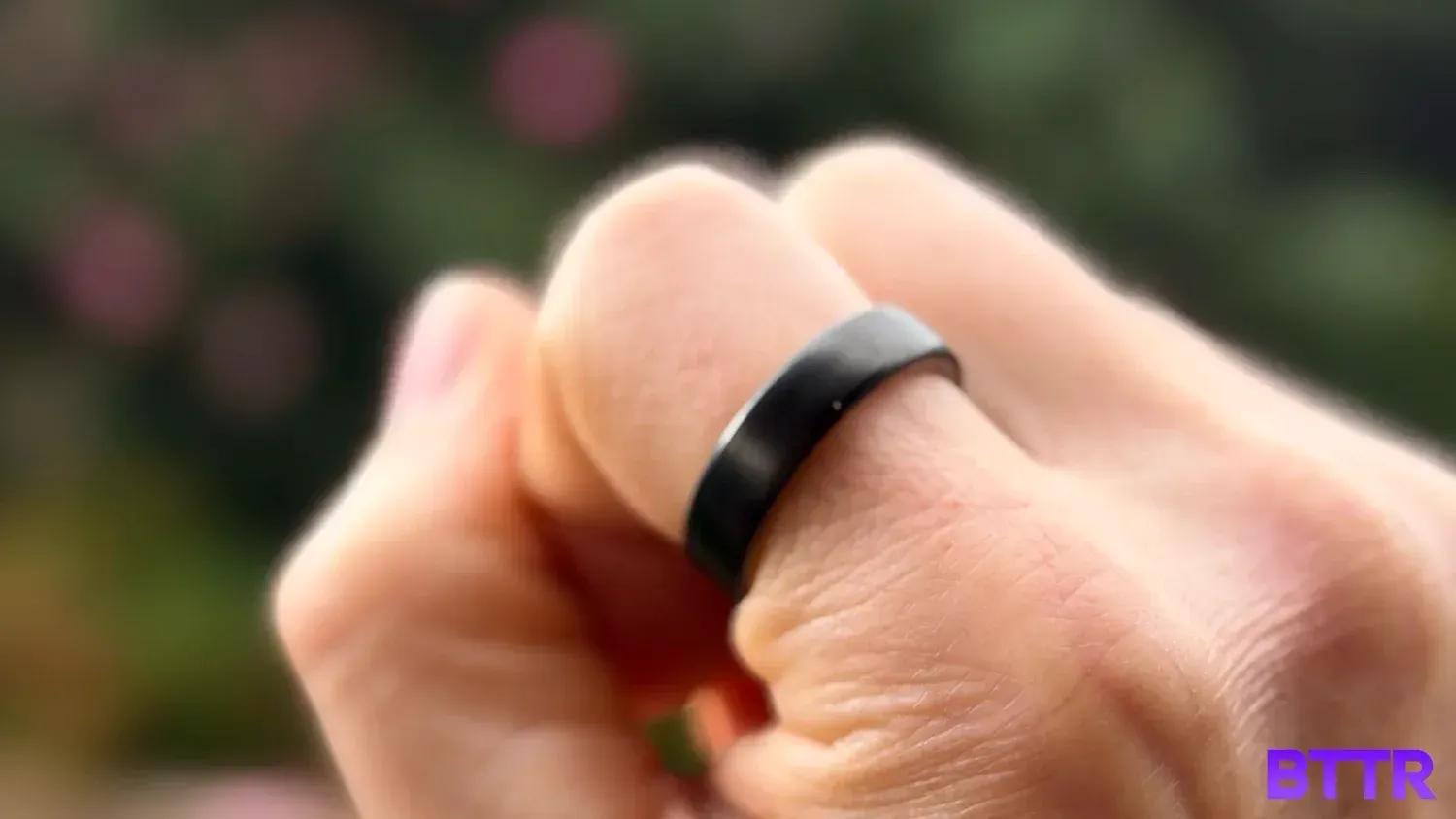
Thanks to its tiny, almost invisible form factor, 6-9 day battery life and really sleek companion app, Oura has managed to get me thinking about my health in a positive, holistic way again.
And it's not a cheap habit to pick back up. The Ring 5 starts at $649 RRP for the Silver or Black finishes, and jumps to $799 for Gold, Stealth, Brushed Silver or Deep Rose, which is the finish I've been testing.
That's before the Oura Membership, which is $9.99 a month or $109.99 a year, and which you'll need for most of what makes the ring worth wearing in the first place. Without it, you're really just wearing a very expensive ring.
What makes the Oura Ring 5 stand out?
This is my first Oura smart ring, so I can’t compare my own experience with previous models. But I can compare the spec sheet, and the Oura 5 is significantly smaller to the Oura 4.
The Oura 5 measures in at 6.09 mm wide and 2.28 mm thick, compared to 7.9 mm wide and 2.88 mm thick on the Oura 4. But the weight is where the real difference is, with the newer model weighing between 2.0 to 2.69 grams vs 3.3 to 5.2 grams for the Oura 4, depending on size.
Despite the smaller volume, Oura has managed to improve battery life by about a day, as well as add a vapourised coating to the titanium for improved durability and rated the Oura 5 IP68 for water and dust resistance.
It’s a pretty comprehensive spec upgrade over the Oura 4, though at their core, both rings offer the same suite of health tracking tools in the Oura app.
Those health features are comprehensive across areas like sleep, activity and fitness, stress, heart health, women’s health and readiness. I’ll dive into each one a bit more later, but the overall app feels more like a life companion than a “fitness” app, like so many wearable apps do.
Oura Ring 5 specs
| Price (AUD) | $649 RRP (Silver, Black) / $799 RRP (Gold, Stealth, Brushed Silver, Deep Rose) |
| Membership | $9.99/month or $109.99/year RRP — required to unlock most health insights |
| Width | 6.09mm |
| Thickness | 2.28mm |
| Weight | From 2g, up to 2.69g depending on size |
| Sizes | 6 to 13 |
| Colours | Silver, Black, Gold, Stealth, Brushed Silver, Deep Rose |
| Materials | Titanium exterior and interior, PVD coating for scratch resistance |
| Water resistance | Waterproof to 100m, IP68 rated for water and dust |
| Sensors | Red/infrared LEDs (blood oxygen), green/infrared LEDs (heart rate, HRV, respiration), digital temperature sensor, accelerometer |
| Battery life | Up to 6-9 days per charge, depending on size and usage |
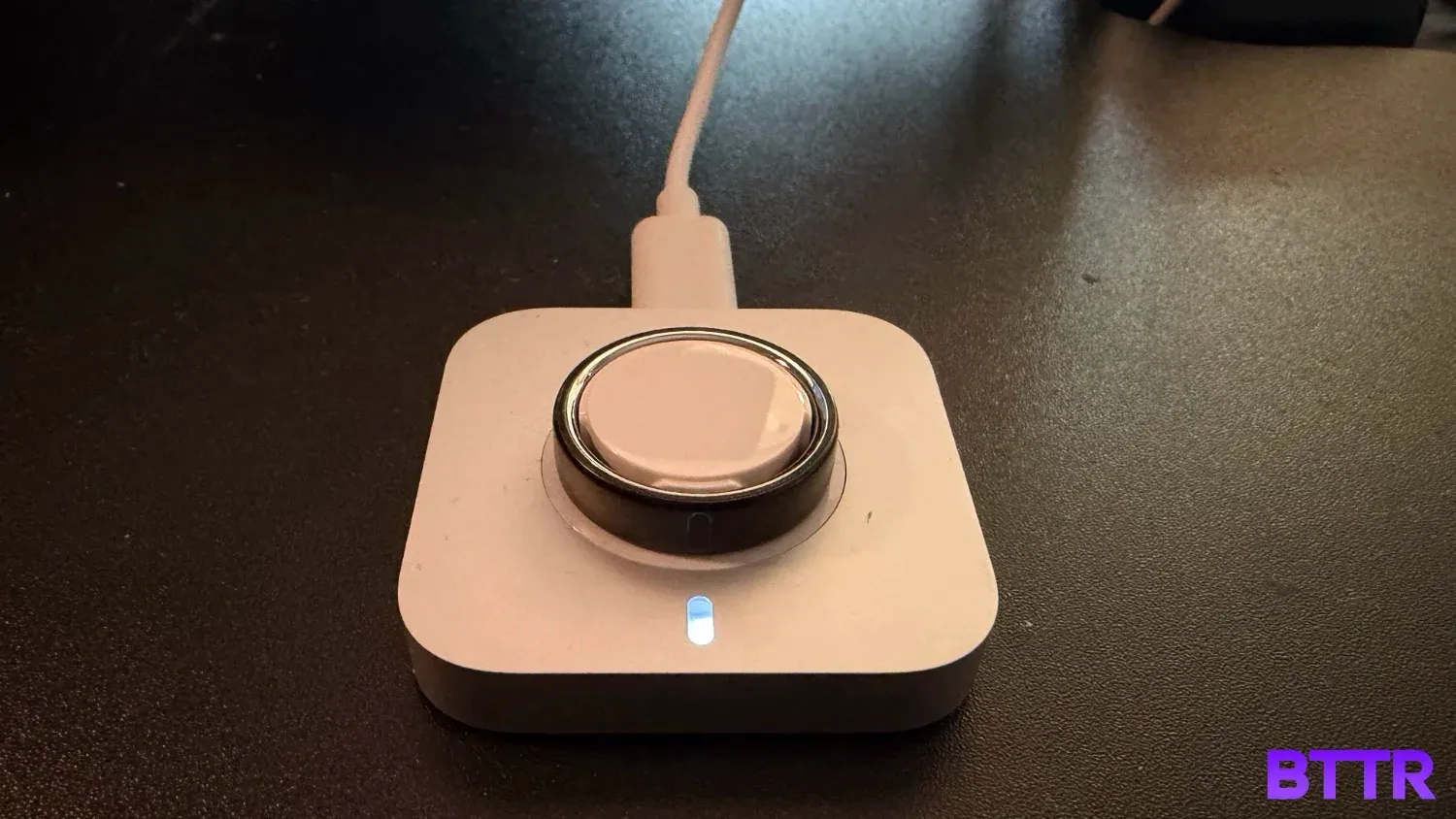
| Charging | Size-specific charger, USB-C cable, approx. 80 minutes for a full charge |
| Connectivity | Bluetooth Low Energy |
| Compatibility | iOS and Android |
| Warranty | 1-year limited warranty |
| What's in the box | Oura Ring 5, size-specific charger, USB-C cable, printed documentation |
Design and build quality
The first step on the journey to getting the Oura Ring 5 is to size yourself up. Just like the Samsung Galaxy Ring, there’s a sizing kit of plastic moulds, and you try a few to find the size that fits you best.
The sizes aren’t a match for jewellery ring sizes, so you can’t really skip this step. You need to measure your finger against the Oura sizing to make sure you get the right fit. Because smart rings can’t be resized, and you don’t want it to be too loose and fall off, or too tight you can’t get it off.
Once you have your fit, you have to choose your style, and this is one of the worst parts of the product. I ended up choosing the Stealth option, which is a matte black finish, but there are six different finishes to choose from. I spent hours deciding between Stealth and Brushed Silver, but other people might like the Gold, Silver, Deep Rose or Black finishes.
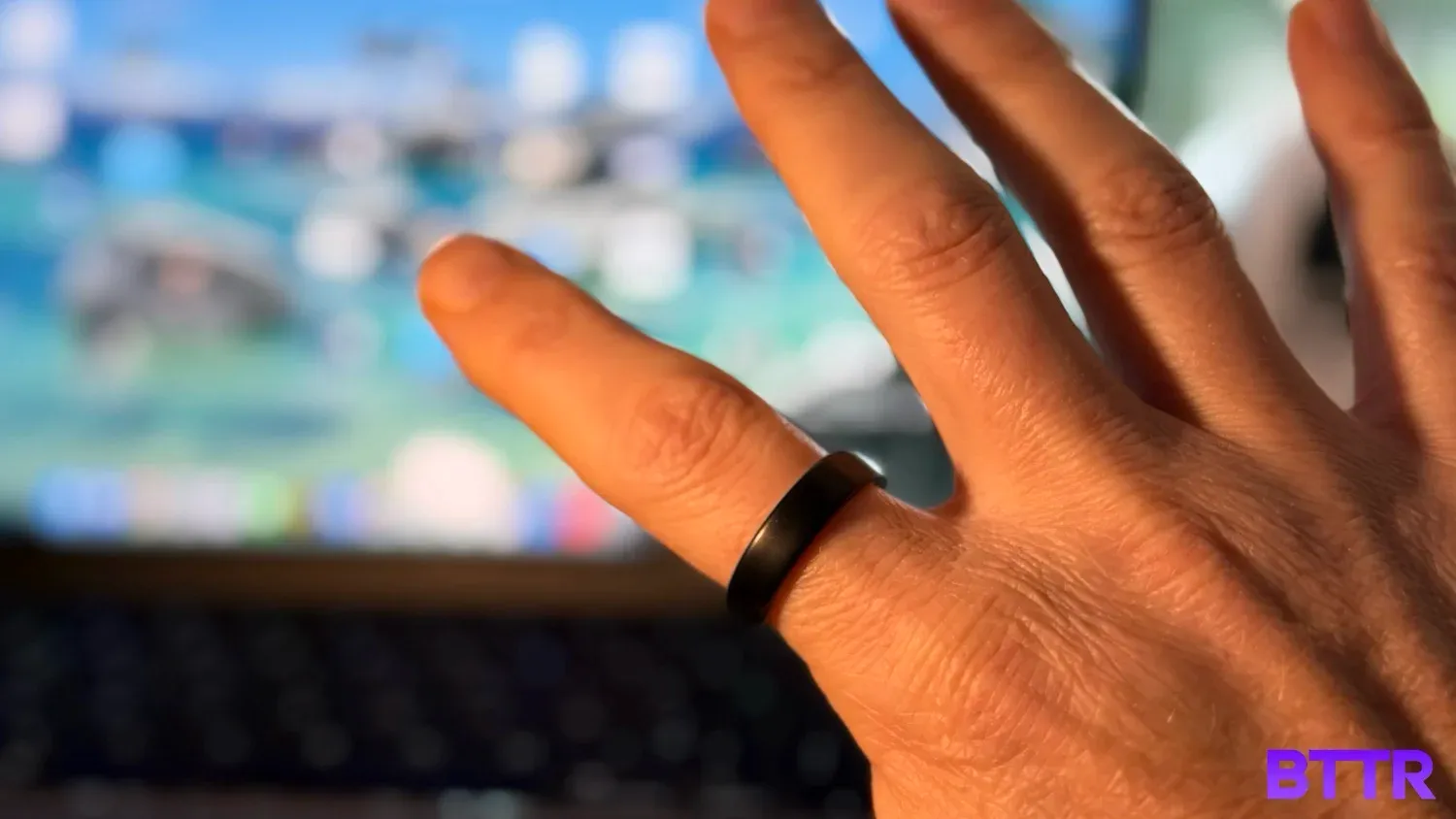
The Titanium build is tough, and the finish is robust though not indestructible. If I look closely, I can see one tiny mark on the edge of my review ring, a minuscule scratch. It’s barely perceptible, but it is there.
The inside of the ring is where the technical components sit. There are green and red and infrared LEDs for measuring heart rate and blood oxygen levels, a digital sensor for temperature measurements and an accelerometer for movement and activity tracking.
Those lights can creep out from under the ring at night though. It’s not been so distracting as to wake me up or interrupt a movie, but it does happen.
Performance
Because there’s no screen in the Oura Ring 5, all interaction happens through the app. The ring records the data and you access it via Oura’s software.
One of the potential concerns of having all the data come from a piece of metal that wraps around your finger is accuracy. Oura has done studies into the accuracy of its heart rate monitoring and found it exceptionally close to a medical grade ECG device.
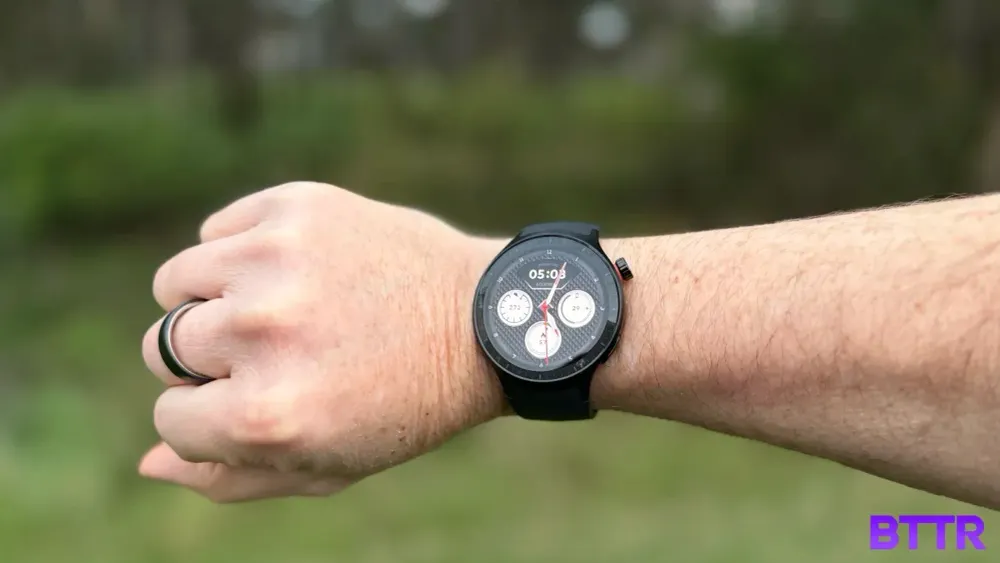
Compared to data I tracked from the Apple Watch Series 11 wrapped on my wrist, the data varies a fair amount. Take sleep tracking, for example. I had a bit of an interrupted night’s sleep last night, and the data varied dramatically across devices:
| Metric | Apple Watch | Withings Sleep Analyser | Oura Ring 5 |
|---|---|---|---|
| Time in bed / total duration | 8h 48m | 8h 30m | 8h 47m |
| Time asleep | 7h 55m | 8h 04m | 7h 21m |
| Awake | 1h 10m | 0h 26m | 1h 26m |
| REM | 2h 19m (29%) | 1h 45m (21%) | 2h 07m (29%) |
| Light / Core | 4h 30m (57%) | 4h 32m (57%) | 3h 37m (49%) |
| Deep | 1h 06m (14%) | 1h 47m (22%) | 1h 38m (22%) |
There’s a lot of variability there, though I’m fascinated that across REM, Deep and Light/core sleep periods two of the devices have the same percentage, though never the same two.
From an activity perspective, compared to the Apple Watch, the Oura tends to index a bit higher on the step count and total calories burnt, but lower on the active/move calorie front.
| Metric | Oura Ring 5 | Apple Watch |
|---|---|---|
| Steps | 3,502 | 2,958 |
| Distance | Not shown | 2.10 km |
| Active/Move calories | 309 / 450 Cal (goal progress) | 353 / 400 Cal (Move ring) |
| Total burn | 2,446 Cal | 2,197 Cal |
Where the Ring 5 doesn't really try to compete is structured workouts. You can start a manual activity, but there's no live heart rate display during a session unless you pair an external strap, and exercise tracking mostly still leans on automatic detection rather than anything you'd call a training tool.
I didn't run any structured sessions through it during testing, relying instead on that automatic detection, and I think that tells you where Oura sees this ring sitting.
If you want a device that doubles as a serious training partner, this isn't it. If you just want your daily movement picked up without thinking about it, it does that job well enough.
I did like that it automatically detects things like housework and yard work as activities. The key takeaway here is that there's going to be differing data points across devices, but so long as you're consistent with your device, it shouldn't matter too much.
Holistic health approach
While the data from the Oura 5 differs to the Apple Watch, it became less important, overall, within the broader scheme of my health during the course of the review.
The Oura app is built around six key areas. You can customise the order to suit your needs best, but fundamentally you are looking at Readiness, Sleep, Activity, Heart Rate, Resilience and Stress.
Not all measurements are available straight away. It takes time for the ring to pull together a baseline of data for you, which it then uses to inform how things are changing over time. Even now, over a month after I started testing, I still need another six weeks of data before it will tell me my Body Clock or Chronotype.
But within those areas, you will get insights into your overall health. Jump to the “My Health” button on the app screen, and you’ll get a quick look at areas you can focus on vs areas you are thriving, as well as getting insights into what’s changing.
Perhaps that’s the most interesting element of the Oura app. It’s clearly driven by an AI system, but the natural language communicating how things are changing with your health is a great way to consume the information.
For example, my current health summary says:
You’re strong overall, with small shifts to watch over the past 90 days–stress management and heart health dipped slightly while sleep improved. Celebrate your sleep gains and lean on those routines to support recovery and heart-friendly habits like consistent activity, relaxation break, and steady sleep timing.
The information isn’t a major difference to what the Apple Health app tells me when I look at the data, but the natural language does make it clearer to understand.
Battery life and connectivity
I got a week from each recharge fairly easily, wearing the Ring 5 almost 24-7. I would still take it off to shower or wash up, despite its IP68 rating.
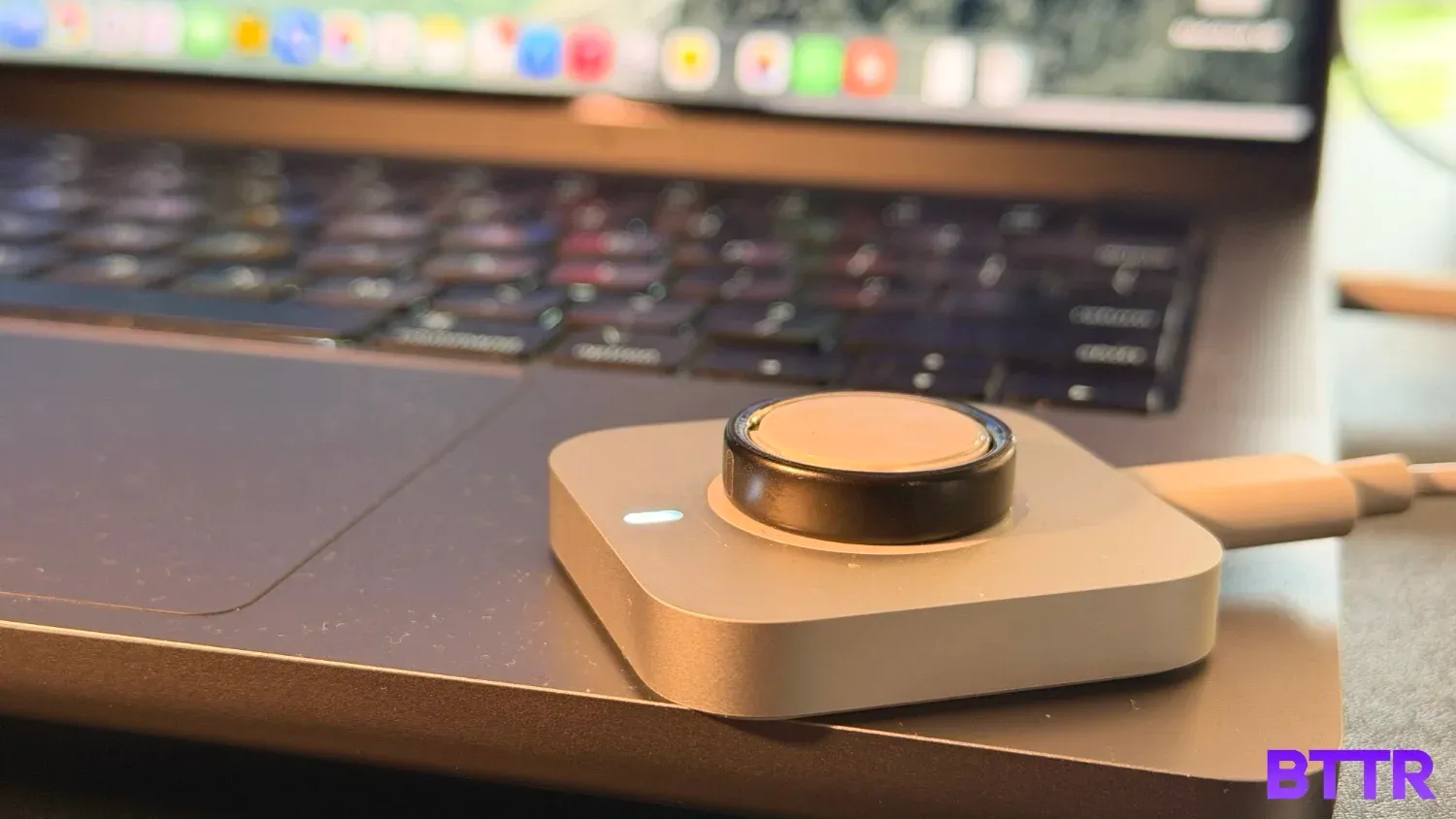
It is a little on the slow side to charge, though. It would take roughly an hour on the charger to fill up, though Oura says that 10 minutes will give you enough to get through the day.
While the Ring seamlessly connects via Bluetooth to your iOS or Android phone to sync data, one area I would love to see further expansion is in third party connectivity.
There is already a bunch of third party integrations available. But most of them are platforms I haven’t heard of before. The only platform I had an existing account for was Strava, but for things like calorie tracking, apps like MyNetDiary or MyFitnessPal don’t have integrations.
And as much as it’s a holistic approach to health, things like weight tracking aren’t part of the app, at least from what I can see. That makes it much less useful for anyone focused on losing weight as a primary driver.
Verdict
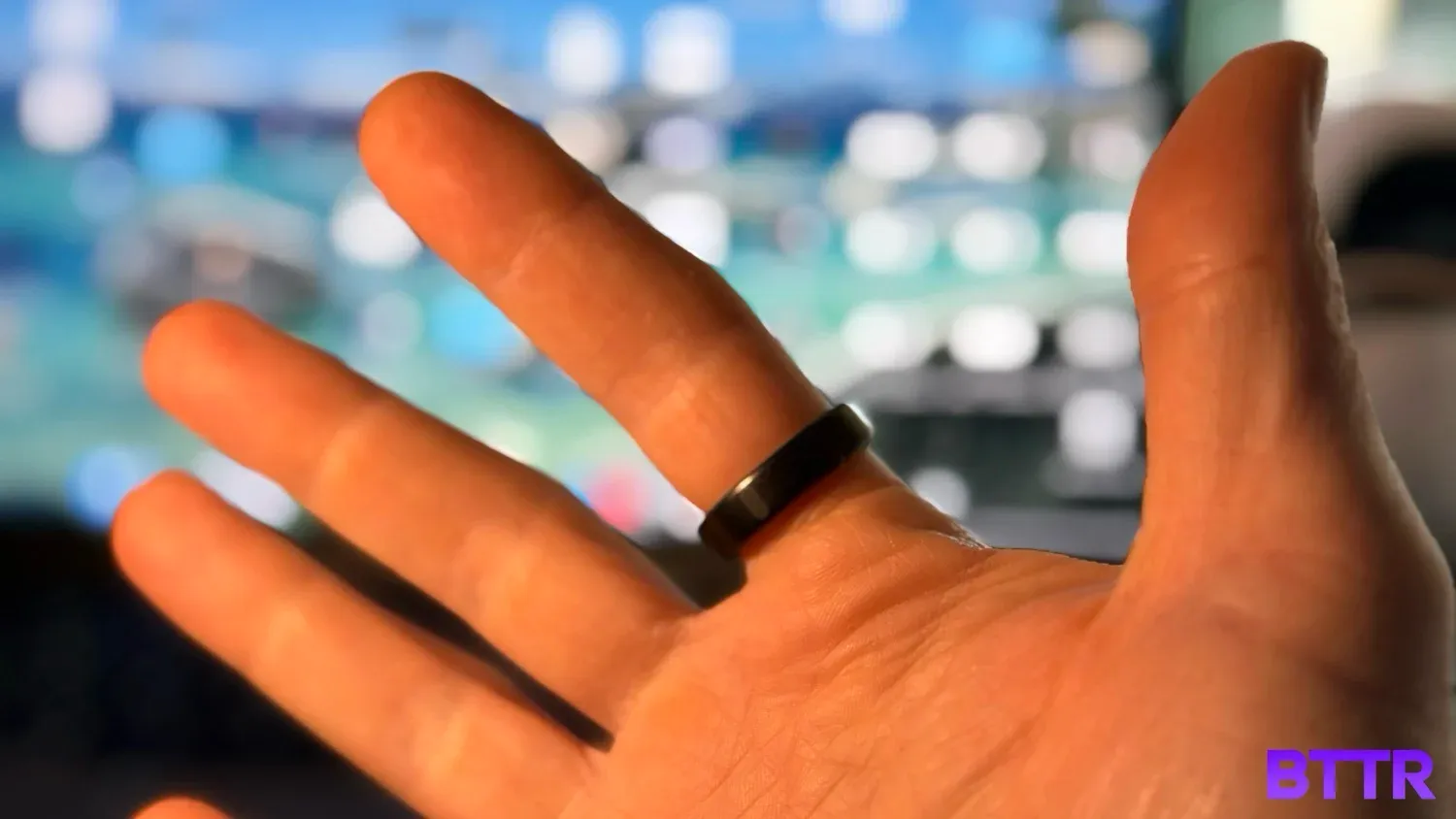
For a device that can be viewed as a piece of jewellery as much as a fitness device, I’m surprised by how much I enjoyed testing the Oura Ring 5 over the past month.
A big part of that is the pure simplicity. There is no user interface with the ring itself – you just pop it on your finger and leave it to do its work.
But it’s also the Oura app. It’s well designed around the ethos of overall health, rather than a specific focus on fitness or weight loss. And that broader focus makes it friendlier in some ways, easier to digest information and understand the changes you need to make to improve.
I would like to see a broader ecosystem of connected apps, particularly around diet and (healthy) weight loss. But the good news is that can all be made available through a software update.
It's also worth knowing Oura isn't the only option if the subscription puts you off.
The Samsung Galaxy Ring, RingConn Gen 2 and Ultrahuman Ring Air all offer health tracking without an ongoing membership fee, which makes them worth a look if you'd rather pay once and be done with it.
None of them quite match Oura's app for how it explains your data, but if the monthly cost is the dealbreaker, they're the obvious alternatives.
The Oura Ring 5 itself is exceptional enough as it is.
Buy the Oura Ring 5 if
- You want health tracking that doesn't feel like wearing tech. The tiny form factor disappears on your finger, and the battery lasts up to nine days, so you're not constantly thinking about charging it.
- You want holistic insights, not just raw numbers. The Oura app's natural language summaries make sense of your data instead of just dumping stats on you.
- You don't want to wear a smartwatch to bed. Sleep tracking is where Oura still does its best work, and a ring is far more comfortable overnight than a watch.
Skip the Oura Ring 5 if
- You're serious about sports and workout tracking. There's no live heart rate display during structured workouts unless you pair an external strap.
- You don't want an ongoing subscription. Most of the ring's insights sit behind the $9.99/month or $109.99/year Oura Membership, on top of the $649 to $799 you pay for the ring itself.
- You already own an Oura Ring 4. The size is the only meaningful upgrade, since Oura rolls its new software features out to older rings too.
Latest wearables deals
Frequently Asked Questions
Do I need an Oura Membership to use the Oura Ring 5?
Yes. The ring itself collects the data, but most of the health insights, including your Sleep Score, Activity Score and Readiness Score breakdowns, sit behind the Oura Membership. That costs $9.99 a month or $109.99 a year in Australia, on top of the $649 to $799 you pay for the ring.
How long does the battery last?
Oura rates the Ring 5 at 6 to 9 days per charge, depending on your ring size and usage. In my testing, I got about a week from each charge fairly easily, even wearing it almost around the clock.
Can the Oura Ring 5 track workouts like a smartwatch?
Technically, yes. But in reality it’s built more for passive, day-to-day tracking than structured workouts. I mostly relied on its automatic activity detection rather than logging manual workouts, and if serious sports tracking matters to you, a proper GPS watch will do a better job.
Does the Oura Ring 5 work with other fitness apps?
It integrates with Strava, but third-party support beyond that is limited. Popular calorie and diet-tracking apps like MyFitnessPal and MyNetDiary aren't currently supported, which is worth knowing if you want to combine Oura's data with a broader health tracking setup.
Is the Oura Ring 5 worth upgrading to if I already have an Oura Ring 4?
Only if the smaller size matters to you. Oura rolls most new software features out to the Ring 4 as well, so size and comfort are really the only reasons to upgrade.