

BTTR is independent. We may earn a commission if you buy through our links.
Why trust us? | How we test
Taking a photo on your phone is way more complex than you might think.
10 years ago, having a higher megapixel count might have been a rough indicator of a phone’s quality. But in today’s world of multiple lenses, varied sensor sizes and computational photography, the megapixel stat is only one small part of the equation.
The truth is that some phones with 12MP sensors can capture better photos than those with 200MP cameras, and the reason comes down to physics and processing.
So what features are important when choosing a phone for a camera? That’s what I’m going to try to explain here.

Megapixels: what they measure, and why the number is mostly noise
Digital photos are like mosaic of thousands – millions, even – of tiny squares. The squares can all be different colours and when you step back and look at the picture as a whole, it becomes the image you want to see.
Each of these squares is called a Pixel. Pixel here is short for “picture element”, and it refers to the smallest unit of measurement of a digital image. So for digital photography, a megapixel is equivalent to one million pixels.
But a photo doesn’t just appear and become megapixels. It is first captured on a sensor. Each sensor is made up of millions of individual light-sensing points (photosites), and when someone describes a camera as a 50 megapixel camera, they are actually referring to the number of photosites on the sensor. Effectively, 1 pixel is the same as one photosite, though they technically refer to different things.
But where this gets interesting is that while more megapixels means more detail for your images in theory, the reality is a bit different.
It makes sense. A 200MP photo has more individual data points than a 12MP one, so you expect it to have a finer texture.
But the catch is that phone camera sensors are tiny compared to those in dedicated cameras. Even the largest phone sensors (around 1 inch) are a fraction of the size of a proper camera’s sensor.
For comparison, an entry-level mirrorless camera's APS-C sensor is about 2.8–3.2x larger by area, and a full-frame sensor is about 7.4x larger.
And this is where the physics kicks in. Smaller photosites collect less light per pixel, which means more noise (visible grain, especially in shadows and low light), less dynamic range (the gap between the darkest and brightest detail the sensor can capture in one shot), and more reliance on software to clean the image up afterward.
So if you cram 200 million photosites onto a sensor that's only around 1/1.3 inch across, each individual photosite becomes extremely small. It’s not going to do as good a job at capturing the image compared to a photo with fewer, but larger photosites on its sensor.
Pixel binning: why your "200MP" photo is usually not 200MP
Because tiny photosites individually perform poorly, almost every high-megapixel phone camera uses a technology called pixel binning. This means the sensor combines a cluster of adjacent photosites (commonly a 2x2, 3x3, or 4x4 group) and treats them as one larger "superpixel" for the final image.
- A 200MP sensor using 4x4 binning outputs a 12.5MP photo
- A 108MP sensor using 3x3 binning outputs a 12MP photo
- A 50MP sensor using 2x2 binning outputs a 12.5MP photo
For smartphones, the output resolution is nearly always in the 12-16MP range regardless of the sensor's rated megapixel count, because that's roughly the resolution at which the binned photosite size becomes large enough to gather useful amounts of light.
Some phones let you manually shoot in the full, un-binned resolution (useful for cropping in later, or printing very large), but the default camera app almost always shoots in binned mode because it looks better in normal conditions.
When higher megapixels help
There are two scenarios where a higher native megapixel count pays off:
- In-sensor zoom (crop zoom): a 200MP sensor can crop into the centre of the frame and still output a reasonably sharp 12MP image at 2x or 4x "zoom," because there's enough native resolution to crop from. This is how many phones fake a "2x optical-equivalent" zoom without a second lens.
- Bright daylight, tripod, or landscape shooting: in good light, with a steady hand or tripod, the full-resolution mode can resolve more fine detail than the binned mode, which is useful for large prints or heavy cropping.
Outside those two situations, higher megapixels rarely translate to a visibly better everyday photo.
Sensor size: the spec drives image quality
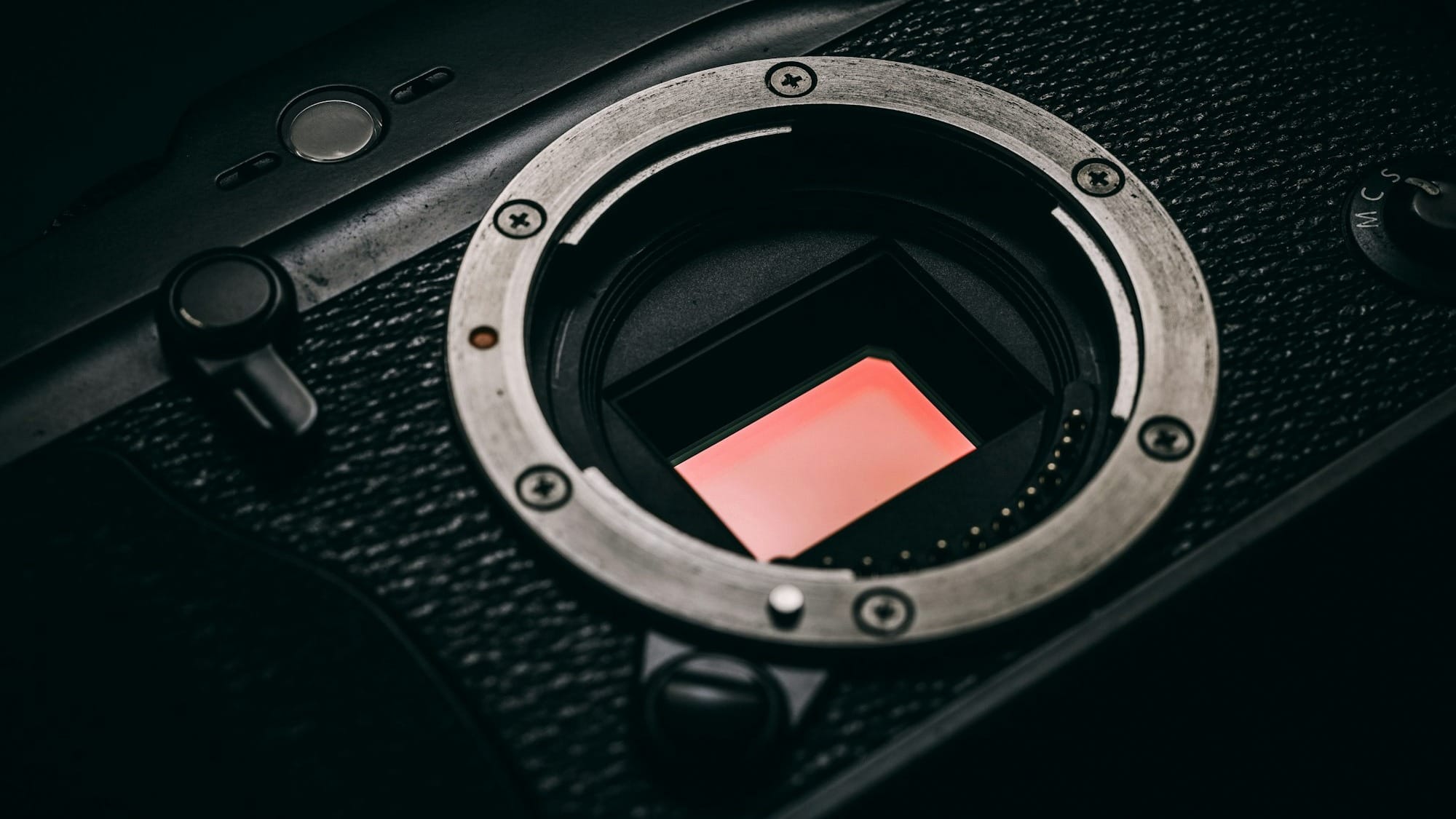
If you want to know if a smartphone is going to take a good photo, this is the number that you’ll want to look for. Unfortunately, few manufacturers promote it, so finding the detail can be a bit of a challenge.
Sensor size is typically written as a fraction of an inch, like 1/1.3" or 1/2.55".
This is an old TV-tube measurement convention, and it can be confusing: a larger denominator means a smaller sensor.
So 1/1.3" (roughly 9.8mm x 7.3mm) is significantly larger than 1/2.55" (roughly 5.0mm x 3.7mm), despite 2.55 being the bigger number.
Here’s an example: the 200MP primary lens on the Galaxy S26 Ultra has a 1/1.3″ sensor, where the Motorola Signature’s 50MP primary lens is a 1/1.28″ sensor. Despite the Motorola having a smaller megapixel count, the slightly larger sensor helped DXOMark rate it higher than the Samsung.
What you get for your money
- Budget phones (under $400): main sensor is typically 1/2.76" or smaller
- Mid-range phones ($400-$900): main sensor typically measures between 1/1.95" and 1/1.56"
- Flagship phones ($1,200+): main sensor typically sits around 1/1.3" to 1"
A larger sensor area means each individual photosite (before binning) can be larger too, which directly improves low-light performance, reduces noise, and improves dynamic range.
This is why flagship phones consistently produce better night shots and better-looking skies (skies are one of the first things to show noise and banding on a small sensor) even when the megapixel count on paper looks similar to a cheaper phone.
Aperture: the importance of light
Aperture is an indication of the size of the hole a lens creates to let light through onto the sensor. It is written as an f-number (like f/1.8), and counterintuitively, a lower number means a wider opening, letting in more light.
On an interchangeable lens camera, you can generally adjust the size of the aperture to let in more or less light, depending on the photo you want to take.
On a smartphone though, aperture is typically fixed, and most phone main cameras sit between f/1.4 and f/2.2.
Wide-aperture lenses help low-light performance and produce more natural background blur, and because the aperture is generally fixed on a smartphone, having a wider aperture gives you the most versatility for photography.
That means you can use this spec to compare between different phone models.

What is computational photography?
Modern phone cameras don't just capture a single photo. They capture a burst of multiple frames quickly, and then merge them in software before you see the result. This is called computational photography, and it's the biggest reason phone cameras have gotten so good in recent years despite much smaller sensors.
Computational photography can do a bunch of cool things through software that traditional cameras required skill to achieve.
For HDR images, the phone captures several frames at different exposure levels in a fraction of a second and blends them, so a bright sky and a shadowed foreground can both show detail in the same photo.
At night, the phone captures a burst of longer-exposure frames (sometimes several seconds total, split across many shorter exposures to avoid blur) and stacks them, cancelling out random noise and brightening the image far beyond what a single frame at that sensor size could manage. The trade-off here is that anything moving in the frame (like pets, cars, people) will typically blur.
For portrait images, the phone estimates depth (distance from camera to each part of the scene) using either a dedicated second lens, a LiDAR or time-of-flight sensor, or a computational depth estimation from a single lens, then artificially blurs everything outside the subject.
Many phones now use software to identify what's in the frame (sky, skin, foliage, food) and apply different processing to each region of the photo. This means things like boosting sky saturation, smoothing skin, sharpening foliage. This is why some phones' photos look punchier or more "processed" straight out of the camera even when the raw sensor data is similar.
Computational photography has drastically improved the quality of the image out of smartphone cameras, but it’s not magic. There are several areas where it can overreach.
- Over-sharpened skin: aggressive noise reduction plus sharpening can leave skin looking plasticky or waxy, especially in mid-range phones trying to compensate for a smaller sensor
- Flattened HDR: overly aggressive HDR merging can flatten contrast until a photo looks lifeless, particularly noticeable in sunset or high-contrast scenes
- Warm-toned white balance drift: some phones' auto white balance skews warm indoors under artificial light, making skin tones look orange or food look less appetising than reality
Computational photography is a reality in the age of smartphones, but it does raise questions about what a photo actually is. If a smartphone photo is actually several photos blended together in software, is it actually a representation of what you tried to capture?
As AI editing becomes more accessible, this question will become even more important.
Zoom: optical, hybrid, and digital, and why the difference matters
In the days of the dedicated camera, zoom required a lens that would massively extend out of the camera’s body (or a different lens attached to a DSLR).
In phones, zoom is handled differently, thanks to the lack of space within the phone’s body.
True optical zoom is still an option, but instead of a big movable lens, it comes in the form of a separate physical lens (usually a "periscope" design folded sideways inside the phone body) with a longer focal length. Common ranges are 2x, 3x, and 5x optical.
Some phones now offer “hybrid zoom”. This uses the optical zoom lens's data, combined with cropping and AI upscaling, to claim a higher zoom figure than the optical lens alone provides. It’s a bit of a marketing gimmick, but at the same time, can be remarkable in its own right. The 100x zoom on the Galaxy S26 Ultra is a good example of this, letting you get up close with a subject on the other side of a football field.
Finally, digital zoom is the act of software cropping and upscaling with no additional optical hardware, which is the least detail-preserving option and degrades quickly once you get past 2x
Marketing materials often lead with the highest number ("30x zoom!") without clarifying how much of that is optical versus digital.
If zoom quality matters to you, check the optical zoom figure specifically, and treat anything beyond that as a bonus rather than the main selling point.
Understanding video
Today’s phone cameras aren’t just for capturing still images. Video is a key part of the camera functionality, using the same image sensor, lens and aperture.
For video recording, megapixels become less important. 4K video is 3840 × 2160 pixels, which is about 8.3 megapixels. When you consider smartphone cameras offering 200 MP cameras, that doesn’t seem like a lot.
So what happens with all those other pixels when a 200MP lens is recording video? Well, it depends. In many cases, the phone will use pixel binning to combine several adjacent pixels worth of data into a single pixel for the video. Just like it does with photos, pixel binding can help with low-light scenarios.
In other cases though, the phone will crop in on a specific section of the sensor, taking only the information it needs.
Unlike some dedicated cameras, phones don’t have a mechanical shutter that opens and closes to take a photo. They use electronic rolling shutters that read the data from the sensor line by line really quickly.
That data is processed by the Image Signal Processor combine all the images and data into something that can be encoded into a proper video file.
How does this help you choose the right smartphone
Camera quality is one of the key differentiators in modern day smartphones. So if you’re looking for a phone that can take great pictures and record high quality video, you are probably going to need to pick up a premium device.
Even then, not all premium smartphone cameras are created equal. And buying the most expensive phone doesn’t mean you’ll end up with the best camera performance either.
If you are looking for a great camera phone, try to get an idea of the sensor size. DXOMark is also an excellent source for identifying the best camera phones – its scientific testing is unrivalled for smartphone cameras.
But at the end of the day, learning to take better photos can sometimes be even more powerful than getting the best device.
Latest smartphone deals