


BTTR is independent. We may earn a commission if you buy through our links. Why trust us?
The Rokid AI Smart Glasses pack an impressive amount of tech into a 49g frame that mostly passes for a normal pair of glasses. The in-lens display, dual AI model choice and translation features are excellent. But the discreet, hard-to-spot recording light means wearing them in public leaves you looking like you might be secretly filming someone, and that's a problem no software update fixes.
- Comfortable, all-day 49g build that looks like a normal pair of glasses rather than obvious tech
- Choice of Gemini or ChatGPT, with the flexibility to mix and match depending on the task
- Real-time translation across 89 languages displayed directly on the in-lens screen
- Live subtitles double as a genuine hearing aid tool
- The tiny, easy-to-miss recording light creates a real privacy stigma for wearer and bystanders alike
- Real-world battery life falls well short of all-day use, dropping to about 45 minutes with video recording
- Proprietary charging cable needs a second USB-C cable just to charge it, a needless design flaw
- Translation is one-way unless the other person is also wearing a pair
A little over a decade ago, I was very excited by the prospect of Google Glass. I thought it would be a game changer for how humans interacted with technology.
And it was. It highlighted all the potentially devastating privacy concerns that arose from “glassholes” using the product for purposes outside the legitimate. Google benched the product, and smart glasses stagnated.
Until the past few years, where Meta – a company that celebrates its disregard for people’s privacy – pushed hard with its Meta glasses. Other companies have also pursued the technology, from OPPO and Lenovo to Rokid.
At its core, the Rokid AI glasses are exceptional examples of technological innovation. What they manage to do is impressive, and arguably useful for plenty of people in countless situations.
But regardless of how impressive the tech is, there is a real stigma attached to wearing glasses with a camera in them. Even if the camera isn’t switched on, the countless reports of people hacking smart glasses to hide the notification light means that people don’t trust you aren’t recording.
I really like the Rokid AI glasses. But I just can’t bring myself to wear them in public.
What makes the Rokid AI Smart Glasses stand out?
Rokid’s flagship smart glasses don’t look like an embarrassing frame of chunky plastic on your face (cough, Snap, cough). They’re reasonably sleek, looking more like a pair of actual glasses than not. From a distance, you likely wouldn’t realise they are even “smart”.
A bit closer and there are a few giveaways. There’s the 12MP camera lens next to the left eye, and the LED light next to the right eye that indicates when it’s recording.
There’s a single button on the right arm, right next to your temple, too, though you really need to look closely to see that.
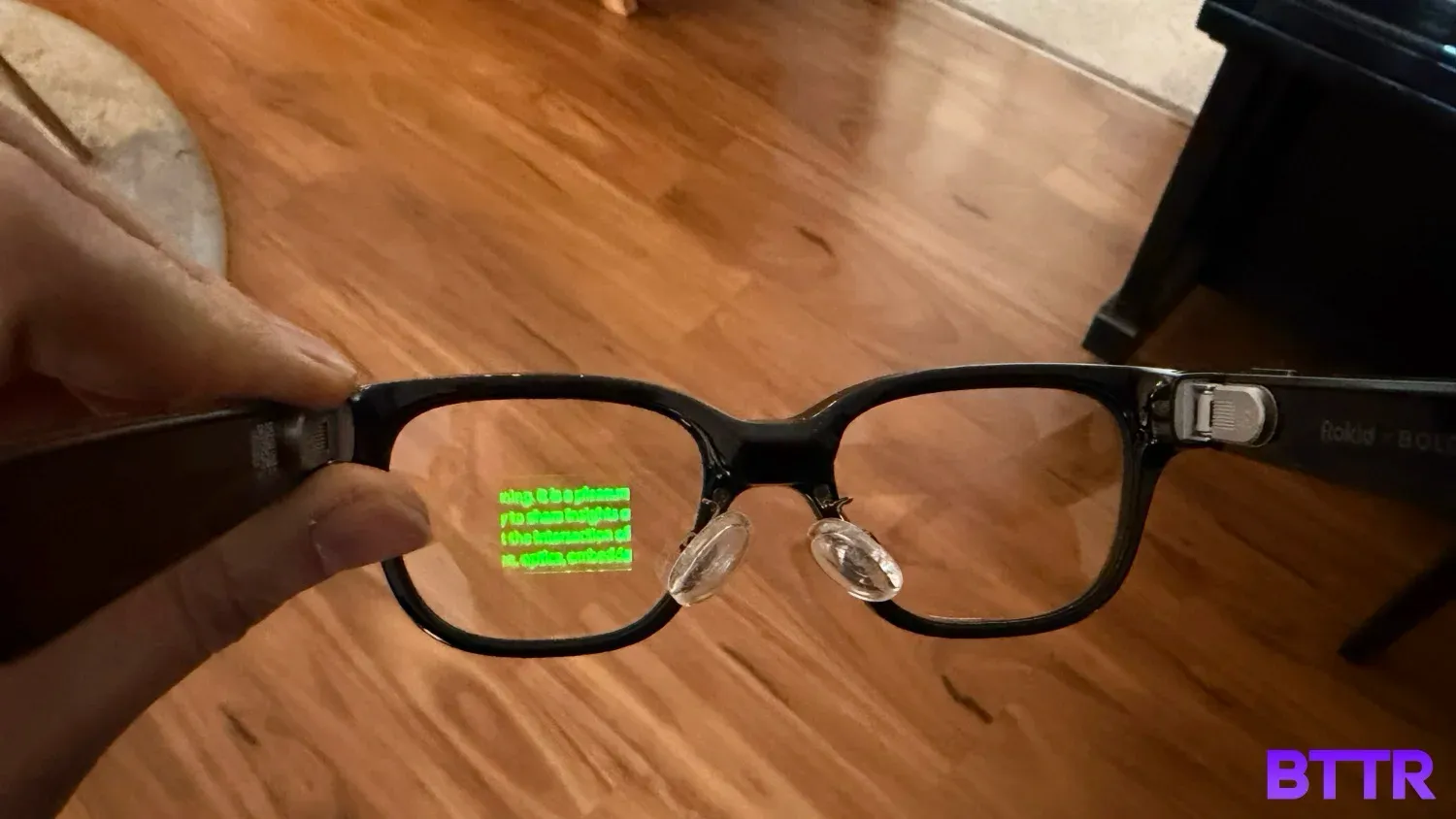
But perhaps the thing that gives away the Rokid’s advanced functionality is the micro-LED screen in the frames themselves. Designed for the wearer, you can occasionally catch a glimpse of the display when someone is wearing the glasses.
That display is one of the most exciting elements here. It turns the glasses into a futuristic tool to engage with the world around you, not just a creepy hidden camera.
The display is straight out of Fallout – monochrome green, which makes it easy to read, without interfering too much with what you can actually see in front of you.
The other part of smart AI glasses, at least the models available right now, is the AI functionality. Rokid is somewhat unique here, in that it gives you a choice of using either Gemini or ChatGPT. You can even mix and match a little bit, using one for chat and one for image recognition.
Rokid AI Smart Glasses specs
| Category | Specification |
|---|---|
| Price | From $999/td> |
| Dimensions | 155mm x 49mm x 44mm |
| Weight | 49g |
| Processor | Snapdragon AR1 Gen 1 / NXP RT600 (MIMXRT685SFAWBR) |
| RAM / Storage | 2GB / 32GB |
| Connectivity | Wi-Fi 6, Bluetooth 5.3 |
| Battery | 210mAh |
| Display | Dual-eye monochrome Micro-LED, 30° FOV, up to 1,500 nits, 18mm eye relief |
| Camera | 12MP Sony IMX681, f/2.25, FOV H:77° V:94° D:109°, fixed focus (34cm to infinity), tilted 3° inward |
| Audio | 4-microphone directional array, 2x AAC 0920 speakers |
| Colours | Black |
| What's in the box | Glasses, magnetic charging cable, carrying case, cleaning cloth |
Design and build quality
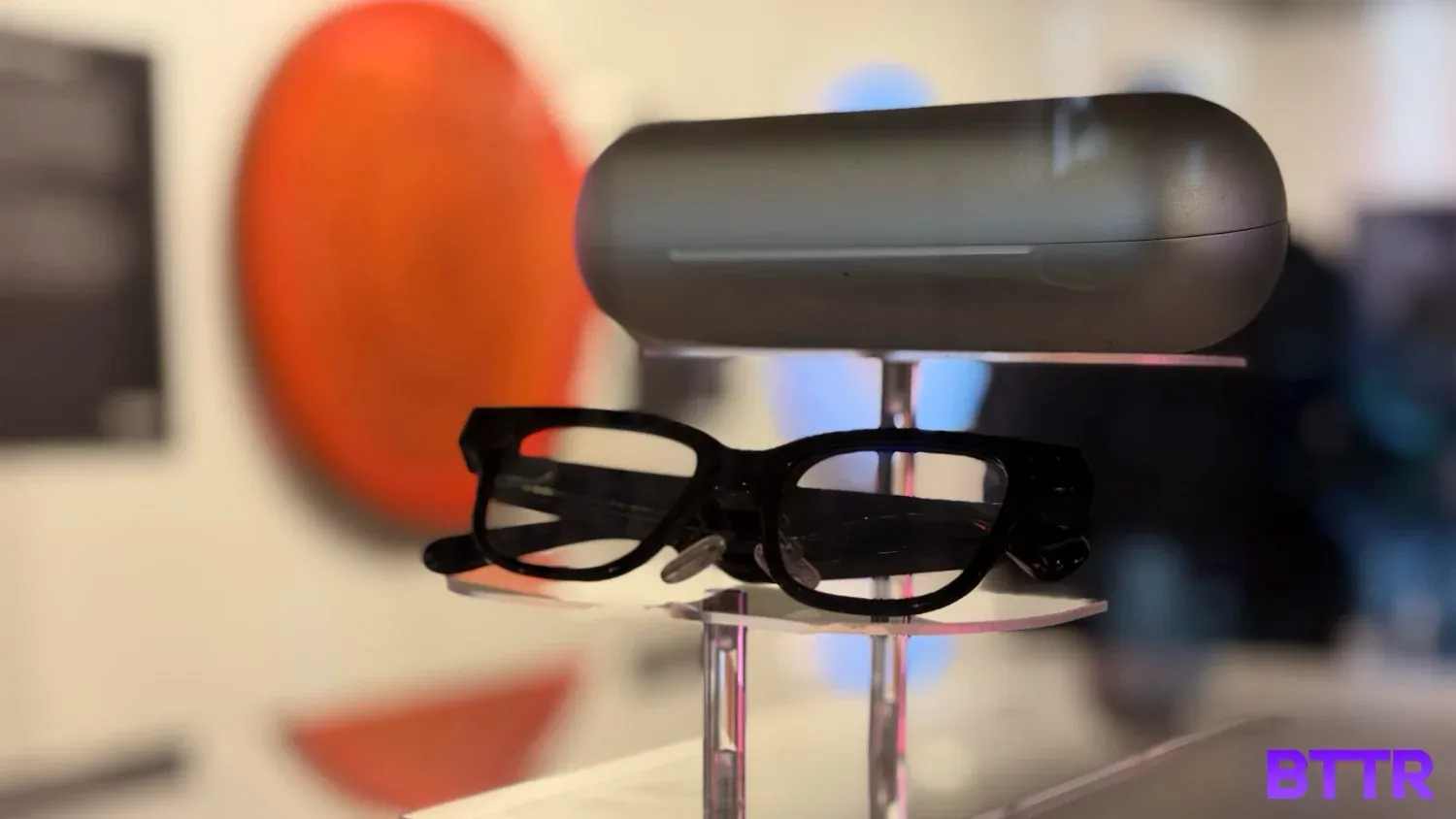
Made from a glossy TR90 high-polymer titanium black plastic, the Rokid AI smart glasses are reasonably stylish, so long as you like a chunkier style frame. My usual reading glasses are really thin metal frames, so I would probably say the Rokid glasses are a bit chunky for my face. But they look good on my son, so I know it’s not a bad design.
Like any pair of glasses, the frames don’t feel indestructible. I won’t say these are fragile, but they don’t feel like they could withstand being sat on accidentally too many times. At just 49 grams, they aren’t too heavy to wear all day, though.
The hinge is made from a titanium alloy, so it should be robust for extended use.
The screen in the glass did make the Rokids a bit reflective. I found that in my office environment, I would see reflections of the things behind me on the inside of the glass, which made it slightly harder to see what was in front of me.
It’s also worth calling out that the Rokid AI glasses support prescription lenses through a magnetic lens attachment system. I didn’t actually test this myself, though. There’s also clip on sunglasses attachments for when you want to wear the glasses out in the sunlight.
The glasses are rated IPX4, which means they can survive should you get caught wearing them in a light rain. There’s no dust resistance though, so probably best not to wear them at the beach (that’s also true thanks to the camera, but more on that later).
What makes the Rokid’s design remarkable is just how much tech is packed into the frames. There’s the 12 MP camera lens, the micro-LED screens in the lenses, the button, and touchpad in the right arm, speakers, and microphones for voice control and audio playback.
There’s also the battery and processor. It’s a really intelligent design that allows these glasses to be versatile for a wide range of features.
User interface
It’s the in-glass display, and its connection to AI, that makes the Rokid a more versatile pair of smart glasses.
Activate it with a “Hi Rokid” or a double tap of the touchpad on the side, and you get immediate access to controls for the screen's brightness, volume, voice translation, prompter, music, camera, subtitles, or device information.
The voice control also gives you more conversational access to AI. You can ask it anything you would ask any AI, really.
You do need to pair it with a phone to work, and that does create the occasional headache. By default, the glasses will show you every notification from your phone when you put them on, and if you’re a bit slack clearing notifications like I am, it means a minute of repetitive beeping every time you put the glasses on your face.
But that’s a minor quirk, fixable with a software update. More important to discuss here are the key features the glasses offer. The translation service is great, able to translate 89 different languages in real time. You get the translation written on the glasses screen, so you can follow along.
The catch, obviously, is that it’s a one-way conversation unless the other person is also wearing a pair of these glasses. So while you can understand someone else, they won’t be able to understand you.
The teleprompter function is also useful, though only for those who need to present. Simply upload the presentation you want to read through the app, and then read along. The tracking follows your actual presentation, so you don’t have to read too fast or too slow, which makes it much more useful.
The subtitles function is arguably the one most immediately useful, though. Like the Nuance Audio Glasses, you can use these to augment your hearing by having the microphone transcribe the conversation on the screen so you can read along.
It’s pretty quick and reasonably accurate, though in noisy environments and situations when you’re conversing with someone across the room, it does struggle to pick up what the other person is saying.
Camera performance
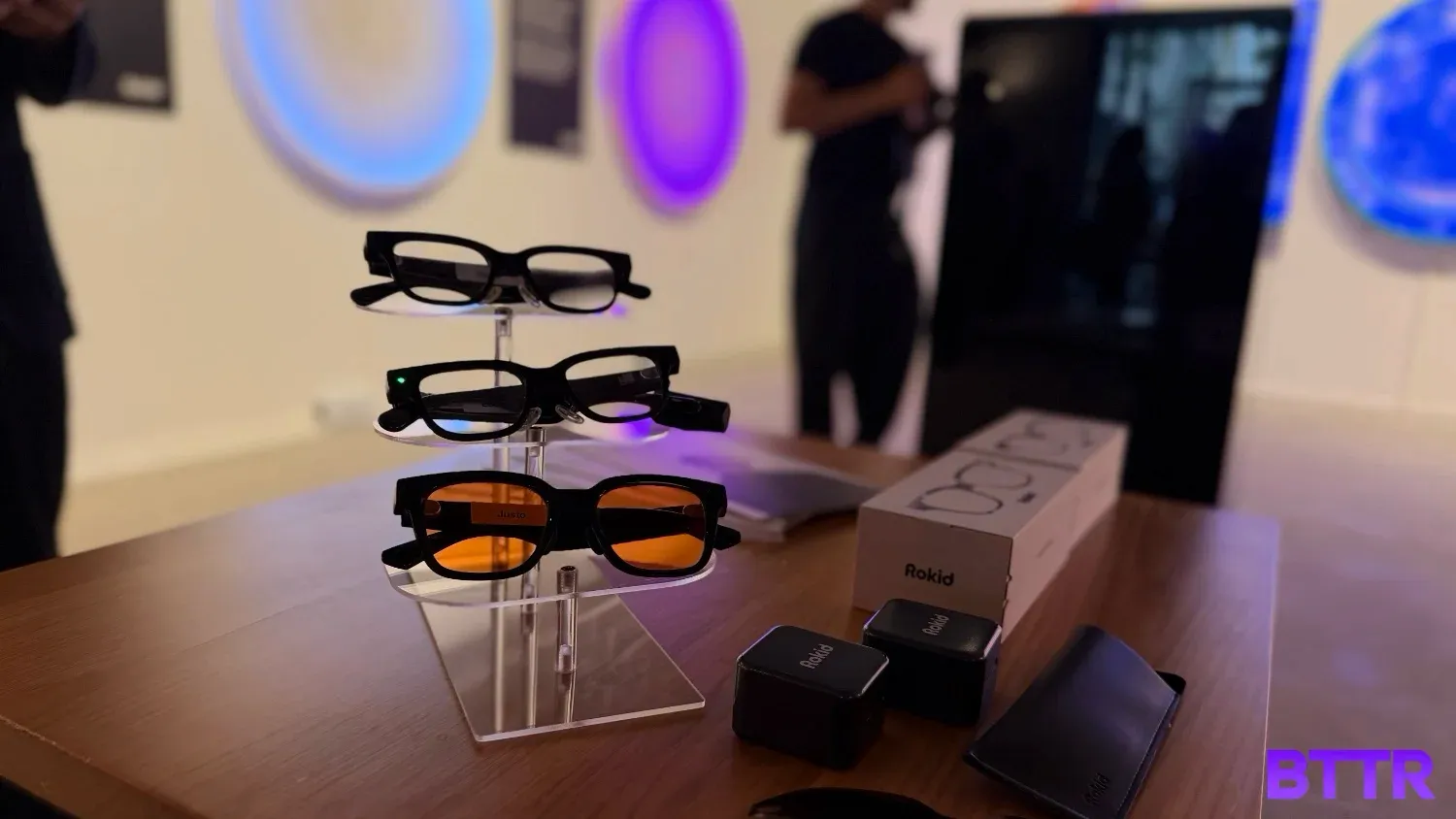
The AI glasses have a single 12MP lens in there to take photos and video. You can adjust the quality settings in the app, as well as the orientation easily enough for both photo and video.
You can take a photo easily with a press of the button on the right side of the glasses, while starting a video is a long press.
The quality is solid without being mind-blowing. If you use a flagship phone, or a camera like the DJI Osmo Pocket 4, you will definitely get better quality from those devices. But the Rokid quality isn’t terrible.
Taking a photo, you’ll get a preview of the shot on the green monochrome display, which doesn’t really do the image justice. But the actual photos do come out clear and colourful.
To access the images and videos, you need to manually download them from the glasses, which is a bit of a pain if I’m honest.
The glasses do let you connect the camera to the AI features easily. Ask the AI what you are looking at, and it will take a photo, send it to the AI for analysis, and then give you a response.
It can also translate text written in a different language. It’s a cool feature, though aside from travellers, not something I think justifies the purchase of smart glasses.
The question of discreet cameras
Perhaps the greatest challenge the Rokid glasses have is the discreet nature of the camera. Since Meta launched its first generation of smart glasses with Ray Bans, the internet is rife with stories of people hacking their glasses to hide the recording LED light so they could discreetly record people without their knowledge.
And this is a real problem. If someone is walking along with a gimbal camera or their phone out, visibly recording their environment, you can comfortably avoid them.
If someone hides the indicator light on their smart glasses so they can record FPV without people being aware, it’s a real problem.
The Rokid glasses don’t have the same bad reputation as Meta on privacy, but the LED indicator light is tiny. Even with it on, it’s not obvious — particularly at a distance — that someone is recording with the glasses.
Personally, wearing the Rokid glasses out in public left me with an uncomfortable feeling – not because I was using the cameras, but because I could be. Because seeing someone filming with a pair of these glasses makes me feel uncomfortable.
Ultimately, this is a problem all smart glasses face. And I think it will be a while before the category gets mainstream adoption because of it.
Battery life and connectivity
So battery life can vary dramatically on these things. Walking around and using. The smart features on the odd occasion, you may be able to get a full day of use.
Turn on some music, and that drops to 6–8 hours.
Start recording video, and they’ll last about 45 minutes.
There are options if you’re keen, though. The internal battery is just 210 mAh, which is tiny compared to a phone. But you can pick up additional capsule batteries, which attach magnetically to the charging connector, with each battery housing 1,700 mAh.
There’s also an optional charging case, which can recharge the glasses a full 11 times, which should give you the usage you want through the day.
Charging the glasses without that case is a pain, though. There’s a single, short, custom cable that comes in the box. I’m not a fan of proprietary chargers, but I do understand it with this form factor.
What bugs me is that the supplied cable uses a female USB-C port, which means you don’t just plug it in and start charging. You need to find a different USB-C cable to plug into the charging cable. It’s a silly, unnecessary design flaw.
Beyond the cable, the glasses support Bluetooth and Wi-Fi. You can pair to two devices, but not two accounts.
Verdict
Rokid’s AI glasses hardware is excellent. Honestly, it’s an exciting piece of hardware that delivers a pretty good experience across its feature set. There are arguments to be made about whether the feature set has enough mainstream appeal to succeed, but it’s not through any hardware fault.
The in-lens displays give a real Fallout vibe with the green monochrome display. It’s still kind of cool. Obviously, a full-colour display would be more engaging, but for now, I feel the monochrome does a good job.
The software, similarly, is easy to use and does a pretty good job. It’s easy to start and stop music, take a photo or video or start a teleprompter session using the on-device controls.
For me, though, the ongoing privacy questions around smart glasses is problematic. If it’s not an issue for you, then Rookie’s glasses provide a very solid option for a smart glasses alternative to Meta.
Buy the Rokid Glasses if
- You want a genuine second opinion on translation and subtitles. Real-time translation across 89 languages and live subtitles on the in-lens display make this one of the few smart glasses with a real accessibility use case.
- You're happy running the AI assistant through your phone rather than standalone. The dual Gemini/ChatGPT choice is genuinely useful once you're paired up, even if the glasses can't do much without your phone nearby.
- You don't mind being an early adopter of buggy first-gen software. Rokid is still actively patching the experience, and some of what's frustrating today may not be in six months.
Skip the Rokid Glasses if
- You're planning to wear them out in public around people you don't know. The privacy stigma around a barely visible recording light is a genuine social cost, not just a personal preference.
- You need all-day battery life without a top-up. The 210mAh cell struggles to get through a full day of moderate use, and video recording drains it in well under an hour.
- You're chasing standalone functionality. Nearly every feature routes through the Rokid phone app, so these aren't glasses you can leave the house with and forget your phone.
Latest wearables deals
Frequently Asked Questions
How long does the Rokid Glasses battery actually last?
Rokid claims up to 8 hours, but real-world use tends to land closer to 4–6 hours with occasional use, dropping to under an hour if you're recording video continuously. The 210mAh cell is tiny by design to keep the glasses light, so heavier use will drain them faster than you'd expect.
Can other people tell when the Rokid Glasses are recording?
There's a small LED next to the right eye lens that lights up when recording, but it's easy to miss, especially from a distance. This is the main reason smart glasses with cameras carry a privacy stigma, and it's not unique to Rokid.
Do the Rokid Glasses work with prescription lenses?
Yes. Rokid supports prescription lenses through a magnetic clip-on attachment system for myopia and astigmatism for an additional $69.
Can I use the Rokid Glasses without a phone?
Not really. Nearly every feature, from AI queries to navigation to translation, routes through the companion app on your phone. Without it paired, the glasses are limited to basic photo and video capture.
Which is better, the Gemini or ChatGPT option on the Rokid Glasses?
Neither is clearly better across the board. Gemini tends to be stronger for image recognition and location-based queries, while ChatGPT can be quicker for general conversational questions. You can switch between them in the app depending on what you're doing.
How does the Rokid Glasses camera compare to a dedicated action camera?
It's solid for a pair of glasses but no replacement for a proper camera. The 12MP Sony sensor is the same one used in Meta's Ray-Ban smart glasses, and while daylight shots come out clear, low-light performance is a known weak point.