

BTTR is independent. We may earn a commission if you buy through our links. Why trust us?
The Find N6 gets closer to a crease-free inner display than any foldable before it, and the Hasselblad camera system produces natural, detailed results that edge out what Samsung offers, particularly in low light. At RRP $3,299 ($400 more than the Galaxy Z Fold 7) it's hard to argue the premium isn't earned on screen and camera performance alone. The shorter software support window is the main thing to weigh up before committing.
- Inner screen crease is barely visible and almost imperceptible to the touch
- Hasselblad cameras produce natural results, with excellent low-light performance
- 6,000mAh battery easily clears a full day, often pushing toward two
- Smooth, reliable day-to-day performance with no bugs or slowdowns
- Seamless transition from cover display to inner screen when opening the phone
- RRP $3,299 is $400 more than the Galaxy Z Fold 7
- Five years OS updates, six years security patches — two years shorter than Samsung and Google
- AI Pen case is bulky, plasticky, and blocks wireless charging while attached
- Not all Android games are optimised for the squarish inner screen ratio
- IP56/58/59 water resistance falls short of some competitors at this price point
Mosts screens are flat. That all changed when foldable phones arrived, but they came with a compromise: a crease running through the middle of the display. It was a persistent physical reminder that this screen had to fold in half to fit in your pocket.
The OPPO Find N6 is the most serious attempt yet to create a proper phone/tablet hybrid. Having spent just over a month with it as my day-to-day phone, OPPO has come closer than any foldable I've tested.
Offering a nearly crease-free inner screen, Hasselblad cameras, the Find N6 also comes with a significant price tag. The question was whether it all held up in extended use.
It largely did. There are a couple of things worth knowing before you hand over $3,299, though.
What makes the OPPO Find N6 stand out?
Foldable phones have narrowed to a handful of serious contenders: Samsung's Galaxy Z Fold series, Motorola’s RAZR clamshell design, Google's Pixel Fold lineup, and OPPO’s own Find N series.
Most tell a similar story. You get a big inner screen with a prominent crease, and you make trade-offs on thickness and weight. Samsung’s Galaxy Z Fold7 took big steps on that part last year, though.
The OPPO Find N6 takes out a step further, arguing those trade-offs are not inevitable.
The most interesting feature is what OPPO calls “Zero-Feel Crease”. The hinge uses 3D liquid-printed titanium components, laser-scanned to 0.3 micrometre accuracy and filled with photopolymer, cycled through more than 20 calibration passes.
The result is hinge variance reduced from 0.2mm to 0.05mm, and TÜV Rheinland has certified the mechanism for one million folds.
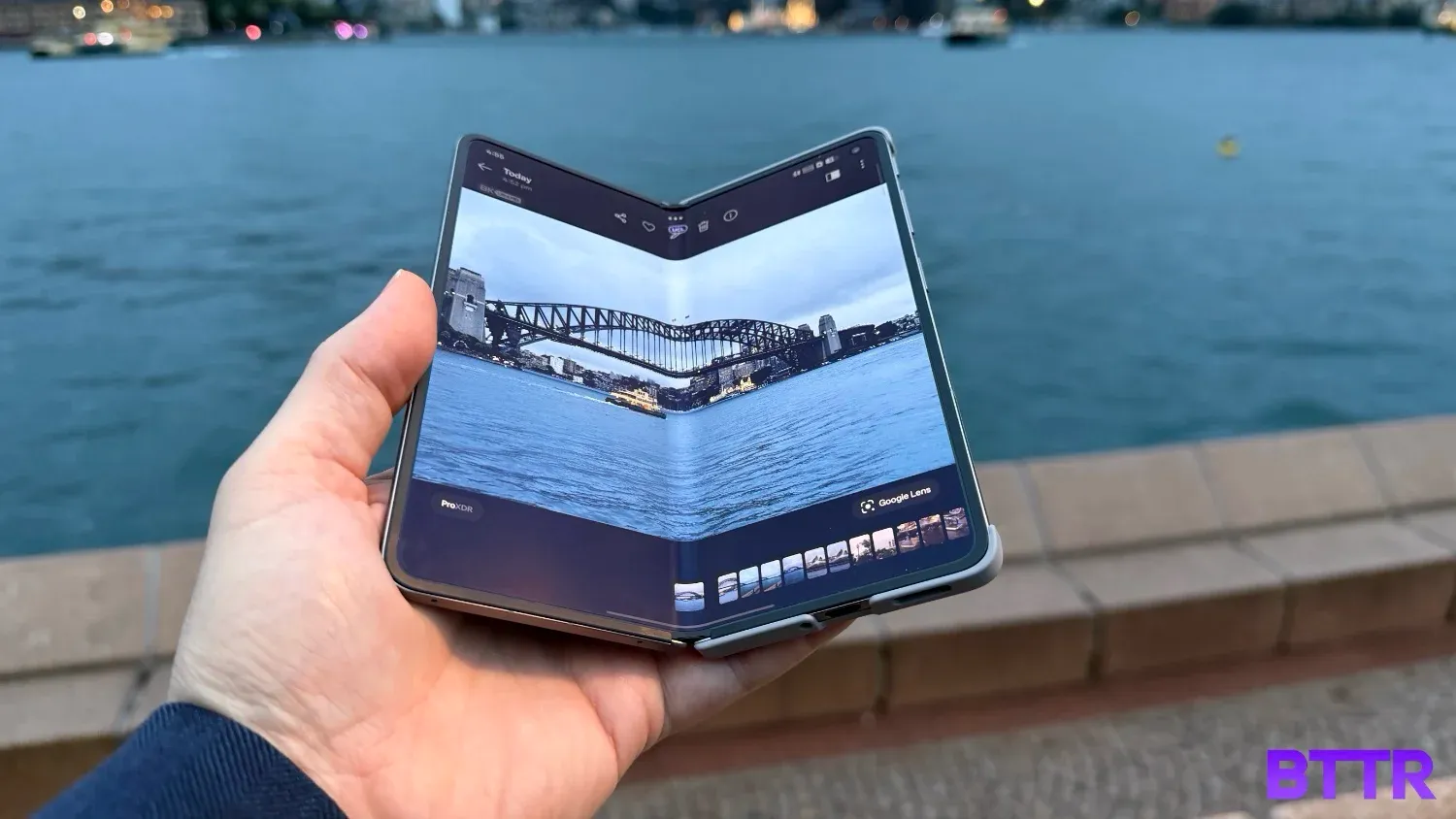
In practice, when the phone is fully open, the crease in the inner display is barely visible under normal light and barely perceptible to the touch. It’s not completely invisible, but it’s still significantly better than anything else currently on the market.
The second standout is the camera system. OPPO has partnered with Hasselblad for the Find N6's imaging, a collaboration that has been running for a few years across the Find X flagship range.
The triple rear array leads with a 200MP main sensor, backed by a 50MP ultrawide and a 50MP 3x telephoto. I’d argue it’s the strongest camera setup in a foldable right now.
The catch here is that at RRP $3,299, the Find N6 sits $400 above the Galaxy Z Fold 7. That premium needs to justify itself.
OPPO Find N6 specs
| Specification | Detail |
|---|---|
| Price | RRP $3,299 |
| Colours | Blossom Orange, Stellar Titanium |
| Dimensions (folded) | 159.87 × 74.12 × 8.93mm |
| Dimensions (unfolded) | 159.87 × 145.58 × 4.21mm |
| Weight | 225g |
| Processor | Snapdragon 8 Elite Gen 5 (7-core) |
| RAM | 16GB LPDDR5X |
| Storage | 512GB UFS 4.1 |
| Inner display | 8.12-inch AMOLED, 2480×2248, 1–120Hz adaptive, 412 PPI, 600 nits typical / 1800 nits HBM |
| Cover display | 6.62-inch AMOLED, 2616×1140, 1–120Hz adaptive, 431 PPI, 600 nits typical / 1800 nits HBM / up to 3600 nits peak |
| Rear cameras | 200MP f/1.8 main (OIS), 50MP f/2.0 ultrawide (AF, 120° FOV), 50MP f/2.7 telephoto (OIS, 3x optical), 2MP monochrome |
| Front cameras | 20MP f/2.4 (cover and inner display) |
| Video | 4K@120fps rear, 4K@30fps front, LOG supported |
| Battery | 6,000mAh, 80W SUPERVOOC wired, 50W AirVOOC wireless |
| OS | ColorOS 16.0 (Android 16) |
| Software support | 5 years OS updates, 6 years security updates |
| Water resistance | IP56 / IP58 / IP59 |
| Connectivity | Wi-Fi 7, Bluetooth 6.0, USB 3.2 Gen 1 Type-C, NFC, eSIM, dual nano-SIM, IR blaster |
| What's in the box | Phone, 80W SUPERVOOC charger, USB-C cable, SIM ejector tool, protective case, quick guide, safety guide |
Design and build quality
In hand, the Find N6 feels like a premium phone should. The frame is metallic, and the front glass has a finish that makes you want to hold it.
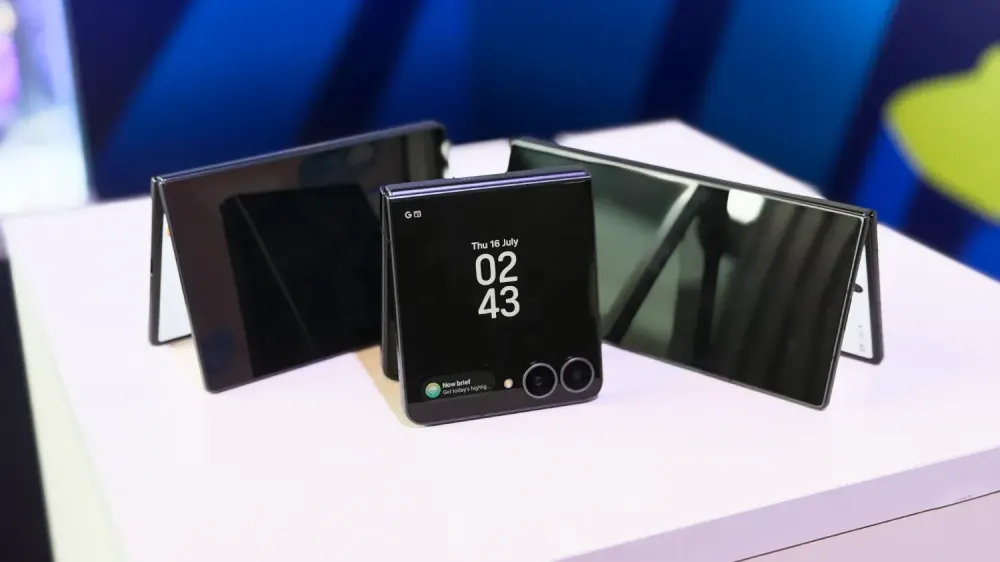
Folded, at 159.87 × 74.12 × 8.93 mm and 225 grams, it sits in similar territory to the Galaxy Z Fold 7, comparable in thickness and weight, but definitely not too thick to fit into a pocket.
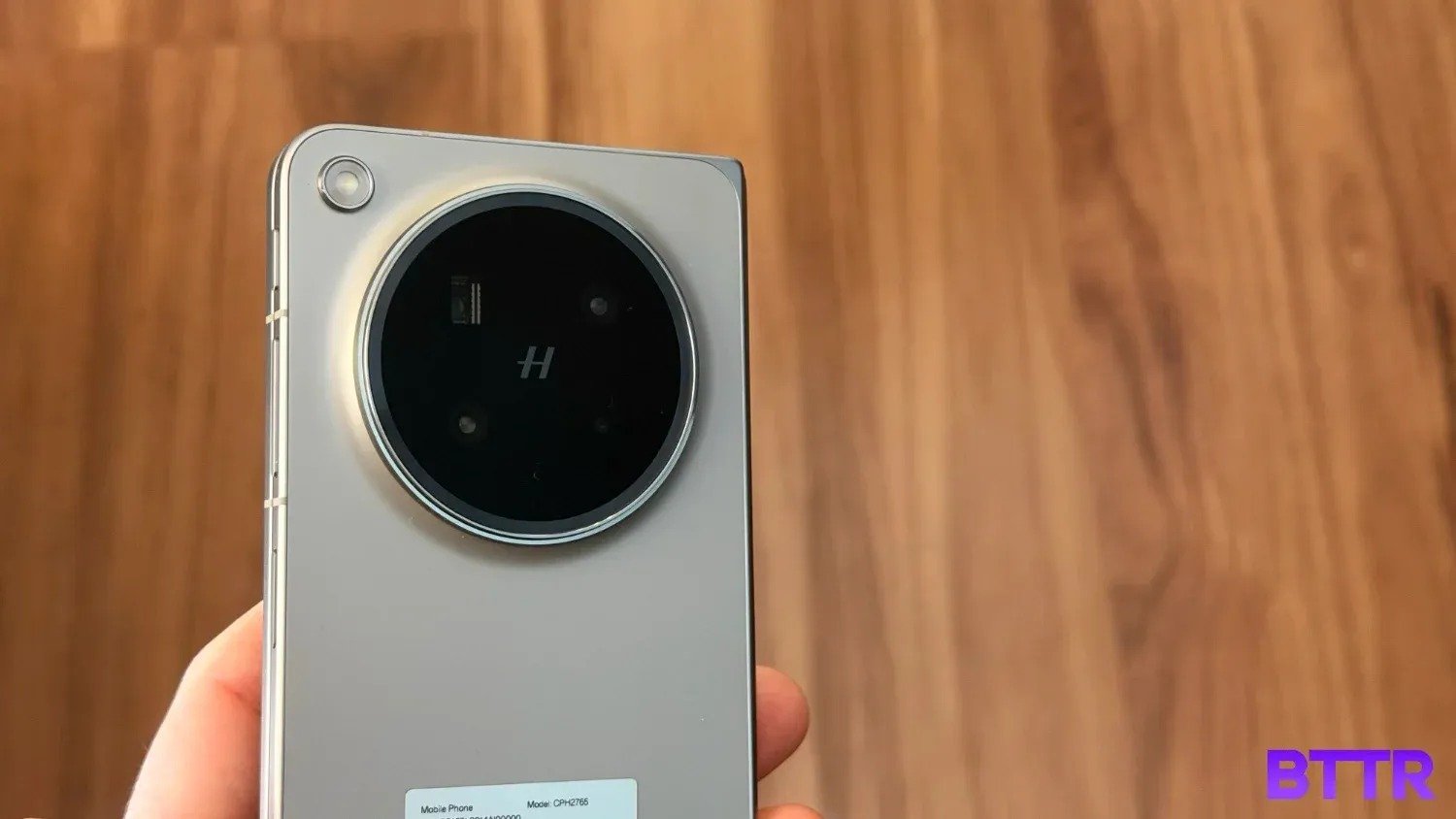
The biggest visual difference from Samsung's foldable is the camera array on the back. Where the Fold 7 uses a vertical row of lenses, the Find N6 has a large circular camera module.
It's a more prominent bump, and it feels different in the hand.
On the right side of the phone, you get a volume rocker, a power button with a side-mounted fingerprint reader, and the Snap Key, a customisable shortcut button that can be assigned to do-not-disturb, torch, camera shutter, or other shortcuts.
It's similar in concept to the action button on recent iPhones. I played around with the options during testing but didn't end up assigning it to anything — I didn't feel the need. A USB-C port sits at the bottom, and that's largely it for the exterior.
Open the phone fully and the experience changes. The inner 8.12-inch display is almost square at 2480×2248 pixels, and under normal lighting the crease at the hinge is barely there. You have to actively look for it.
Under direct light, or at a harsh angle, a fine line across the centre of the display is visible, and if you run a finger across it slowly, you can feel a very subtle ridge where the two halves meet.
But neither should put you off it's the best implementation of a folding screen by a clear margin, and in daily use it fades into the background.
Perhaps the biggest drawback of the phone’s design isn’t part of the phone itself. The AI Pen stylus is an optional accessory that is stored in a plastic case that attaches to the back of the device. It’s very plastic, and dramatically reduces the visual and tactile feel of the phone for the worse.
What’s worse is that it blocks the phone’s ability to charge wirelessly. I initially thought that the phone didn’t support wireless charging, but later realised it was purely the fault of the case.
The AI Pen is solid, but I’ll touch on that a bit later.
Performance
I used the Find N6 as my primary phone for stretches across the test period and performance was consistently strong throughout. Scrolling through Instagram and TikTok, writing and checking email, browsing, and all of it felt quick and responsive, with no slowdowns.
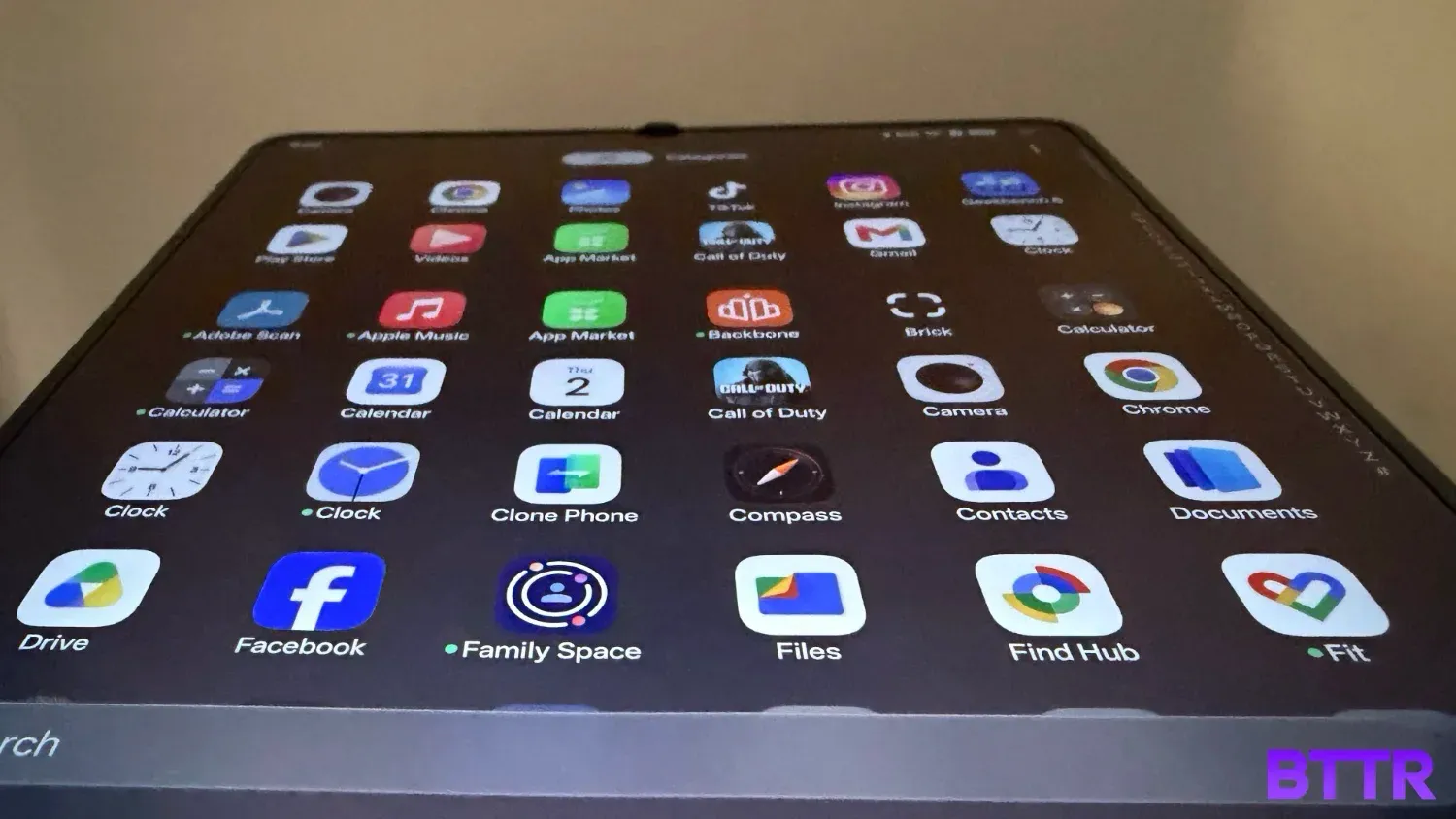
Gaming held up well. I played Call of Duty: Mobile on the inner screen, and while not all Android games are optimised for the squarish aspect ratio (a problem that affects every foldable with this form factor, not just the Find N6) frame rate and responsiveness were solid.
The phone warmed up slightly during intensive gaming sessions, but not to any degree that felt concerning.
The wider internal display allows for some great multi-tasking performance. I ran multiple apps side by side across the test period — photos alongside email, TikTok and a browser — and it worked as advertised.
For the buyers who want that capability, it's there and it functions well.
From a benchmarks perspective, OPPO delivers thanks to its Snapdragon 8 Elite Gen 5 processor. Across CPU and GPU GeekBench 6 tests, OPPO delivers premium results.
Display performance
Both the cover and inner displays are excellent. Colours look vivid, brightness is strong in daylight, and scrolling feels smooth on both screens.
One aspect of the Find N6 that works better than I expected is how it handles switching between the cover and inner display.
Opening the phone is seamless: whatever you were doing on the cover display continues immediately on the larger screen, no interruption.
Closing the phone is a slightly different story. A small prompt appears at the bottom of the cover display asking if you want to continue. Swipe up and it picks up exactly where you were.
There's one extra step involved, but the logic makes sense, because closing a foldable often means you're done with it. I got used to it quickly and stopped noticing it.
Camera performance
The camera is where the Find N6 really earns its premium pricing.
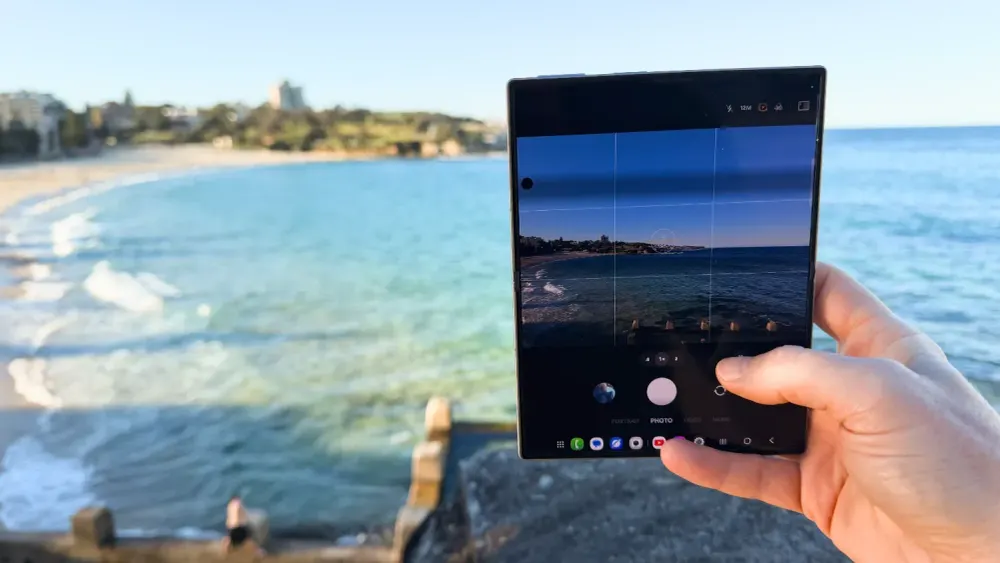
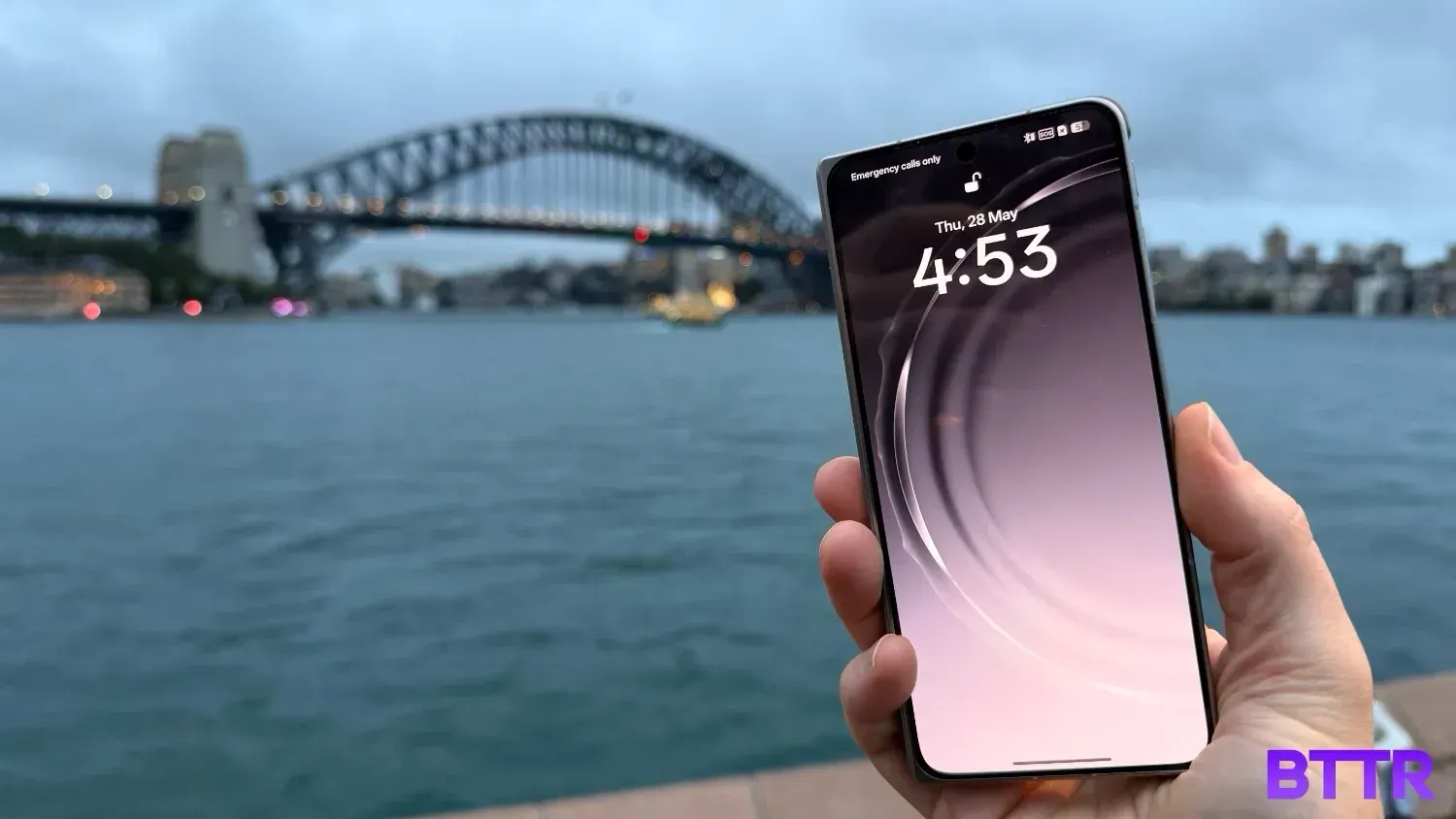
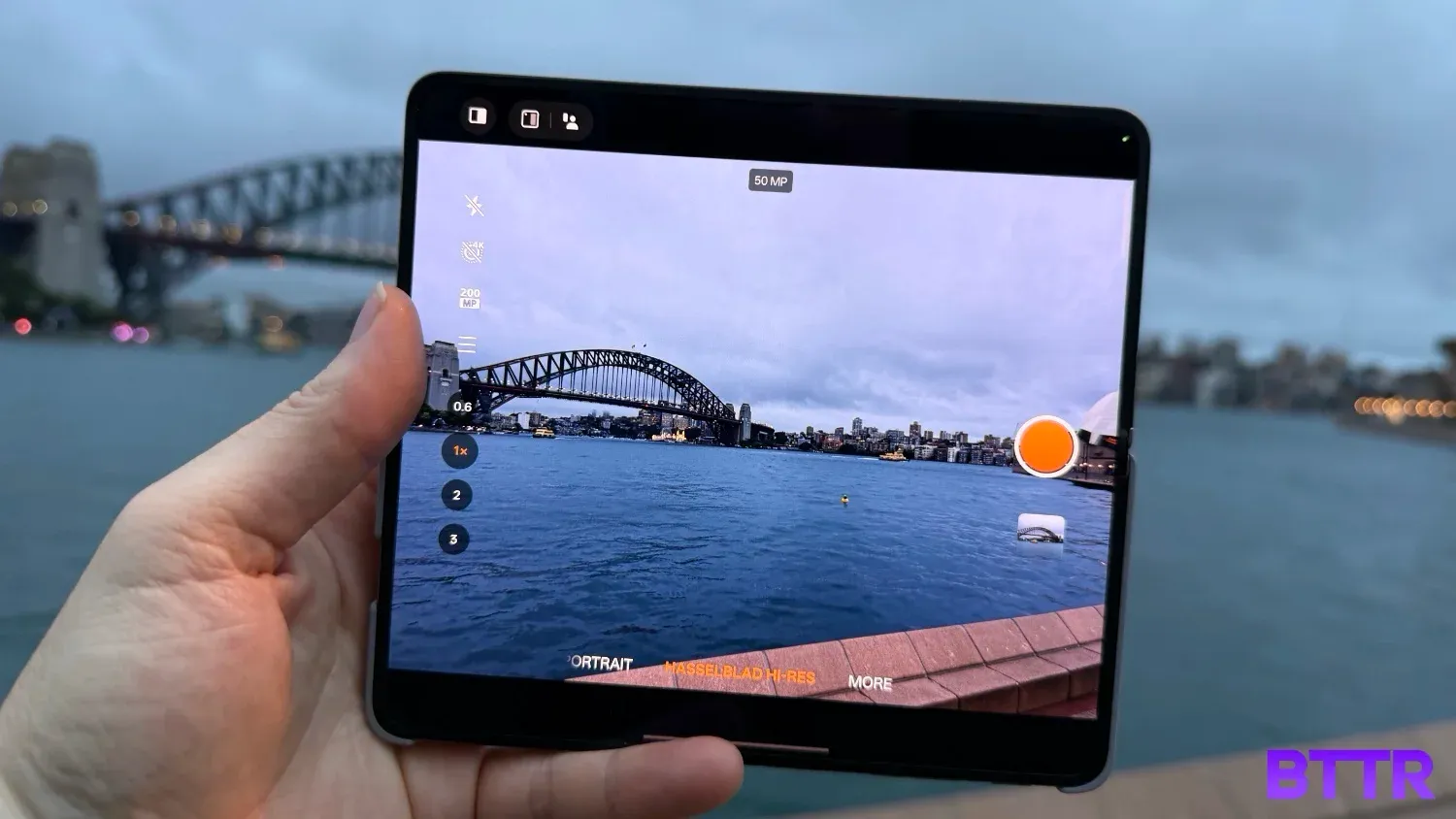
I used it for everything from product photography for other reviews and photos at product launches, to portraits, harbour shots, and night photography around Sydney.
While there are specialist modes available, including Hasselblad High Res, and a Master mode, I was most impressed by the everyday camera, shooting in the standard photo mode.
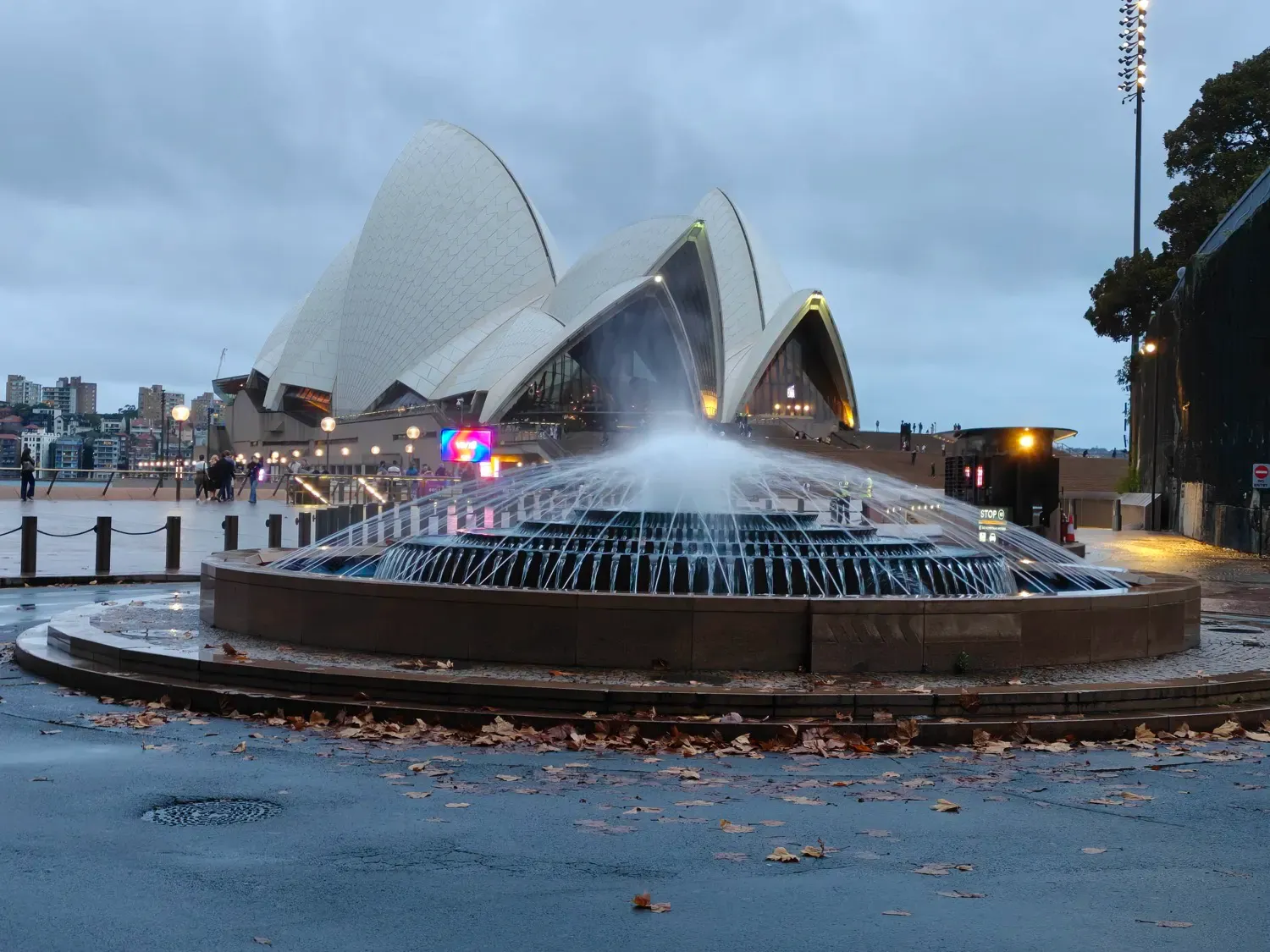
The night photography stands out most. I shot the Opera House during Vivid Sydney on the Find N6, and the lighting on the building, the lasers rising from the foreshore all looked sharp, detailed, and well-exposed in a way that impressed me for a foldable.
Comparing it to the Galaxy Z Fold 7, I prefer the Find N6's output. Samsung's cameras are great, but can tend toward oversaturation. Colours pop, but they don't always look natural. The Find N6 produces images that feel truer to life, a little crisper, which I find more appealing across most shooting situations.
Video is solid too. Motion is smooth, blacks are deep, and 4K recording holds up well across different lighting conditions.

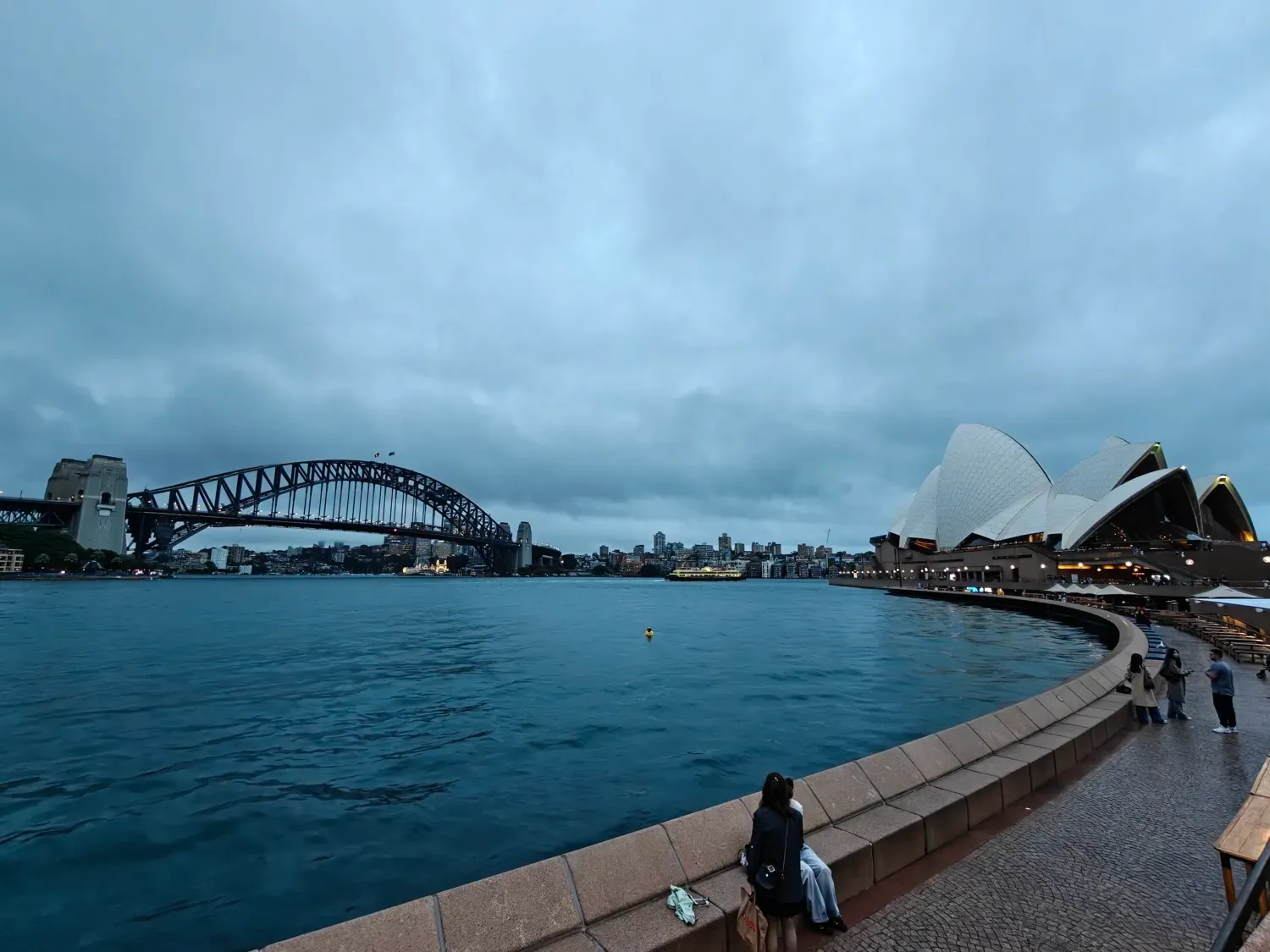





A gallery of images taken with the OPPO Find N6
Battery life and software
Battery life was not a concern throughout the test. On a typical day of mixed use, including social media, email, some gaming and taking photos, the 6,000mAh cell easily covered the day and often stretched toward a second.
I don't run formal battery benchmarks because real-world usage varies too much from person to person to make a single number useful. What I can say is that I never finished a day anxious about finding a charger.
ColorOS 16.0, OPPO's Android 16 skin, is solid. The interface is clean, setup from another Android device or from iPhone is straightforward, and I didn't hit any bugs or significant slowdowns across the testing period.
Some apps come preloaded, TikTok among them. But it didn't feel as cluttered as I've found on some of OPPO's budget devices.
The software support commitment is a slightly bigger issue. OPPO is offering five years of OS updates and six years of security patches. Samsung and Google both offer seven years on their flagship foldables.
At RRP $3,299, that gap is worth factoring into the buying decision, particularly if you're planning to hold onto the phone for four or five years.
The AI pen
One thing that extra real estate craves is a stylus to turn it into more of a creative companion for note taking and drwaing. OPPO’s AI Pen fits the bill.
It works really well, effortlessly letting you circle to search for AI search features, and take notes and screenshots easily.
It’s just a shame that OPPO couldn’t squeeze the stylus into the phone’s body. The case attachment for storage is way too cumbersome, hiding the elegance of the premium phone under a layer of cheaper plastic.
Verdict
The OPPO Find N6 is the best foldable phone I've tested. That's not a comfortable sentence to write given the price tag, but it's the honest assessment after a month of use.
The inner screen is the most compelling argument for it. OPPO has got closer to eliminating the crease than anyone else in this category. The lack of crease means you stop thinking of the Find N6 as a “phone that folds” and start treating it as a phone that happens to have a bigger screen available when you need it.
The camera is the second argument. The results are natural, detailed, and fantastic in low light.
The case against the phone is also straightforward: $3,299 is a significant ask, it's $400 more than the Galaxy Z Fold 7, and OPPO's software support commitment is shorter than what Samsung and Google offer.
If you upgrade your phone on a regular cycle, the software gap matters less. If you're planning to run this phone into the 2030s, it's worth weighing up.
For the buyer who wants the best foldable experience available right now and is prepared to pay for it, the Find N6 delivers.
Buy the OPPO Find N6 if
- You want the best inner screen currently available in a foldable. The Zero-Feel Crease display is the closest this category has come to a conventional smartphone screen, and the difference is obvious in daily use.
- Camera quality is the most important thing to you in a foldable. The Hasselblad triple camera system leads the category, and the low-light results in particular are strong.
- You want a foldable that works as a productivity device. The near-square inner display and multi-app support make working across multiple applications more usable than most foldables allow.
Skip the OPPO Find N6 if
- You're planning to run it for five or more years. OPPO's five-year OS update window trails Samsung and Google by two years — a real consideration at this price.
- You're already on a recent foldable. At $400 more than the Galaxy Z Fold 7, the screen and camera improvements are real but probably not enough to justify switching mid-cycle.
- You're considering the AI Pen. The stylus functions well on both screens, but the case that stores and charges it is bulky, plasticky, covers the phone's refined finish, and blocks wireless charging while attached. It's not an elegant solution for a $3,299 phone, and $199 more on top of that.
Latest smartphone deals
Frequently Asked Questions
Is the OPPO Find N6 available in Australia?
Yes. The Find N6 is available in Australia at RRP $3,299 in one configuration: 16GB RAM and 512GB storage. You can buy it at JB Hi-Fi, the OPPO Store at oppostore.com.au, or on postpaid through Vodafone. It comes in Blossom Orange and Stellar Titanium.
How does the OPPO Find N6 compare to the Samsung Galaxy Z Fold 7?
The Find N6 is $400 more than the Galaxy Z Fold 7, which retails at RRP $2,899 in Australia. In return, you get a better result on the inner display crease, cameras that produce more natural-looking results with less oversaturation, and a larger 6,000mAh battery. The Fold 7 counters with seven years of OS update support versus OPPO's five, and a more established local retail and service presence. Both phones are similarly sized when folded.
Does the OPPO Find N6's crease disappear completely?
Not completely. Under normal use and in standard lighting, the crease is barely visible and difficult to feel with a fingertip. Under direct or harsh light, or at certain angles, a fine line is visible across the centre of the display, and a very subtle ridge is perceptible if you run a finger slowly across it. It is the best crease result in the foldable category right now, but truly crease-free is still a work in progress for the industry.
How long does the OPPO Find N6 battery last?
In real-world mixed use, including social media, email, photos, some gaming, the 6,000mAh battery comfortably covered a full day and often pushed toward a second. Heavier use, such as extended gaming sessions, will bring that down. Charging is fast at 80W SUPERVOOC wired and 50W AirVOOC wireless.
Is the OPPO AI Pen worth buying?
For most users, probably not. The stylus itself works well on both the cover and inner display and performs comparably to Samsung's S Pen. The problem is the case: it snaps onto the back of the phone, wraps around the camera array, and adds substantial bulk. It's plasticky in a way that sits oddly against the phone's otherwise refined build, and it blocks wireless charging while attached. If you have a specific daily need for a stylus, the functionality is there. For most buyers, it's a $199 accessory with a case that doesn't match the phone it's designed for.
Is the OPPO Find N6 waterproof?
The Find N6 carries IP56, IP58, and IP59 ratings, covering dust protection, water immersion, and resistance to high-pressure water jets. It's solid protection for a foldable phone. It does fall short of the IP68 rating on the Google Pixel 10 Pro Fold and Honor Magic V6, which is worth noting given the price.